 HeySolids
Choking risk
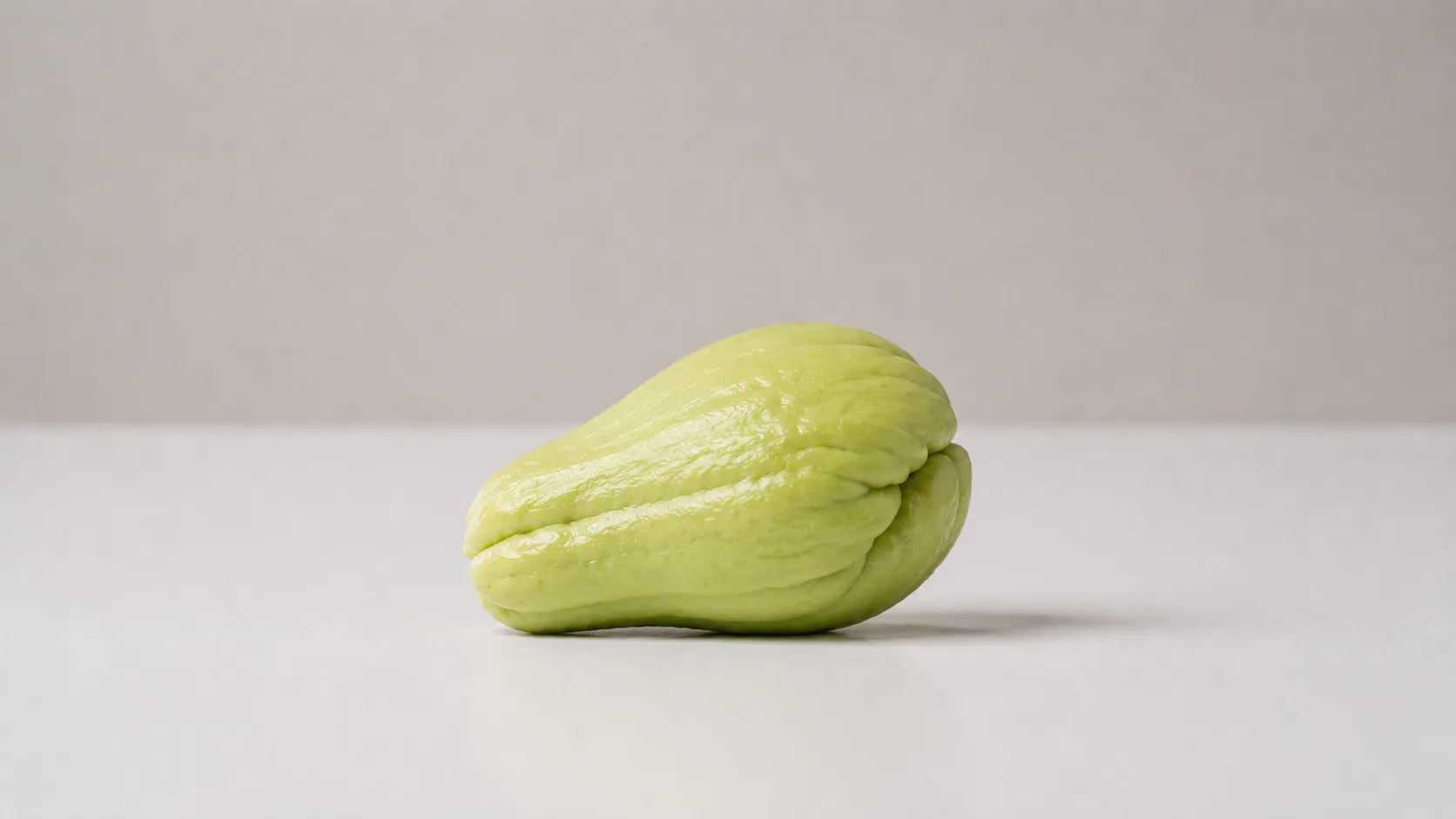
Cooked soft, chayote is a low choking risk. Raw, it is firm and crisp like raw apple, so it is always cooked through first.
Peel it, take out the central seed, and cook it until a piece presses easily between two fingers, then serve it as soft mash or soft pieces. See how to serve for age-by-age prep.
Allergens
Chayote is not a common food allergen, so a true allergy to it is rare.[2]
Start with a small amount and watch for a reaction.
If baby refuses
Chayote is mild and a little plain on its own. Serve it warm, or stir the soft flesh into a food baby already likes such as sweet potato or butternut squash mash. It can take many tries before a new food is accepted, so keep offering it.
How to serve
6+ months old
Smooth mash or large soft piece
Smooth mash on a pre-loaded spoon
Peel the chayote, cut out the flat central seed, and cook the flesh until completely soft. Mash it and serve on a pre-loaded spoon, or offer a large soft piece to grip and gnaw. Mix the mash with butternut squash or sweet potato for more flavor.
How to cook
Steam or boil peeled, diced flesh for about 15 to 20 minutes until very tender, then mash with a little cooking water. It is done when a piece squashes easily between two fingers.
9+ months old
Small soft pieces or mash
About 1/2 inch, bite-sized
Offer peeled, soft-cooked chayote in small pieces for pincer-grasp practice, with the central seed removed first. If small pieces are tricky, keep offering a soft mash or a larger piece. It also mixes well into mashed potato or lentils.
How to cook
Peel, seed, and steam or boil until soft, then lightly saute in a little oil or roast peeled chunks until tender. Pieces should still squash easily between two fingers.
12+ months old
Soft bite-sized pieces
Bite-sized, about 1/2 to 1 inch
Offer soft chayote pieces alongside a fork for utensil practice. It fits easily into family meals now, stirred into soups, stews, grain bowls, or mixed vegetable dishes. Keep peeling it and removing the seed. Mild herbs and spices work well.
How to cook
Peel, seed, and steam, boil, saute, or roast as part of family meals. As chewing skills grow you can cook it a little less for more texture, but keep it soft enough to squash easily.