 HeySolids
Choking risk
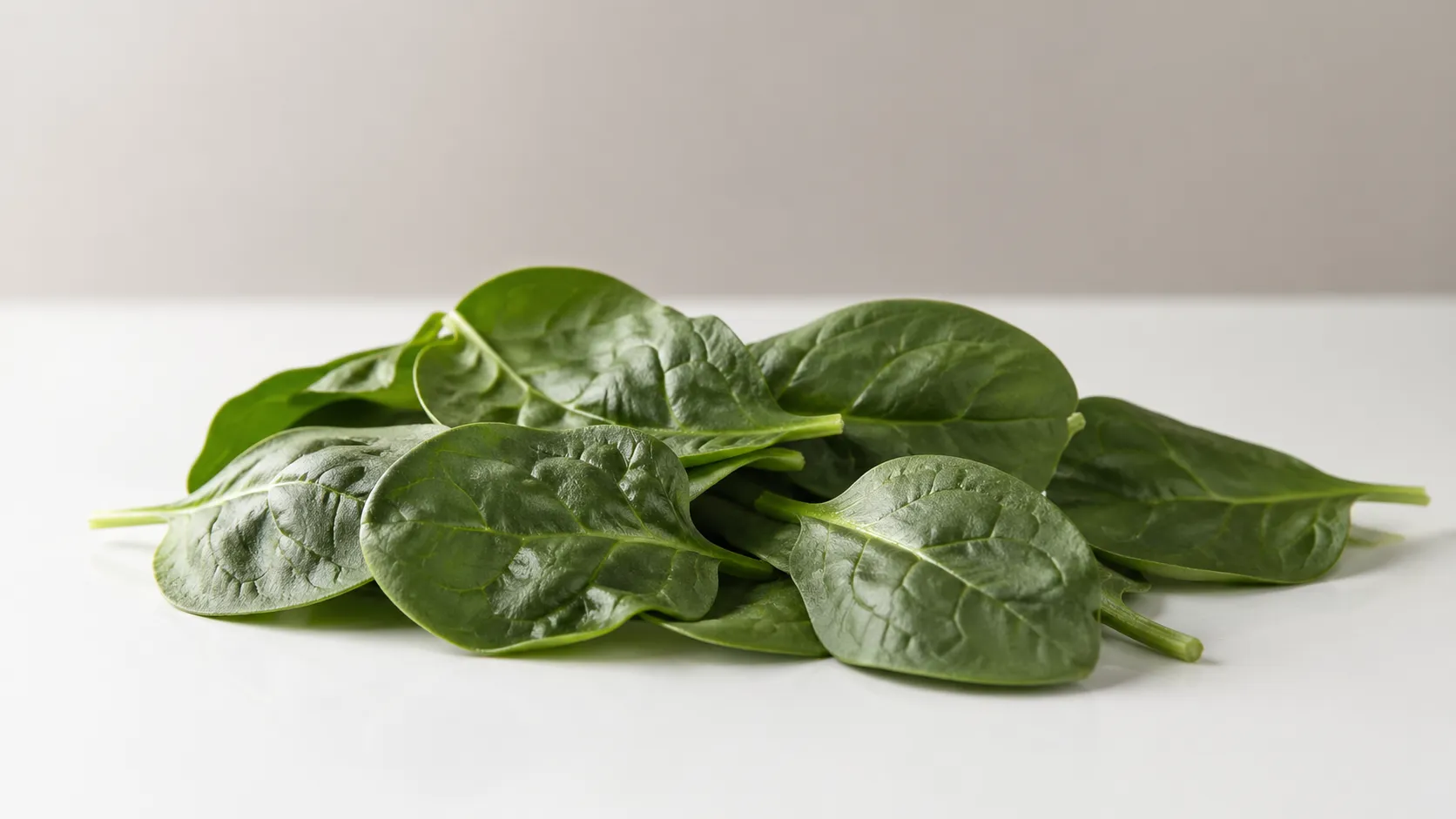
Cooked spinach is a low choking risk, but a whole raw leaf is thin and can bunch into a ball or stick to the roof of the mouth.
Wilt spinach until soft, then chop it fine or blend it into a soft food rather than serving whole leaves. See how to serve for age-by-age prep.
Allergens
Spinach is not a common food allergen, so a true food allergy to it is rare.[2]
Start with a small amount and watch for a reaction.
If baby refuses
The dark color and earthy, slightly bitter taste can put babies off. Stir finely chopped cooked spinach through pasta sauce, mashed potato, scrambled egg, or yogurt, where the flavor softens, or blend a small handful into a fruit smoothie, where it almost disappears. Keep offering it now and then, since repeated tastes build acceptance.
Food safety
Spinach is naturally high in nitrates. This matters most for very young infants, and the AAP advises against high-nitrate vegetables before 3 months; by the time babies start solids around 6 months the concern has largely passed. Spinach is fine to offer from then as part of a varied diet of greens rather than a daily, large-portion food.[3]
How to serve
6+ months old
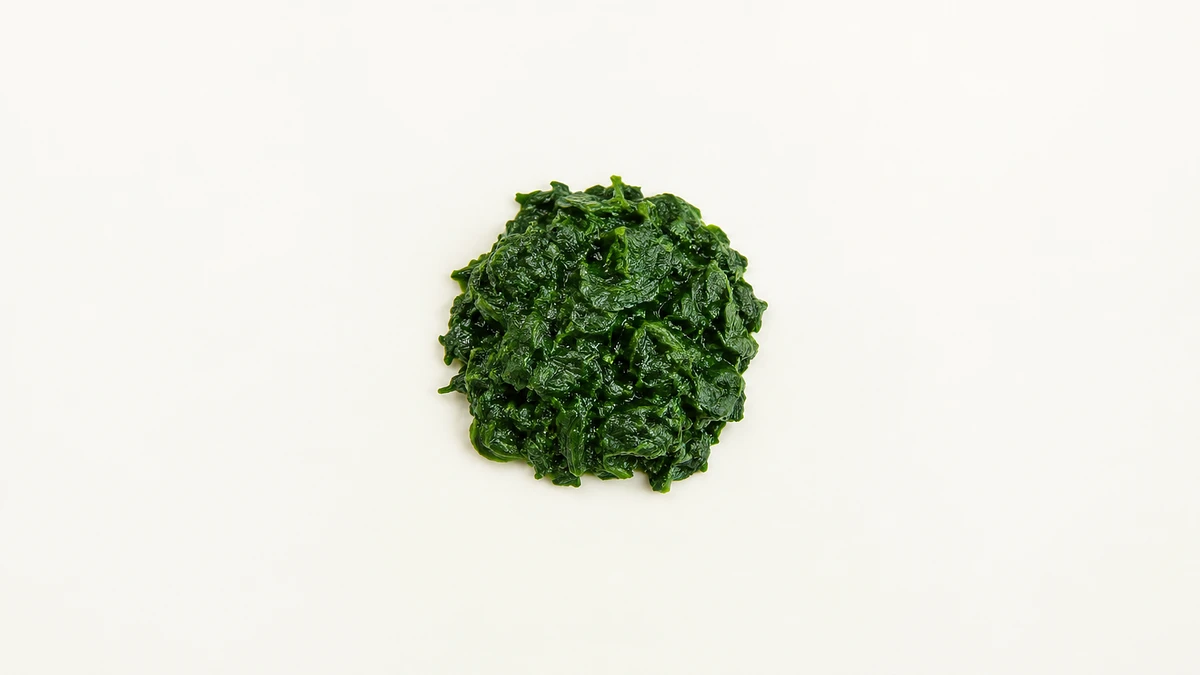
Finely chopped or blended into a soft food
A spoonful stirred through a soft food or puree
Cook spinach down until soft, chop it fine, and stir it through a scoopable food such as mashed vegetables, oatmeal, or yogurt, or blend it into a smooth puree. Mixing it in keeps the soft leaf from clinging to the mouth and makes it easy to eat.
How to cook
Steam or wilt fresh spinach in a hot pan for 1 to 2 minutes until fully softened. Squeeze out the excess liquid, then chop fine or blend with a little of baby's usual food.
9+ months old
Finely chopped, stirred into dishes
Keep stirring finely chopped cooked spinach into familiar foods like pasta sauce, mashed potato, scrambled egg, or soups and stews. A coarser chop is fine now as baby manages more texture, but keep pieces small and well softened so a leaf cannot bunch up.[1]
How to cook
Steam or wilt, or add chopped spinach straight into soups and sauces near the end of cooking. Squeeze out excess liquid before chopping.
12+ months old
Cooked pieces or wilted into family dishes
Serve cooked spinach wilted into family dishes such as pasta, curry, omelette, or risotto, chopped into small pieces. This is a great age to encourage self-feeding with a pre-loaded fork.
How to cook
Wilt, steam, or saute, or stir spinach into family meals near the end of cooking. Keep portions sensible as part of a varied diet.