 HeySolids
Choking risk
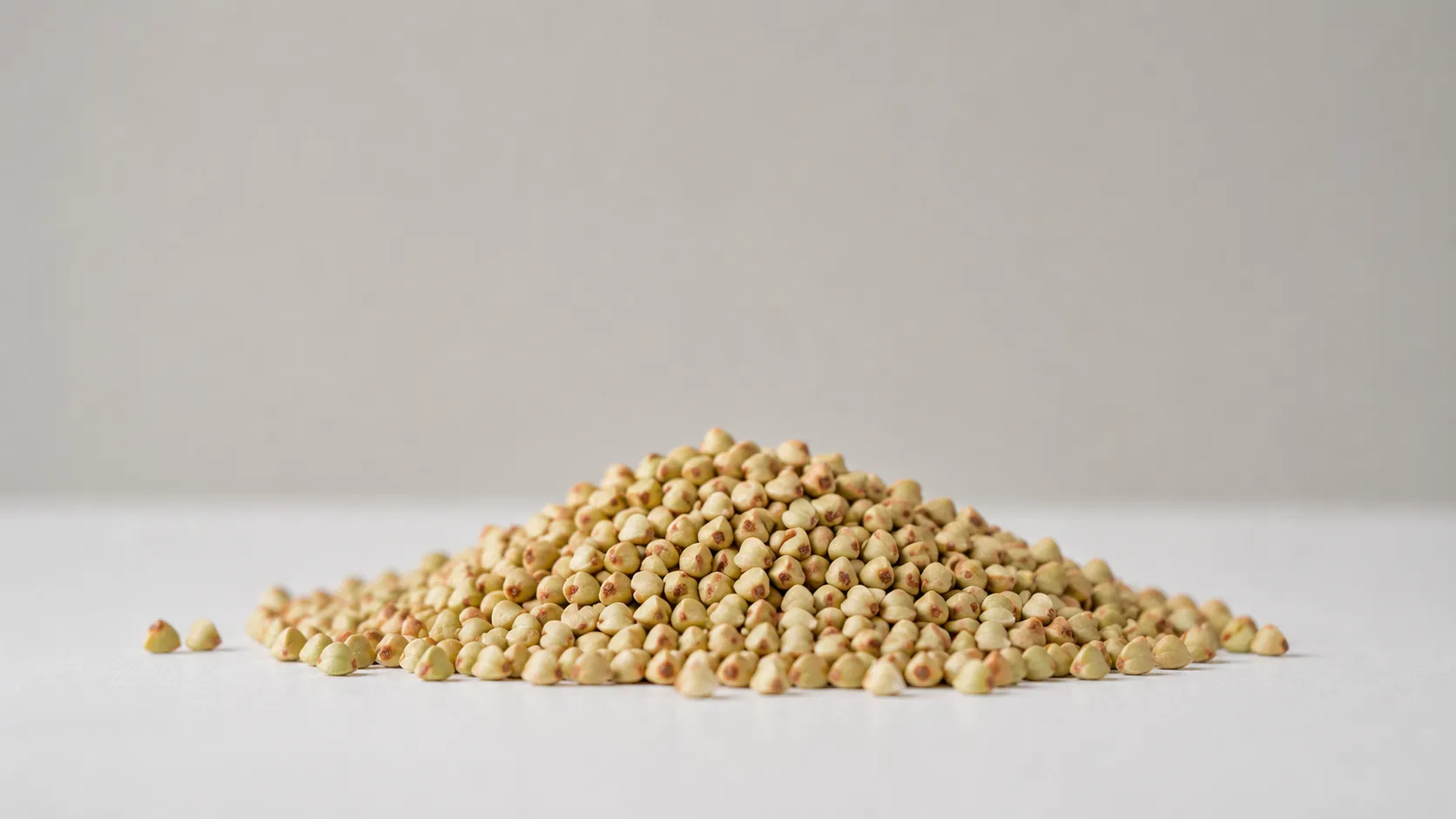
Buckwheat is a low choking risk - cooked soft, the tiny grains press flat easily and clump together, which is what makes them easy to manage. Serve it moist and clumped, stirred into a mash or soft food, never as dry groats. See how to serve for age-by-age prep.
Allergens
Buckwheat is not a common food allergen, so a true allergy to it is rare.[1]
Despite the name, buckwheat is a seed, not wheat, and has no gluten.
Allergy is more common where it is eaten often, like Japan, and can sometimes be significant, so offer it alone first.[2]
Start with a small amount and watch for a reaction.
If baby refuses
Buckwheat's earthy, slightly bitter flavor can put some babies off at first. Try it as a creamy porridge with breast milk or formula and mashed fruit stirred through, or as soft pancakes.
How to serve
6+ months old
Creamy porridge or mixed into mash
Cook buckwheat into a soft, creamy porridge, or stir well-cooked groats through a puree or mashed vegetables so the grains are not loose. Pre-load a spoon and hand it to baby.
Soft buckwheat pancakes can be torn into pieces to pick up. Keeping it moist and clumped makes it easier and safer to manage.
How to cook
Simmer about 1 part groats to 2 to 3 parts water for 10 to 15 minutes until very soft and creamy, adding liquid for a porridge texture, then stir into a soft food so it holds together. Use no added salt.
9+ months old
Soft clumped grains or pancake pieces
Slightly clumped; pancake pieces about 1/2 inch
Offer soft cooked buckwheat clumped together for scooping, or stirred through soft family dishes with a little yogurt or olive oil to help the grains stick for an early pincer grasp.
Soft pancake pieces and buckwheat bound into soft patties also work well. Keep it very soft and moist, with no added salt.
How to cook
Cook until very soft. Bind into soft patties or pancakes, or mix into soft dishes so the buckwheat holds together rather than scattering loose. Use no added salt.
12+ months old
Soft buckwheat in dishes or as a side
Serve buckwheat as part of family meals: a soft side, a soft pilaf, stirred into porridge, or mixed into soups and stews.
Offer a fork or spoon for practice, and do not worry if your toddler still prefers their hands. Keep it moist and slightly clumped for more success with a utensil, cook it very soft, and continue to leave salt out.
How to cook
Cook until very soft, then serve to your family's taste with no added salt. Keep avoiding hard, crunchy, or toasted forms, and vary the grains and grain-style foods you offer across the week.
Tips
- Look for it in the flour aisle too. Buckwheat flour is the easiest way into this grain - it makes the classic tender pancake, and it works in any pancake recipe swapped in for half the regular flour. If the groats feel like a commitment, start with the flour.
- Kasha is the same grain, toasted. The reddish-brown groats labeled kasha are just buckwheat roasted before packing - nuttier and deeper-tasting, and they cook exactly the same way. If plain buckwheat gets a lukewarm reception, kasha is the flavor upgrade to try.
- Rinse before cooking, and don't overcook. Buckwheat carries a starchy dust that turns gluey in the pot - a quick rinse keeps the grains distinct. And it goes from soft to mush fast: about 15 minutes is done, so check early. For baby, slightly over is better than under.
Sources
- Food Allergies (the 9 major US allergens) - FDA
- A Review on Epidemiological and Clinical Studies on Buckwheat Allergy - Plants 2021 (PMC8005110)
- Latex Allergy and Foods - Allergy & Asthma Network
- When, What, and How to Introduce Solid Foods - CDC
- Foods and Drinks to Avoid or Limit (added sugar, salt) - CDC
- Buckwheat groats, cooked, roasted (FDC 170686) - USDA FoodData Central