 HeySolids
Choking risk
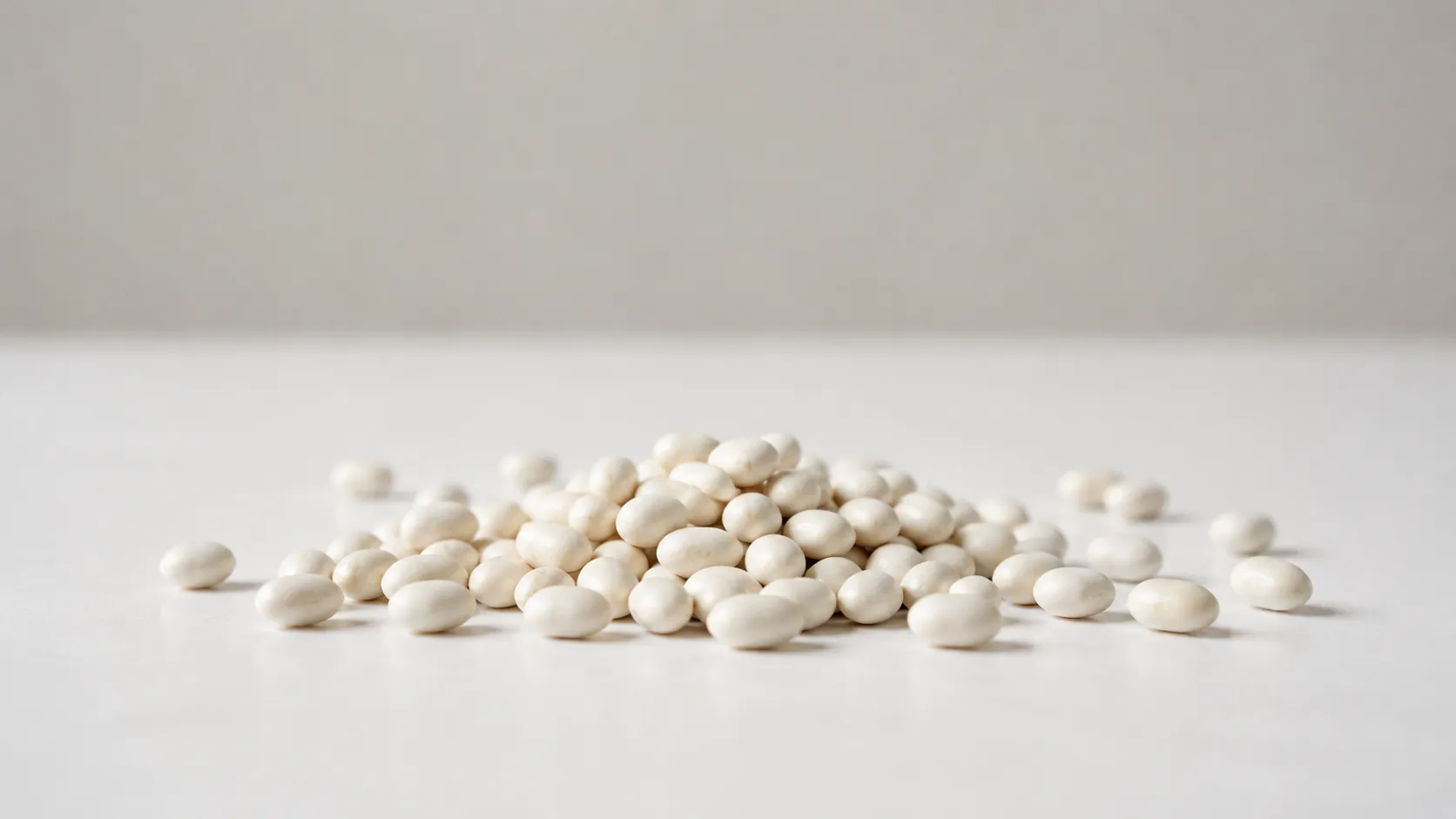
Navy beans are a moderate choking risk - whole beans are small, firm, and round, and the CDC lists round foods like these among its choking hazards.
Cook them until very soft, then smash each bean flat so it's no longer round. See how to serve for age-by-age prep.
Allergens
Navy beans are not a common food allergen, so a true allergy to them is rare.[2]
Start with a small amount and watch for a reaction.
If baby refuses
Navy beans have a mild, creamy flavor most babies take to over time. If yours is unsure, blend them into a smooth dip, or stir smashed beans through a familiar puree or pasta sauce where they almost disappear. Repeated tastes build acceptance.
How to serve
6+ months old
Smooth mash or creamy spread
A few spoonfuls of soft mash
Cook navy beans until very soft, then mash or blend them into a smooth, creamy paste and offer from a pre-loaded spoon, or spread it thinly on a soft cooked vegetable strip or finger of toast baby can hold. Navy beans mash beautifully, so they are ideal for smooth dips and spreads. Mashed beans also stir easily into other soft foods like mashed vegetables. Pairing them with a vitamin C food such as tomato or pepper helps baby absorb more of their iron.
How to cook
Dried beans: soak overnight, then drain and discard the soak water, cover with fresh water, and boil hard for at least 10 minutes before reducing to a simmer for 60 to 90 minutes until very soft - the rolling boil breaks down the natural lectins in raw beans, which a low simmer alone may not.
Canned: choose no-salt-added, drain, rinse, and simmer about 10 minutes to soften further. Skip the salt, then mash or smash well before serving.
9+ months old
Smashed soft beans
Flattened beans, no longer round
As baby's pincer grasp develops, offer fully cooked beans smashed flat with a fork or your thumb so they are no longer round, which makes great picking-up practice. Keep mashed beans and creamy spreads on the menu too, for scooping. Serving beans with a vitamin C food still helps with iron absorption.
How to cook
Cook or heat until very soft, so a bean squashes easily between your fingers. Flatten each bean before serving, or stir them into soft mashes and mild stews for easy self-feeding.
12+ months old
Soft whole beans in family dishes
Soft whole navy beans can be offered once your toddler chews well and does not stuff their mouth. They are lovely folded into family dishes like homemade baked beans, soups, and stews. Smashing a few is still fine, and serving them with a vitamin C food keeps helping with iron absorption.
How to cook
Cook until fully tender. Serve whole soft beans, smashed, or folded into mild stews, soups, and homemade baked beans. Keep added salt and sugar low when cooking for the family so the dish suits baby too.
Sources
- Choking Hazards (Infant & Toddler Nutrition) - CDC
- Food Allergies (the 9 major US allergens) - FDA
- Legume Allergens Pea, Chickpea, Lentil, Lupine and Beyond - Curr Allergy Asthma Rep 2024 (PMC11364600)
- When, What, and How to Introduce Solid Foods - CDC
- Foods and Drinks to Avoid or Limit (honey, added sugar, salt) - CDC
- Beans, navy, mature seeds, cooked, boiled, without salt (FDC 173746) - USDA FoodData Central