 HeySolids
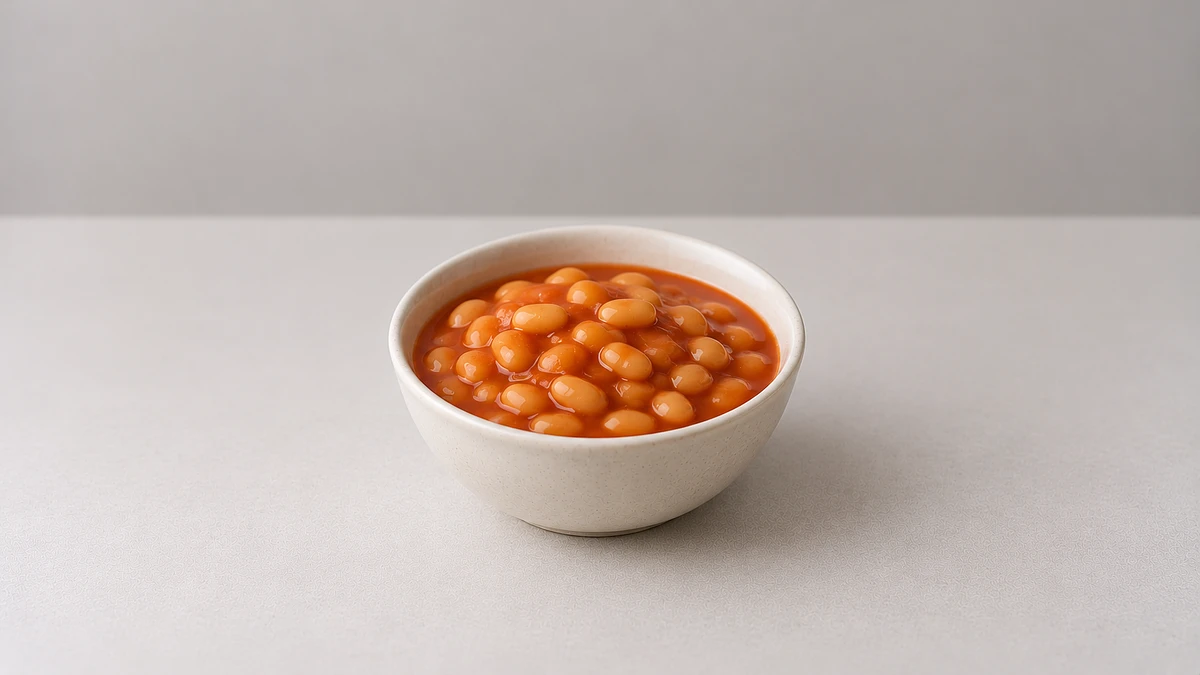
Can babies have baked beans?
Yes, from around 6 months, but the sauce is the problem, not the beans. A half-cup of regular canned baked beans has roughly 500 mg of sodium and 10 to 12 g of sugar, most of it added. A baby’s daily sodium guide at 7 to 12 months is only 370 mg, and children under 2 shouldn’t have added sugar.[8][5][4]
Before age 2, make your own: no-salt-added canned beans, such as navy beans, in a homemade tomato sauce with no added sugar. If you’re using a regular can for the family, rinse a few spoonfuls of beans for your baby and mix them into something plain. From age 2, a small serving of ordinary baked beans is fine as an occasional lunch, not a daily one.
Choking risk
Baked beans are a high choking risk - the beans are soft, but they're small, round and skin-on, and the CDC lists whole beans among the foods that can block a small airway.
Mash them into the sauce for a new eater, then flatten each bean with a fork once baby is picking up pieces. See how to serve for age-by-age prep.
Allergens
Baked beans are not a common food allergen, so a true allergy to them is rare.[2]
Some canned recipes add pork, mustard or wheat-based thickeners - check the ingredient list if any of those matter in your house.
Start with a small amount and watch for a reaction.
If baby refuses
If your baby turns away from beans, it’s usually the texture. Mash them smoother into a vegetable purée they already like, or spread a thin layer on a strip of toast they can hold. Many new foods take several tries before a baby accepts them, so keep offering.
Food safety
Salt is the main limit. Babies shouldn’t have added salt in the first year, and only a little after that. Most of the salt in canned baked beans is in the sauce: a half-cup of a regular can has more than a baby’s whole-day sodium guide, and more than half a toddler’s.[4][5]
Added sugar is the second reason to go easy. The AAP lists baked beans among the savory processed foods that contain added sugar, and children under 2 shouldn’t have any.[6][7] “Reduced sugar” cans often use sweeteners instead, which young children don’t need either.
Once opened, move leftover beans out of the can into a sealed container, refrigerate them, and use them within 3 to 4 days.
How to serve
6+ months old
Mashed beans in homemade sauce
Mash no-salt-added beans into a thick, smooth paste with a little homemade tomato sauce. Offer it on a pre-loaded spoon, or spread it thinly on a soft strip of toast your baby can hold. If you’re sharing a regular can with the family, rinse a few spoonfuls of beans under running water to wash off most of the sauce, then mash them into something plain, like mashed potato.
How to cook
Simmer no-salt-added canned navy or cannellini beans in strained or crushed tomatoes with a little onion and a pinch of paprika for about 10 minutes, until the sauce thickens. Then mash. There’s no need for salt or sugar, since the tomatoes are sweet enough.
9+ months old
Beans flattened one by one, lightly sauced
Flattened beans, no longer round
Flatten each bean with the back of a fork so it’s no longer round. Small, flat pieces like this are good pincer grasp practice. A little homemade sauce adds flavor. The rules on canned beans are the same as before: use no-salt-added beans, or rinse regular ones, and keep the portion small.
How to cook
Heat the beans until one presses easily between two fingers, then flatten them and serve warm, not hot. Beans on a strip of toast still work too; press them into the toast so they don’t roll off.
12+ months old
A small serving of family baked beans, occasionally
About 2 tablespoons of beans
From 12 months, a small portion of ordinary baked beans can join a family breakfast or lunch now and then. Keep it to a couple of tablespoons. A half-cup of a regular can has around 500 mg of sodium, and the daily guide for 1 to 3 years is 800 mg. Low-sodium or no-salt-added cans let you offer a little more.
How to cook
Heat the beans and serve them while they’re still soft. If your toddler stuffs their mouth, keep flattening a few. Beans on toast, beans with a baked potato, or beans stirred into scrambled eggs all work. A little grated cheddar on top adds protein without much extra salt.
Tips
- Read the sodium line, not the front of the can. "Reduced sodium" and "no salt added" are different products: the first still carries a few hundred milligrams per serving, the second is the one for a baby's bowl. Rinsing beans in sauce washes some salt off; rinsing plain canned beans does more.
- Skip "reduced sugar" for the littlest eaters. Those cans usually swap in sweeteners, which young children don't need either. Plain beans in a homemade tomato sauce - or a small share of the regular can - is the simpler route.
- Make the sauce yourself once and freeze it. Canned navy or cannellini beans simmered in passata with a little onion and paprika taste like baked beans to a baby who's never had the sugary version. Freeze in ice-cube trays.
Sources
- Choking Hazards (Infant & Toddler Nutrition) - CDC
- Food Allergies (the 9 major US allergens) - FDA
- Legume Allergens Pea, Chickpea, Lentil, Lupine and Beyond - Curr Allergy Asthma Rep 2024 (PMC11364600)
- Foods and Drinks to Avoid or Limit (honey, added sugar, salt) - CDC
- Dietary Reference Intakes for Sodium and Potassium (AI 370 mg at 7-12 months, 800 mg at 1-3 years) - National Academies 2019
- How to Reduce Added Sugar in Your Child's Diet - AAP HealthyChildren
- Dietary Guidelines for Americans 2020-2025 (birth-24 months: no added sugar/salt under 2) - USDA/HHS
- Beans, baked, canned, plain or vegetarian - USDA FoodData Central