 HeySolids
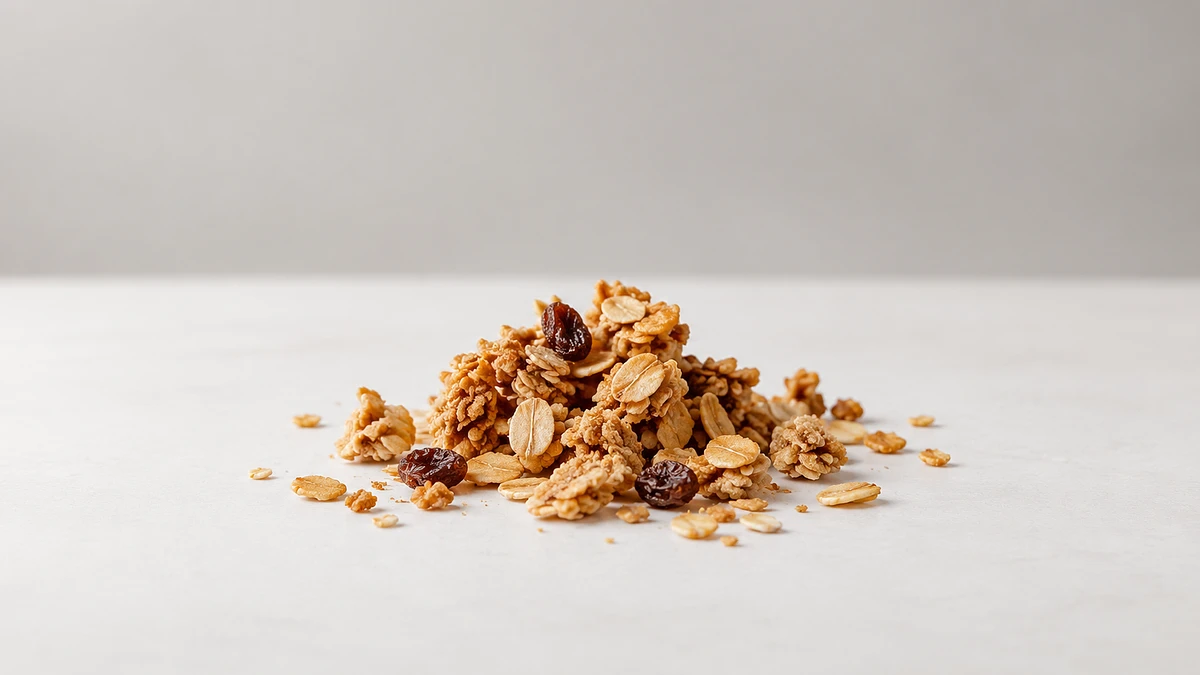
Can babies have granola?
Not before 12 months, and not the crunchy kind until around 4.
A typical granola is oats, honey, raisins, almonds and sunflower seeds, which is how USDA’s reference version is made.[5] That’s a problem for babies on several counts.
Honey isn’t safe before the first birthday, even baked in.[3]
Whole nuts, seeds and dried fruit are choking hazards, and the CDC lists granola bars alongside them.[1]
The AAP advises keeping these high-risk foods away from children until at least 4.[2] And most granola is sweetened, while children under 2 shouldn’t have added sugar.[3]
Before 12 months, offer plain oatmeal instead. From 12 months, homemade granola with no clusters, nuts and seeds ground fine, and no honey or added sugar can be soaked soft and served on a spoon. Store-bought granola and crunchy or chewy bars wait until around 4. A soft, homemade baked oat bar is a different food and doesn’t fall under that.
Choking risk
Granola is a high choking risk - whole or chopped nuts and seeds, dried fruit and granola bars are all on the CDC's choking list, and hard clusters fall under its warning about small, hard foods.
From 1 to 4, serve only a soft, loose granola: no clusters, nuts and seeds finely ground, soaked in milk or yogurt until it gives way on a spoon. See how to serve for age-by-age prep.
Allergens
Granola isn’t one of the common food allergens, and neither are oats. But what’s mixed in often is, and US labels must name every major allergen, either in the ingredient list or in a “Contains” line.[7]
USDA’s reference recipe includes almonds and wheat germ. Nature Valley’s Oats ‘n Honey bar contains soy and may contain peanuts, almonds and pecans from shared equipment.[5][6]
Oats themselves are often processed alongside wheat and other gluten grains, unless the bag says gluten-free.[8]
Check the label every time, and make sure your child has already had each allergen separately before offering it in granola.[9]
Food safety
Honey is the first reason to wait. It can carry the bacteria that cause infant botulism, so babies shouldn’t have any food made with honey, raw or cooked, before 12 months.[3] Both USDA’s reference granola and the Oats ‘n Honey bar are sweetened with it.[5][6]
Added sugar is the second. Children under 2 shouldn’t have any, and honey counts as added sugar too.[4] USDA’s reference homemade granola is about a fifth sugar by weight, including the raisins, and a two-bar pack of Oats ‘n Honey has 11 g of added sugar.[5][6] Before age 2, make granola at home with no honey or sugar, and leave store-bought for later.
How to serve
Up to 12 months old
Skip granola - plain oatmeal is the baby version
Skip granola in the first year. Honey, raw or cooked, isn't safe before 12 months. The hard clusters, whole nuts and seeds are choking hazards, too.
What to offer instead
Plain rolled oats cooked soft into oatmeal give the same grain with no sugar and no crunch. Once each nut or seed has been introduced on its own, a little smooth nut butter or tahini, thinned, can be stirred in.
12+ months old
Loose, cluster-free granola soaked soft in milk or yogurt
A small spoonful, soaked soft
From 12 months, a soft granola can be part of breakfast in small amounts. Break up any clusters, grind nuts and seeds finely, and chop dried fruit small or leave it out. Soak everything in milk or yogurt until it’s soft enough to press easily between two fingers. Until age 2, stick to homemade granola with no honey or added sugar, and save sweetened store-bought granola for later.
How to serve
Homemade is easiest: toast oats with a little oil and mashed banana or applesauce, no honey or sugar, and crumble it while still warm so nothing sets into clumps. From 2, a nut- and seed-free store granola can stand in once it soaks soft with no hard clusters left; stir in finely ground nuts or seeds yourself.
4+ years old
Crunchy clusters, whole nuts and granola bars, seated and supervised
A small handful, or one bar
From around 4, once chewing is reliable and your child sits still to eat, crunchy clusters, whole nuts and granola bars can come in - seated at the table, never while walking or playing, with you nearby. The AAP keeps whole nuts, seeds and other high-risk foods from children until 4 years or older.
How to serve
Keep bars an occasional snack: a two-bar pack of Oats 'n Honey carries 11 grams of added sugar.[6] Chewy bars are sticky rather than hard, and granola bars of both kinds are on the CDC's choking list. Granola over yogurt with fruit is the better everyday shape.
Tips
- Make a soft batch instead of buying one. Toast rolled oats with a little oil and mashed banana or applesauce, plus finely ground nuts or seeds, and break it up loose while warm - no honey, no clusters.
- Soak it first. Leave a spoonful in warm milk or yogurt for a few minutes, until it presses easily between two fingers. Dry granola is the choking risk.
- Soak muesli; save trail mix. Muesli still has whole nuts and dried fruit: pick an unsweetened one, grind the nuts, chop the fruit and soak it soft. Dry trail mix waits until about 4 - whole nuts, seeds and raisins all sit on the choking lists.[1][2]
Sources
- Choking Hazards (Infant & Toddler Nutrition) - CDC
- Choking Prevention for Babies & Children - AAP HealthyChildren
- Dietary Guidelines for Americans 2020-2025 (birth-24 months: no added sugar/salt under 2) - USDA/HHS (PDF)
- How to Reduce Added Sugar in Your Child's Diet - AAP HealthyChildren
- Cereals ready-to-eat, granola, homemade (FDC 171646; USDA recipe with oats, raisins, nuts, seeds and honey; 19.8 g total sugars per 100 g) - USDA FoodData Central
- Nature Valley Granola Bars Nutrition Explained (Oats 'n Honey: sweetened with honey, brown sugar syrup and sugar; 11 g added sugar per 42 g serving; contains soy, may contain peanut, almond, pecan) - General Mills
- Food Allergies (the 9 major US allergens) - FDA
- Eating, Diet, & Nutrition for Celiac Disease (oats and gluten cross-contact; gluten-free labeled foods under 20 ppm) - NIH NIDDK
- When to Introduce Egg, Peanut Butter & Other Common Food Allergens - AAP HealthyChildren