 HeySolids
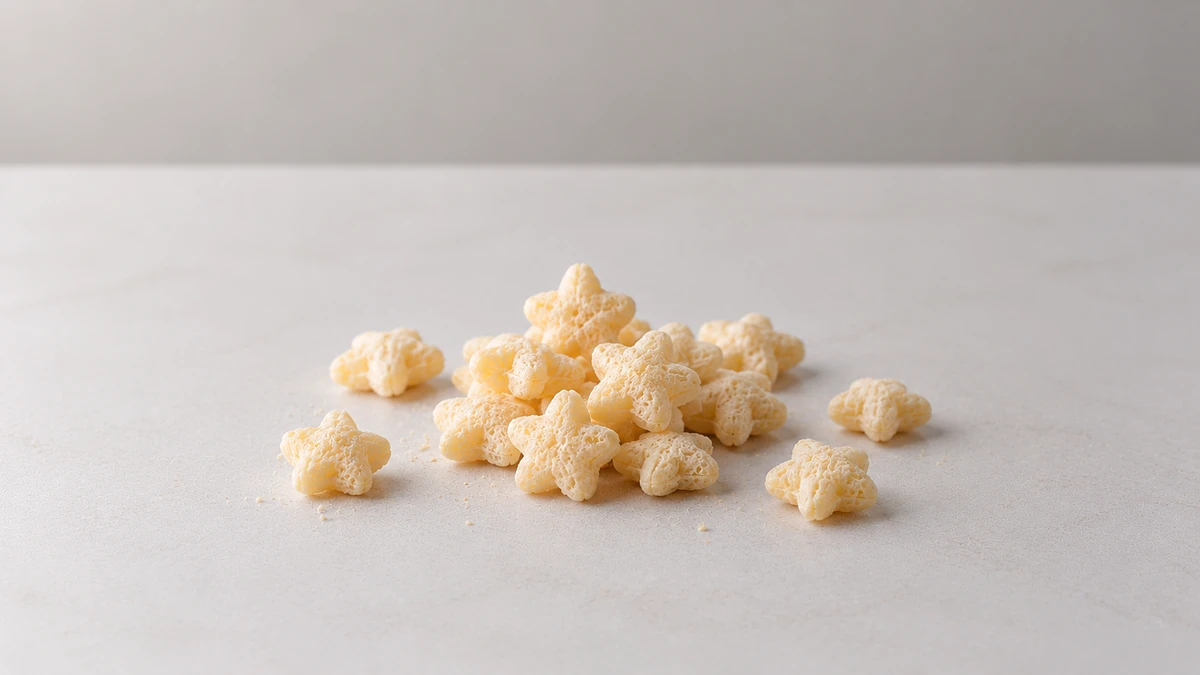
Can babies have puffs?
Yes, from around 9 months. Puffs are made to dissolve within seconds once they’re wet with saliva, which makes them a lower-risk finger food, and they’re a good size for pincer grasp practice. Most packs are labeled for babies who can sit up and pick up food on their own, which matches the CDC’s readiness signs for finger foods.[1]
They don’t add much nutrition, though. Puffs are mostly rice or corn starch with a little fruit or vegetable powder. Some are fortified with iron, but a baby who fills up on puffs may skip the iron-rich foods they need. Offer a few at a time as a snack or for practice, and check the label for added sugar.[2]
Choking risk
Puffs are a low choking risk - they dissolve quickly - but a mouth crammed with several, or a puff grabbed before baby is ready for finger foods, can still cause a gag.
Put one or two on the tray at a time rather than a pile, and test a new brand on your own tongue first to check how fast it softens. See how to serve for each age.[3]
Allergens
Puffs are not a common food allergen in themselves, but recipes vary: some contain wheat, yogurt-flavored puffs contain milk, and a few add egg or soy.[4]
Check the ingredient list the first time, and treat a puff as the introduction of any allergen baby hasn't had yet - offer a couple earlier in the day and watch.[5][6]
As with any new food, start with a small amount and watch for a reaction.
Food safety
Most puffs are made from rice, and rice takes up more inorganic arsenic than other grains. Vary your baby’s grains, like oats, barley, wheat and corn, rather than offering rice snacks every day. The FDA’s Closer to Zero plan is lowering the limits for arsenic and lead in baby foods, but for now the practical advice is still variety.[7][8][9]
Check the label for sugar and salt too. Some fruit-flavored puffs contain added sugar, which children under 2 shouldn’t have, and savory flavors can be salty.[2][10]
How to serve
9+ months old
One or two puffs at a time on the tray
A few puffs, not a handful
Once baby sits steadily and brings food to their mouth, set one or two puffs on the tray and let them work on picking them up - raking first, then pinching. Puffs that reach the mouth soften in seconds; ones that don't are still good practice. Keep the total to a small handful, after a meal rather than instead of one.
12+ months old
A small snack from the pack, with water
A small handful of puffs makes an easy snack on the go, but at this age a strip of cheese, soft fruit or a toast finger does the same job with more in it. Vary the grains and keep puffs occasional once real finger foods are going well.
Sources
- When, What, and How to Introduce Solid Foods - CDC
- Dietary Guidelines for Americans 2020-2025 (birth-24 months: no added sugar/salt under 2) - USDA/HHS (PDF)
- Choking Hazards (Infant & Toddler Nutrition) - CDC
- Food Allergies (the 9 major US allergens) - FDA
- Wheat - FARE
- Milk - FARE
- Arsenic Exposure (vary infant grains beyond rice) - AAP
- Arsenic in Food and Dietary Supplements - FDA
- Closer to Zero: Reducing Childhood Exposure to Contaminants from Foods (arsenic, lead, cadmium, mercury) - FDA
- Dietary Reference Intakes for Sodium and Potassium (AI 370 mg at 7-12 months, 800 mg at 1-3 years) - National Academies 2019