 HeySolids
Choking risk
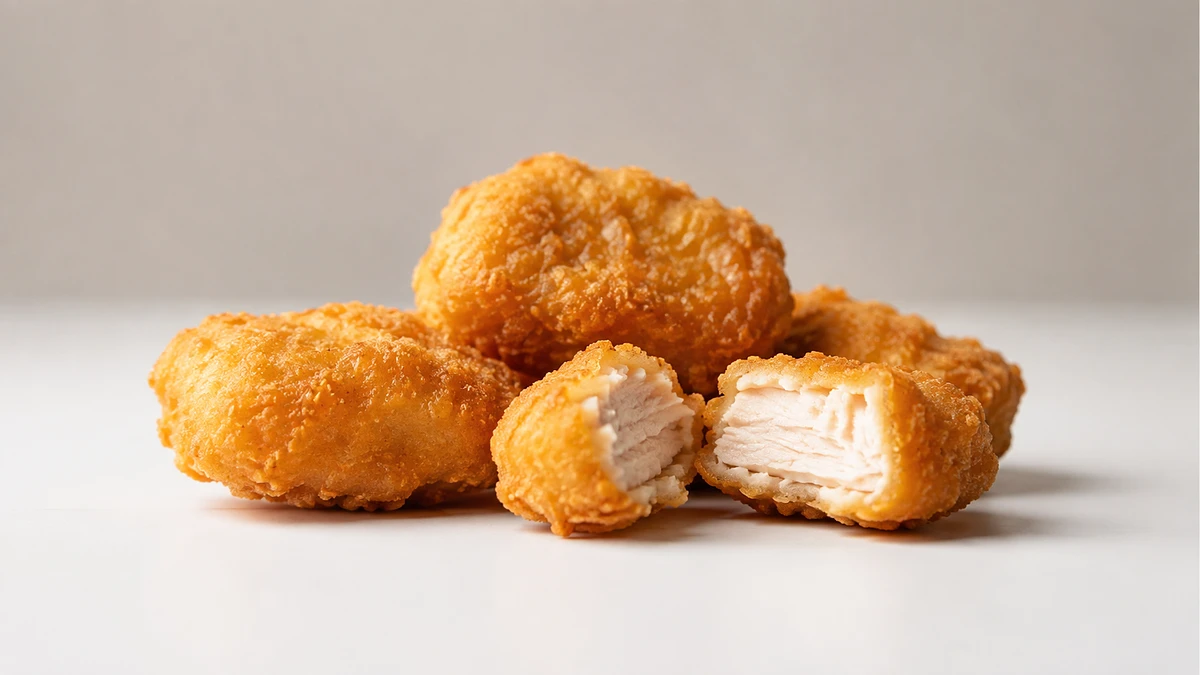
Chicken nuggets are a moderate choking risk - the crisp coating and dense chunks of meat take real chewing.
Cut each nugget into small bite-sized pieces, and check the meat inside is moist rather than dry. See how to serve for age-by-age prep.
Allergens
Chicken itself is not a common food allergen - it's the coating to check: nearly all nuggets are breaded with wheat, and some brands add egg or milk to the batter.[1]
Coatings vary brand to brand, so read the label if your child has a known allergy. As with any new food, start with a small amount and watch for a reaction.
Food safety
Some frozen nuggets are raw inside: the breading is browned at the factory, so an uncooked product can look fully done. Cook them as the package directs and check the middle reaches 165°F.[2]
Nuggets are also salty - a small serving can carry several hundred milligrams of sodium, a big share of the roughly 1,200 mg a day that's the limit for ages 1 to 2. Keep them occasional and let plain chicken be the regular protein.[3]
How to serve
12+ months old
Small bite-sized pieces
Pieces about 1/2 inch
From 12 months, nuggets work as an occasional meal. Most are high in salt, and salt should stay low after the first year.
Cut each one into pieces about 1/2 inch so the dense meat and crisp coating are manageable, and check the inside is moist.
When you buy, favor brands made from whole breast meat with the shortest ingredient list and the lowest sodium - the range between brands is wide.[4]
How to cook
Bake or air-fry as the package directs, until the middle reaches 165°F - many frozen nuggets are raw inside despite the browned coating. Cool before cutting up and serving.
2+ years old
Cut up, as an occasional meal
A few nuggets, cut into pieces
The habit to hold onto is occasional: nuggets stay a convenience meal, not the default protein, at every age. Keep cutting them into pieces for a while yet - dense chunks of meat still take chewing practice.
This is a good age to switch the default to homemade: chicken strips in plain breadcrumbs, baked, look and crunch like the boxed kind with far less salt - and a favorite dip carries most of the appeal anyway.
How to cook
For homemade, coat chicken breast strips in flour, beaten egg, and breadcrumbs, then bake at 400°F until cooked through to 165°F. Freeze a batch and reheat as needed - they keep as well as store-bought.
Tips
- Look for "fully cooked" on the box. Raw and fully cooked nuggets sit in the same freezer case and look identical once browned. The label is the only way to tell - and a raw one has to hit 165°F in the middle, not just look golden.
- Bake a homemade batch for the freezer. Chicken breast strips in plain breadcrumbs, baked and frozen, reheat as fast as the boxed kind - and you decide what goes in them. Most toddlers care about the dip more than the nugget anyway.