 HeySolids
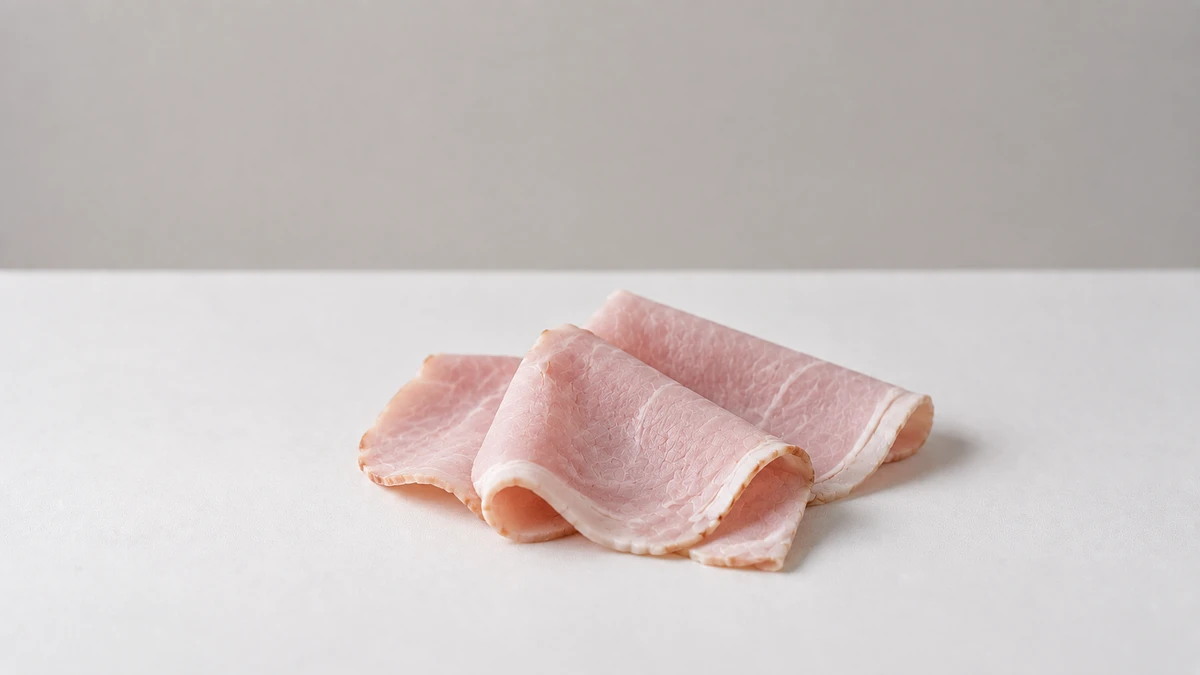
Choking risk
Ham is a moderate choking risk - it's denser and chewier than fresh-cooked pork, and thick or stringy pieces are hard for a young eater to break down.
Chop it fine or slice it into thin ribbons, and trim any rubbery fat before serving. See how to serve for age-by-age prep.
Allergens
Plain ham is not a common food allergen, so a true allergy to it is rare.[1]
Glazes are where surprises hide - honey, brown sugar, and mustard are common, and some brands add other ingredients in the cure. Check the label, then start with a small amount and watch for a reaction.
Food safety
Ham is a cured meat, and curing means salt - a single slice can carry a big share of the sodium a baby should see in a whole day, which is why ham waits until after the first birthday and stays small after that.[2]
It's also a processed meat, best kept occasional for young children - let fresh pork, chicken, or beef be the everyday protein.[3]
Serve ham hot from the oven or heated until steaming: ready-to-eat and deli-style ham can carry listeria, which keeps growing even in the fridge, and young children sit in the higher-risk group.[4]
How to serve
Up to 12 months old
Skip ham - offer fresh pork instead
Hold off on ham in the first year. Curing loads it with sodium that young kidneys aren't built for, and it gives a baby nothing that fresh meat doesn't.
What to offer instead
Slow-roasted or shredded fresh pork delivers the same savory depth without the cure or the salt - cook it soft, keep it moist, and serve it finely shredded.
12+ months old
Small thin pieces, chopped fine, occasionally
From around a year, a small amount of ham now and then is fine. Chop it into small, thin pieces, warm deli-style ham until steaming and let it cool, and fold it through eggs, pasta, or rice so a little flavor goes a long way.
Choose a lower-sodium ham when you can, and keep it occasional - salt should stay low well past the first birthday.