 HeySolids
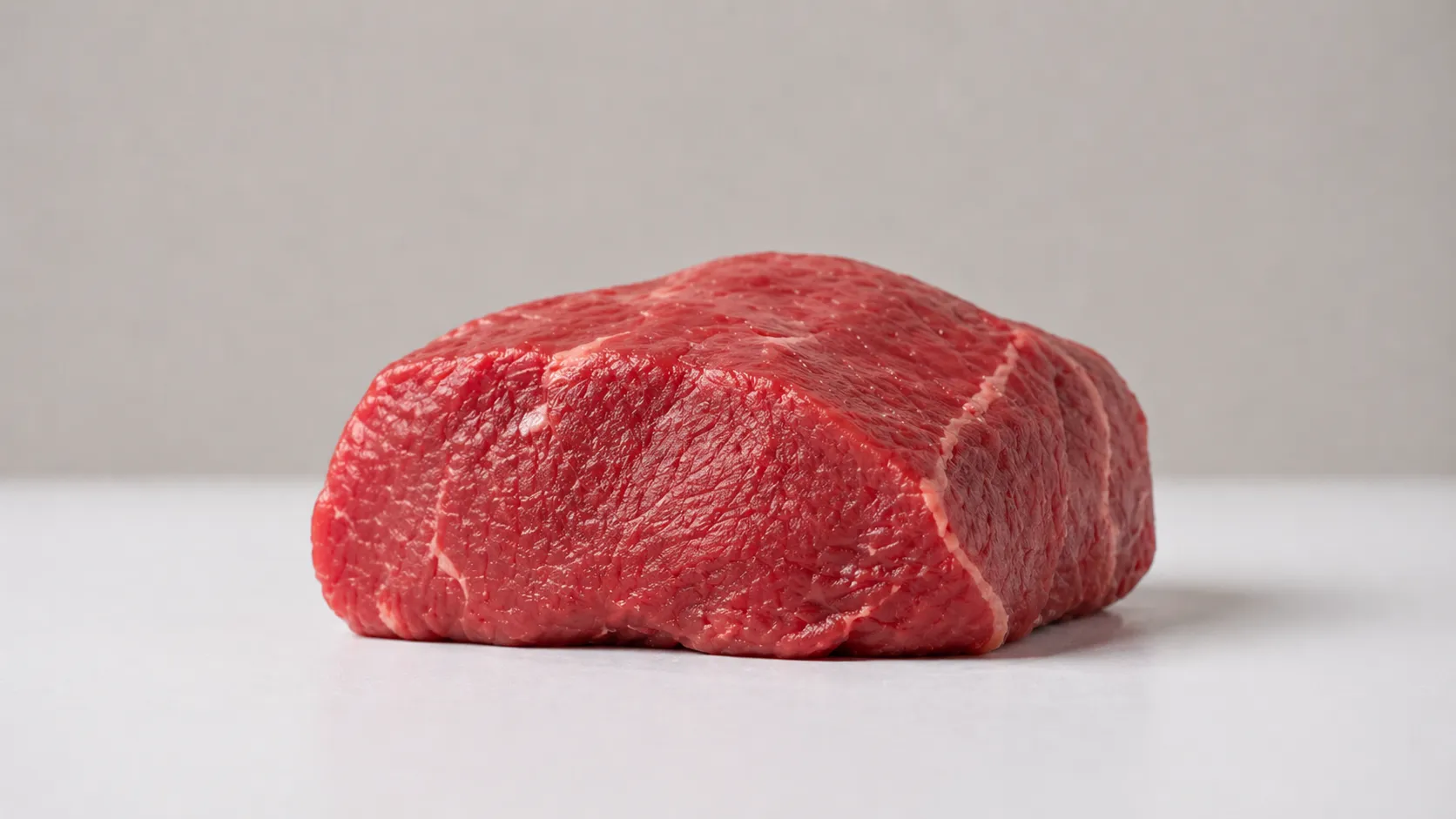
Choking risk
Firm or chewy beef chunks are a moderate choking risk.
Serve it finely ground or shredded and kept moist with sauce, gravy, or oil, not as firm cubes or tough steak. See how to serve for how to prep it by age.
Allergens
Beef is not a common food allergen, so a true allergy is rare, and babies with a cow's milk allergy can usually eat beef without trouble.[2]
Start with a small amount and watch for a reaction.
If baby refuses
Dryness is the main reason beef is refused, so keep it moist - slow-cook or stew it, or stir ground beef into a familiar sauce, soup, or pasta. Soft meatballs are accepted better than loose crumbles.
Food safety
Cook ground beef to 160°F - grinding spreads surface bacteria through the meat, so it must never be pink.[4]
Use a thermometer, or check it is steaming hot throughout with no pink and clear juices. Wash hands, boards, and utensils after raw beef, away from ready-to-eat foods.[5]
How to serve
6+ months old
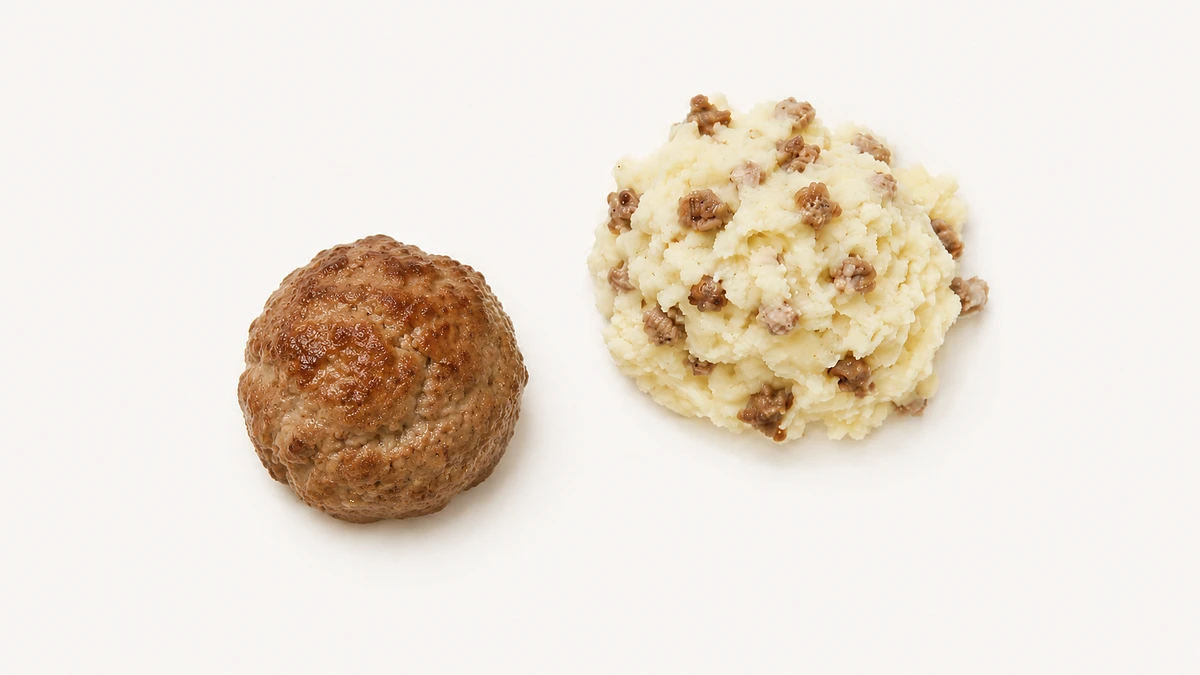
Finely ground stirred into soft food, or a big soft meatball
Serve beef soft and moist - finely grind or shred it so there are no long strands, then stir it through a scoopable food like mashed potato or vegetables, or loosen it with a little gravy or a drizzle of oil. Let baby scoop with their hands, or offer it on a pre-loaded spoon.
Soft meatballs bound with breadcrumb and a little milk are another good option at this age - big enough to grip and gnaw, and soft enough to squash. Just note the breadcrumb and milk bring in wheat and dairy, so serve these once your baby has tried each on its own.
Skip firm cubes and chewy chunks for now, since they're hard for a baby to break down.
How to cook
Slow-cook, braise, or stew to keep the meat tender, or brown ground beef in a pan and drain the fat. Cook ground beef to 160°F - check with a food thermometer, or make sure it's browned through, isn't pink inside, and the juices run clear.[4]
9+ months old
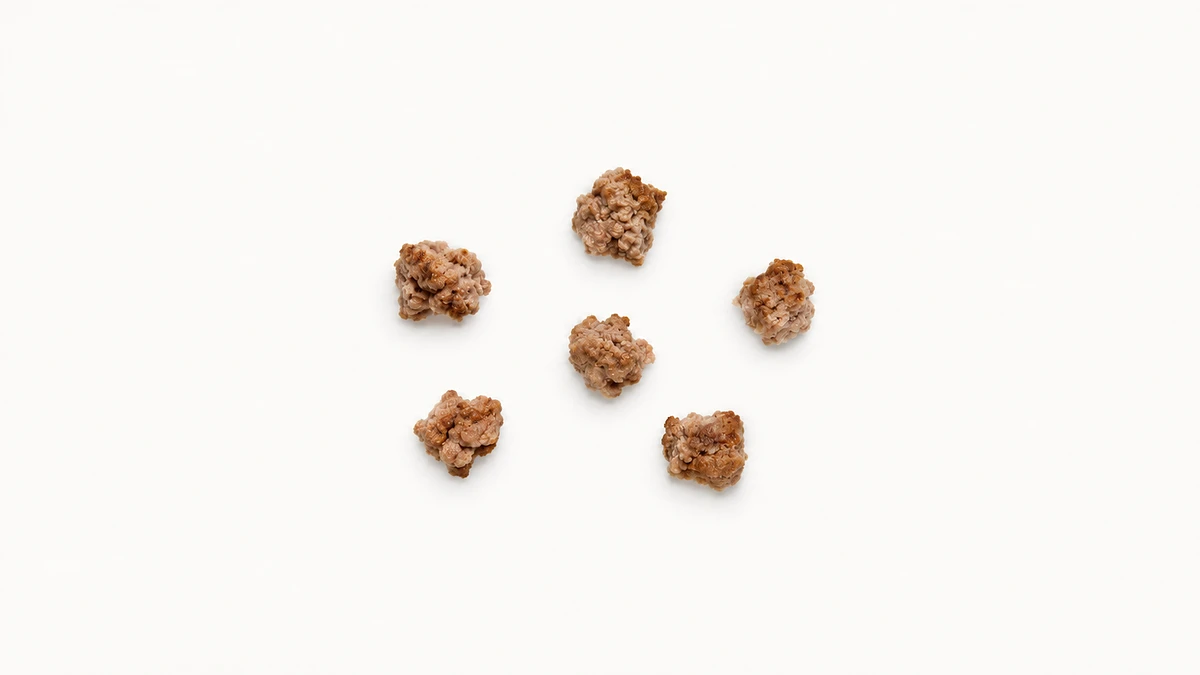
Finely shredded, or soft meatballs
Pea-sized pieces, or a soft meatball to hold
As the pincer grasp develops, offer finely shredded beef or bite-sized pieces of soft meatball for picking-up practice. Keep everything moist with a sauce or a little oil.[1]
Keep avoiding firm cubes and chewy chunks. Cooking ground beef into a sauce or stew, or binding meatballs with breadcrumb and egg, keeps them soft.[1]
How to cook
Slow-cook, braise, or stew so the beef stays soft, with ground beef and meatballs cooked to 160°F - check with a food thermometer, or make sure it's browned through, isn't pink inside, and the juices run clear
12+ months old
Small soft pieces, meatballs, or ground in sauce
Bite-sized soft pieces, about 1/2 inch
Offer small, soft pieces of beef, meatballs, or ground beef stirred through a sauce as finger food, or let your toddler practice with a fork. Keep it moist with a sauce or gravy, and still skip dry, firm cubes and chewy steak.
Beef now works well stirred into family dishes like bolognese, cottage pie, stews, and chili. A soft burger or meatball works too, though many toddlers take it apart and eat the pieces, which is fine.
How to cook
Slow-cook, braise, stew, or pan-cook as part of a family meal, with ground beef and burgers cooked to 160°F - check with a food thermometer, or make sure it's browned through, isn't pink inside, and the juices run clear
Sources
- Choking Hazards (Infant & Toddler Nutrition) - CDC
- Food Allergies (the 9 major US allergens) - FDA
- About Alpha-gal Syndrome (tick-acquired red-meat allergy) - CDC
- Ground Beef and Food Safety (cook to 160°F) - USDA FSIS
- Safe Minimum Internal Temperature Chart - USDA FSIS
- Iron (Infant & Toddler Nutrition) - CDC
- Beef, ground, 90% lean meat / 10% fat, patty, cooked (FDC 171793) - USDA FoodData Central