 HeySolids
Choking risk
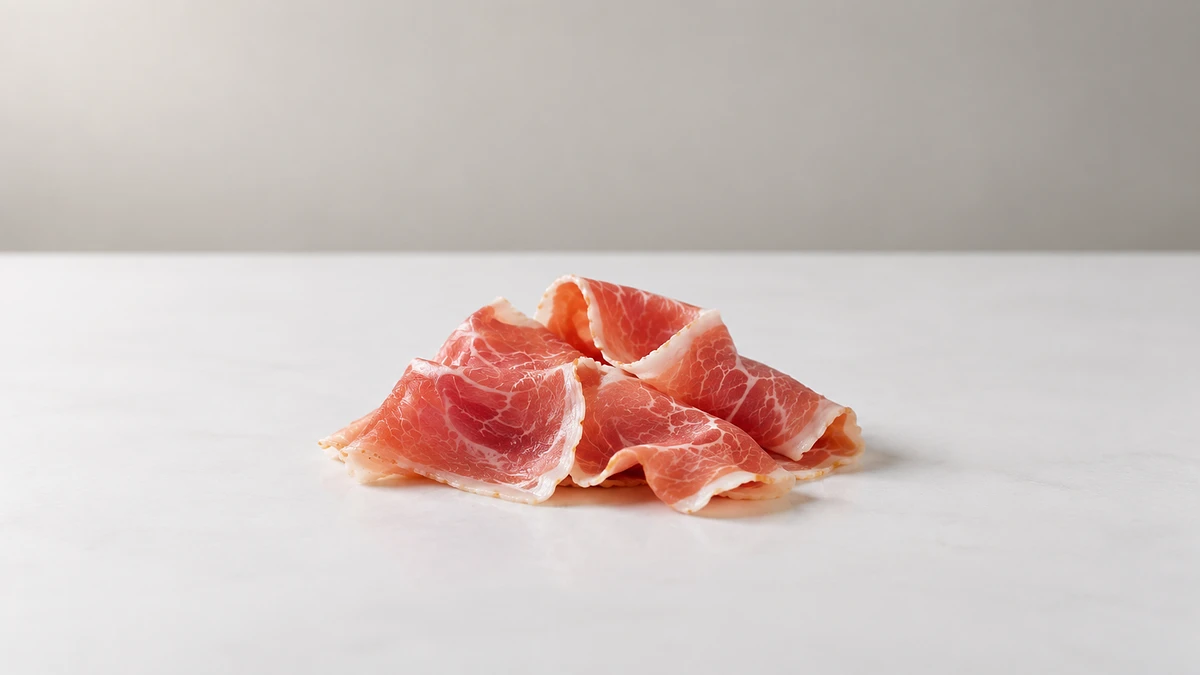
Deli meat is a moderate choking risk - a thin slice is floppy, and a folded or wadded piece can flatten over the airway instead of breaking apart.
Cut slices into narrow strips or small pieces rather than handing over a whole or folded slice. See how to serve for age-by-age prep.
Allergens
Deli meat is not itself a common food allergen, but it's a processed product, and some brands add milk, soy, or wheat as binders or flavorings.[1]
Read the ingredient list on the one you buy, especially if baby has a known allergy. Start with a small amount and watch for a reaction.
Food safety
Deli meats are ready-to-eat, and that's exactly why they carry a listeria risk - the bacteria can survive processing and keeps growing slowly in the fridge. For young children and others at higher risk, heat cold cuts to 165°F or until steaming hot, then cool before serving.[2]
They're also among the saltiest meats sold, and a processed meat besides - two reasons to keep them occasional and let fresh-cooked meat be the default.[3][4]
How to serve
Up to 12 months old
Skip deli meat - offer freshly cooked meat instead
Skip cold cuts in the first year - they're high in salt, processed, and carry a listeria risk that matters most for the youngest eaters.
What to offer instead
Meat you roasted yourself, shredded or finely chopped, gives the same easy protein with none of the trade-offs. Cook once, portion it, and freeze for the week.
12+ months old
Small pieces or strips, heated until steaming
From around a year, deli meat is fine now and then. Cut it into narrow strips or small pieces - never a whole folded slice - and heat it until steaming, then cool, to handle the listeria risk.
Keep it to the odd lunch rather than a regular one. The Dietary Guidelines put deli meat in the group of salty, ready-to-eat processed foods to avoid, and the numbers show why: 1 oz of deli ham carries around 250 mg of sodium, and a one-year-old should stay under 1,200 mg for the whole day. A small sandwich filling uses up a third of that. Plain roast chicken or beef gives more protein and more iron, with none of the salt.
If you do buy it, choose lower-sodium cuts like plain roasted turkey or chicken breast over salami and bologna.