 HeySolids
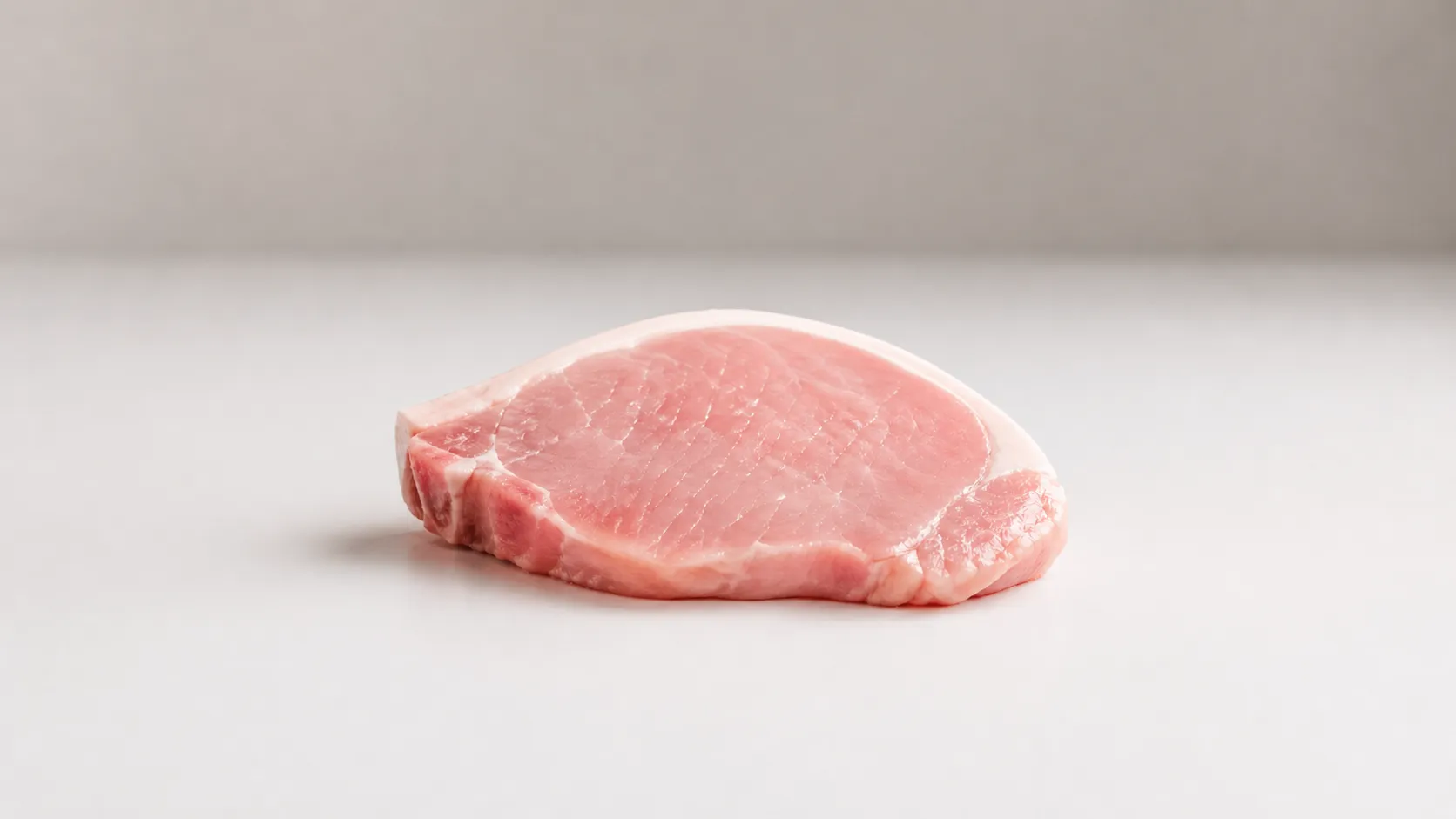
Choking risk
Pork is a moderate choking risk when it's dry or in firm chunks - lean cuts like chops stiffen as they cook and don't break down easily when chewed.
Serve it finely shredded or ground and kept moist with sauce, gravy, or a little oil, not as firm cubes or dry chops. Slow-cooked cuts like shoulder shred softest. See how to serve for age-by-age prep.
Allergens
Pork is not a common food allergen, so a true allergy to it is rare.[2]
Start with a small amount and watch for a reaction.
If baby refuses
Dryness is the main reason pork is refused, so keep it moist - slow-cook or stew it, or stir shredded pork into a familiar sauce, soup, or pasta. Pulled pork and soft meatballs are accepted far better than a plain, dry chop.
Food safety
Cook whole pork (chops, roasts, loin) to 145°F and rest 3 minutes; cook ground pork to 160°F. Wash hands, boards, and utensils after raw pork. Skip cured and processed pork - bacon, ham, sausage, deli ham - as everyday food; they're high in salt. No added salt in the first 12 months, kept low after that.[4][5]
No thermometer? Safely cooked pork can still be slightly pink, so color won't tell you it's done. The reliable route is slow-cooked forgiving cuts: a shoulder that pulls apart easily with a fork has cooked long enough. For a chop, check the juices run clear and the meat feels firm, not squishy or shiny inside - and cook it through for a baby rather than leaving it rosy.[6]
How to serve
6+ months old
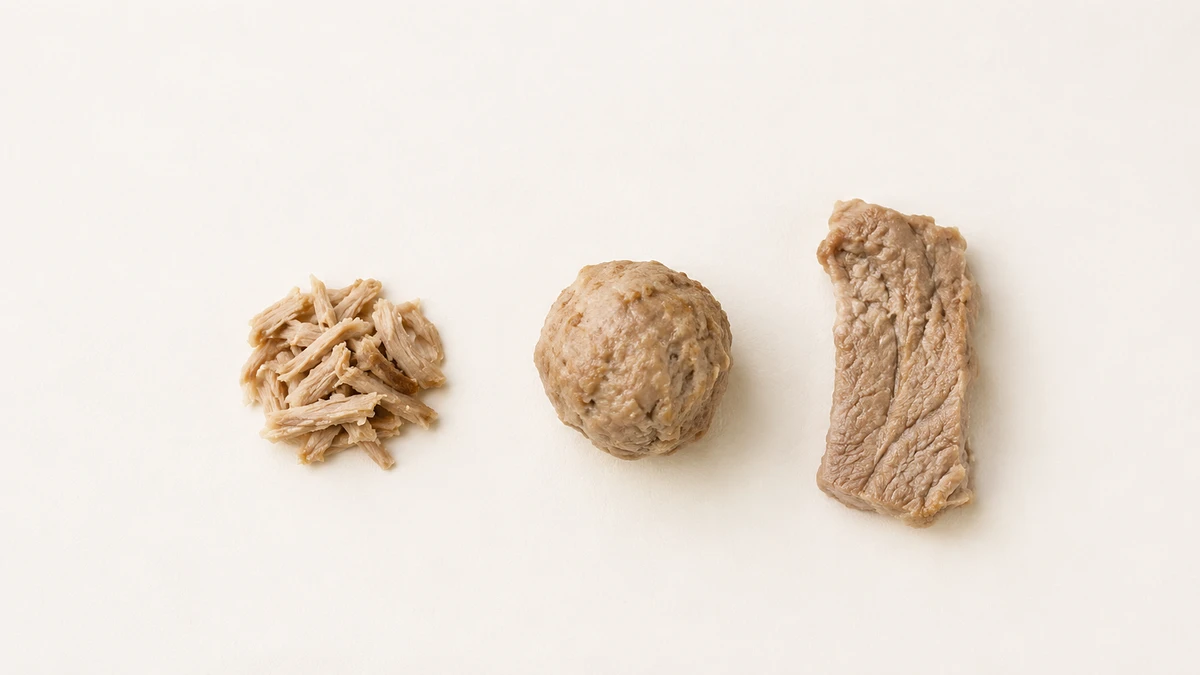
Finely shredded or ground, a big meatball, or a strip to grip
Shredded, a meatball about 2 inches, or a strip two fingers wide
Pork needs to be soft and moist for a baby. The easiest way is to slow-cook a fatty cut like shoulder until it falls apart, then shred it fine and stir it through mashed potato or vegetables.
You can also shape ground pork into a big soft meatball - bigger than a mouthful - for baby to hold and gnaw on, or hand over a strip of soft, shreddable pork to grip.
Whatever the form, keep it moist with a little of the cooking juices, a mild sauce, or a splash of oil. Steer clear of firm cubes and dry chops for now.
How to cook
Slow-cook or braise a fatty cut like shoulder until it's soft enough to shred - lean chops just dry out and go firm. For meatballs, use ground pork and cook it through to 160°F, kept soft and moist.
9+ months old
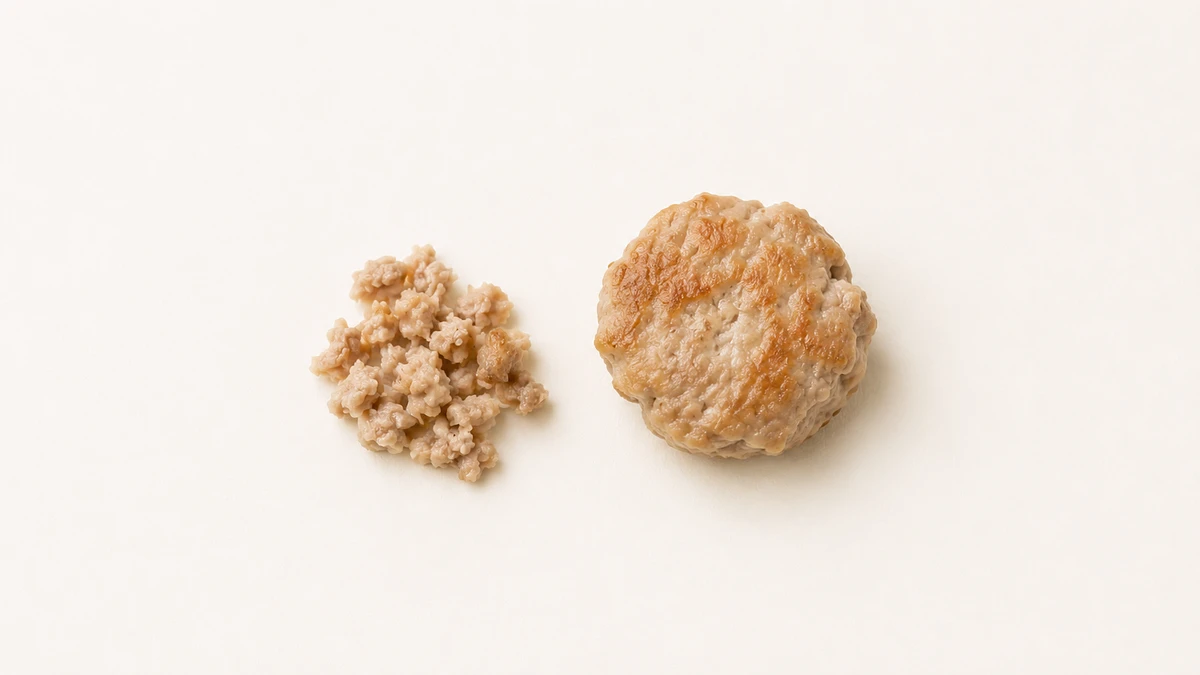
Finely chopped, small patties, or crumbles
Flattened patties, or pieces about 1/2 inch
As baby starts picking up smaller pieces, offer finely chopped soft pork, or flatten a soft meatball into a little patty that's easy to pick up and can't roll to the back of the mouth. You can also break a meatball into soft crumbles and stir them through mashed vegetables or pasta. Keep everything soft enough to squash, and keep it moist with a sauce.
A small whole meatball is only for once your baby chews well and doesn't stuff their mouth - otherwise flatten it or offer a larger one to bite from.
How to cook
Slow-cook or braise so the pork stays soft, or use ground pork cooked to 160°F into sauces and soft meatballs. Shred or chop finely and keep moist.
12+ months old
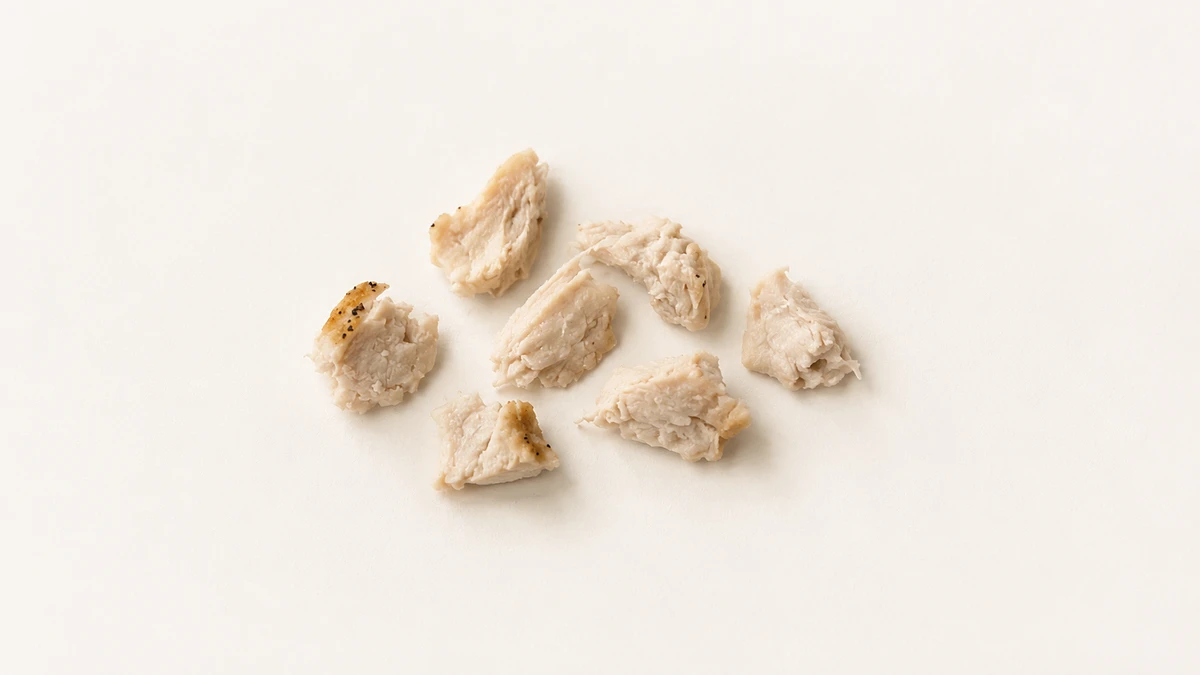
In family meals
Bite-sized soft pieces, about 1/2 inch
Offer small, soft pieces of pork alongside a fork for utensil practice, and stir shredded or chopped pork into family dishes like stews, ragùs, and rice. Keep it moist with a sauce or gravy, and still skip dry, firm pieces. Slow-cooked and ground pork stay the softest options.
How to cook
Braise, slow-cook, or cook ground pork into family dishes, keeping whole cuts to 145°F with a 3-minute rest and ground pork to 160°F. Keep it moist rather than letting it dry out.
Tips
- Slow-cook, don't reach for a chop. Pork shoulder cooked low and slow - a few hours until it pulls apart with a fork - is the softest, most forgiving cut you can give a baby, and it's almost impossible to overcook. Lean chops and tenderloin do the opposite, going firm and dry in minutes, so save those for later. Batch-cook a big piece, shred it, and freeze it in portions with a little of the cooking juices for soft pork ready whenever you need it.
- Apple is pork's natural partner. A little unsweetened apple - puréed, grated, or cooked down soft - cuts through pork's richness and adds moisture, which is exactly what leaner cuts need. Stir it through shredded pork or mix it into meatballs, and it does two jobs at once: flavour, plus the moisture that stops pork drying out.
- Keep something saucy nearby. Pork stiffens and dries as it sits on the plate or in the fridge, more than most meats. A spoon of gravy, a mild tomato sauce, or a splash of the cooking juices brings reheated pork back to soft - stir it through just before serving rather than letting it sit dry.
Sources
- Choking Hazards (Infant & Toddler Nutrition) - CDC
- Food Allergies (the 9 major US allergens) - FDA
- About Alpha-gal Syndrome (tick-acquired red-meat allergy) - CDC
- Fresh Pork From Farm to Table (cook to 145°F with a 3-minute rest; ground to 160°F) - USDA FSIS
- Safe Minimum Internal Temperature Chart - USDA FSIS
- Foods and Drinks to Avoid or Limit (honey, added sugar, salt) - CDC
- Pork, fresh, loin, whole, separable lean and fat, cooked, roasted (FDC 167816) - USDA FoodData Central