 HeySolids
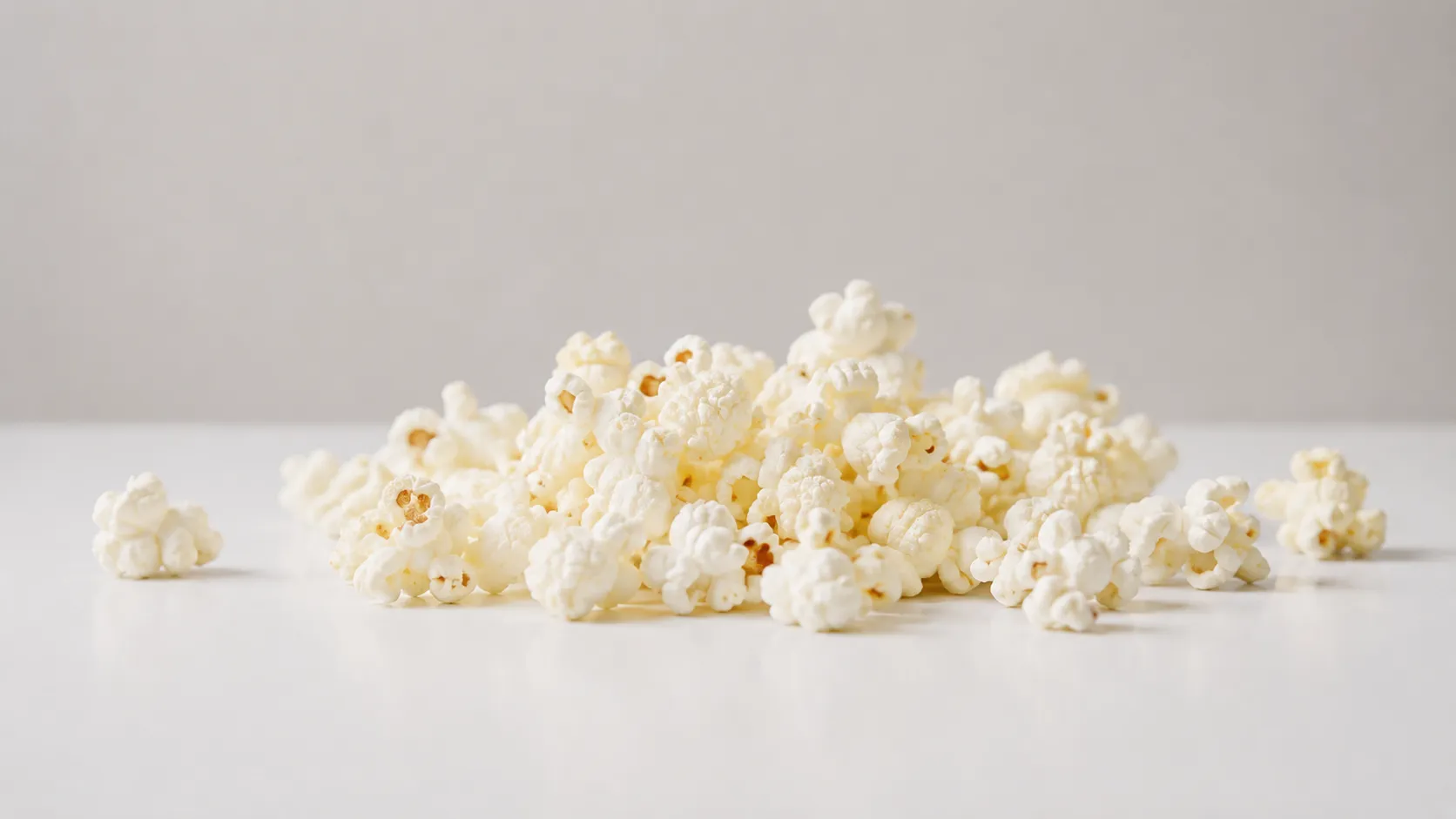
Choking risk
Popcorn is a high choking risk. The CDC lists it among the foods to avoid for young children, alongside chips and pretzels.[1]
There is no safe way to prepare it - the fluffy pieces are light enough to be inhaled, the hard unpopped and partly popped kernels are firm and irregular, and the sharp hulls can lodge in the windpipe. This is one to skip rather than adapt, and it's usually kept back until at least age 4. See how to serve for what to offer instead at each age.
Allergens
Popcorn is not a common food allergen, so a true allergy to it is rare. The reason to wait on popcorn is the choking risk, not allergy.[2]
Start with a small amount and watch for a reaction.
How to serve
Up to 4 years old
Skip popcorn - offer soft finger foods instead
Do not give popcorn before about age 4. It is one of the foods most often linked to choking in young children - the fluffy pieces are easily inhaled and the hard kernels and hulls can block a small airway, and there is no safe way to cut or soften it.
What to offer instead
Offer soft, age-appropriate finger foods baby can safely gum or chew, like soft-cooked vegetable sticks or strips of ripe fruit, and if the rest of the family is eating popcorn, keep it well out of reach.
4+ years old
Okay to offer now, with care
From around age 4, popcorn can go on the menu. Choose fully popped pieces and pick out any hard or partly popped kernels, which are the riskiest part.
Stay close while they eat, have them sit upright, and keep popcorn out of the car or anywhere they might be jostled. Serve it plain - store-bought popcorn is usually high in salt.