 HeySolids
Choking risk
Well-cooked purple potato is a low choking risk - soft and easy for babies to manage.
Cook it until a piece squashes easily between two fingers, and never serve it raw or firm. See how to serve for age-by-age prep.
Allergens
Purple potato is not a common food allergen, so a true allergy to it is rare.[1]
A potato allergy can happen but is unusual, and it most often shows up in babies who already have eczema or other food allergies. Start with a small amount and watch for a reaction.[1]
If baby refuses
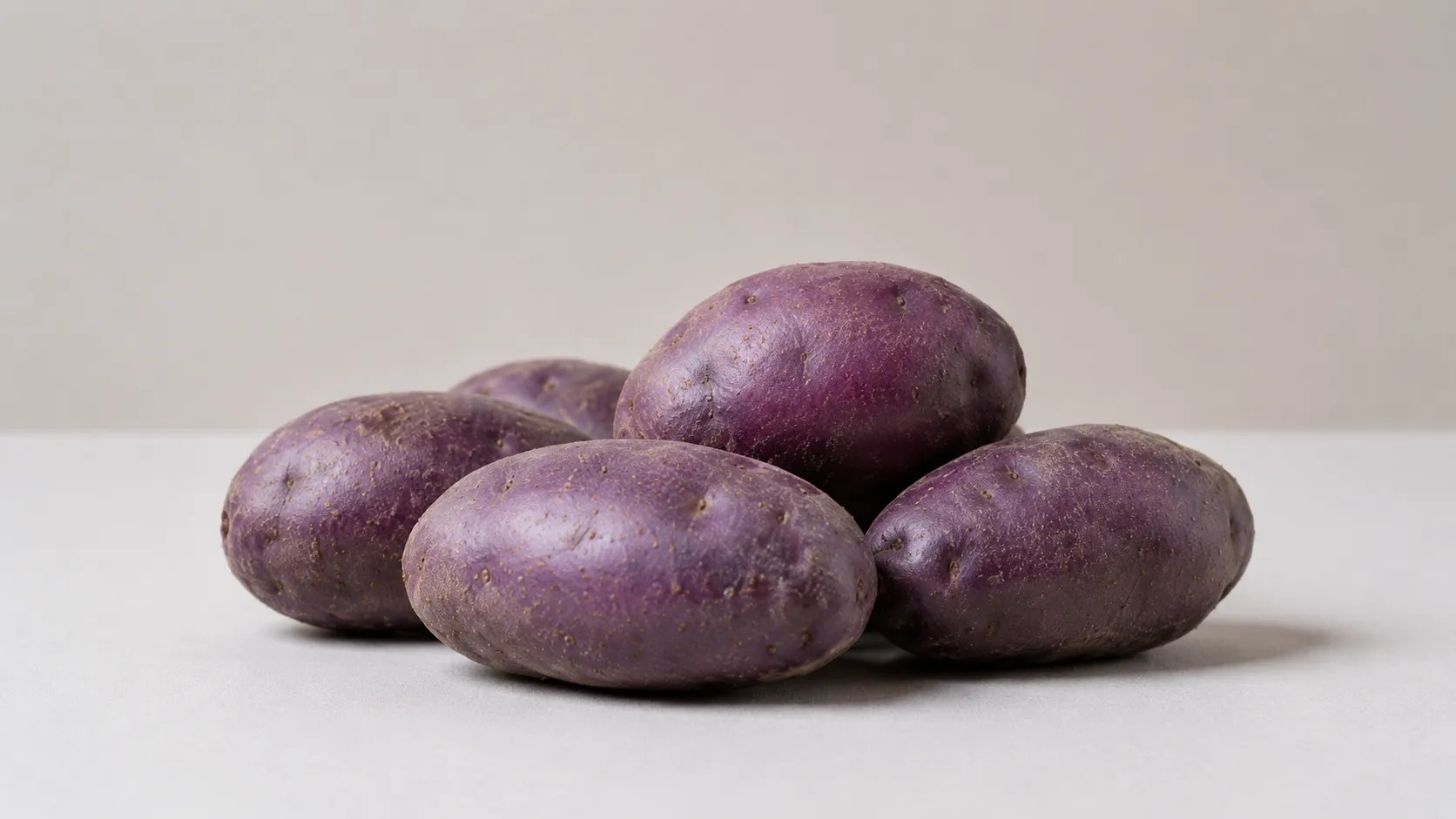
The bright color often wins babies over. If it's turned down, switch the shape - creamy mash, a soft wedge, or small pieces - and serve it warm. Mashing it with a regular potato softens the color, and offering again in a day or two often helps.
Food safety
Green spots and sprouts mean a potato has built up solanine, which can upset a baby's stomach, and cooking doesn't remove it.[2]
Cut away any green parts or sprouts before cooking, or toss a potato that's heavily green or sprouted. Store them somewhere cool and dark, and scrub well before cooking.[3]
How to serve
6+ months old
Large soft wedge or smooth mash
Wedge about the width of two adult fingers
Serve smooth mash on a pre-loaded spoon, or offer a large soft wedge for baby to hold and suck on. Stir in a little breast milk, formula, or olive oil for richness, and leave the salt out. Peel it at this age, or leave the skin on only if baby is a confident gripper.
How to cook
Cut away any green parts or sprouts first. Boil or steam peeled chunks for 20 to 25 minutes, or bake whole at 400°F for 45 to 60 minutes, until the flesh squashes easily between two fingers. Don't add salt to the water.
9+ months old
Small soft pieces
About 1/2 inch, bite-sized
Cut soft-cooked purple potato into small pieces for pincer-grasp practice, and keep offering a soft wedge or some mash alongside if baby struggles with small pieces. The skin can be left on or removed now.
How to cook
Boil, steam, bake, or roast until tender, cutting away any green parts or sprouts first. Pieces should still squash easily between two fingers. Keep it unsalted and avoid frying.
12+ months old
Small pieces or soft wedges
Bite-sized, about 1/2 to 1 inch
Offer bite-sized pieces or soft roasted wedges alongside a fork for utensil practice. Purple potato fits family meals now - mashed next to fish or chicken, roasted, or stirred into soups and stews, where its color makes a fun plate. Keep it unsalted, and continue to avoid chips and fries.
How to cook
Boil, steam, bake, or roast until soft, cutting away any green parts or sprouts first. As chewing skills grow you can leave a little more texture, but keep pieces soft enough to squash easily.
Tips
They cook firmer than white potatoes and hold their shape longer, so they need a few extra minutes before a piece presses easily between two fingers. Check rather than going by the clock.
Sources
- Allergy to cooked white potatoes in infants and young children - J Allergy Clin Immunol 2002 (PubMed 12209106)
- Are green potatoes safe to eat? (solanine in green and sprouted potatoes) - Poison Control
- Selecting and Serving Produce Safely (washing) - FDA
- When, What, and How to Introduce Solid Foods - CDC
- Foods and Drinks to Avoid or Limit (added sugar, salt) - CDC
- Potatoes, raw, flesh and skin (FDC 170026) - USDA FoodData Central