 HeySolids
Choking risk
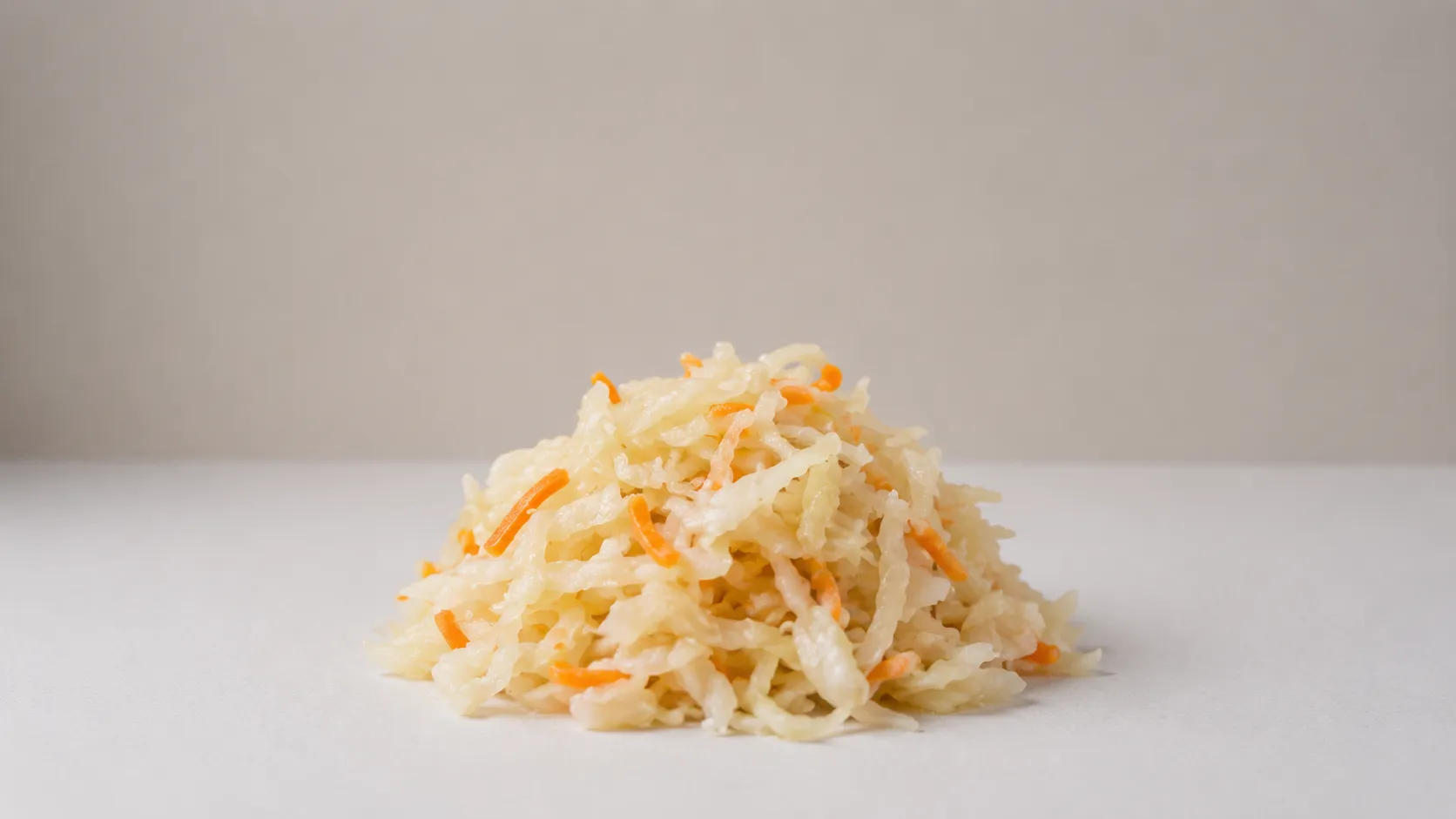
Sauerkraut is a low choking risk - it is soft, finely shredded cabbage, though long stringy strands can ball up in the mouth.
Chop any long strands small and mix them into a soft, scoopable food. See how to serve for age-by-age prep.
Allergens
Sauerkraut is not a common food allergen, so a true allergy to it is rare.[1]
Some jarred kinds add other ingredients, so check the label if your baby has known allergies. Start with a small amount and watch for a reaction.
If baby refuses
Sauerkraut is sour and salty, and that combination usually takes many tries. Mix a small amount through a dish they already like, or pair it with something naturally sweet to soften the sour edge. Keep the amount the same each time rather than building it up. This is a taste, not a portion.
Salt
Sauerkraut is preserved in salt and stays salty even after rinsing, so keep it to a small, occasional taste rather than a regular food. Don't add salt to food in the first 12 months, and keep it low through the toddler years.[2]
Rinsing under cold water and choosing a lower-salt brand both bring it down. Plain cooked cabbage is the everyday way to serve the same vegetable.
How to serve
Up to 2 years old
Best to skip - offer plain cooked cabbage instead
Sauerkraut is cured in salt, and salt is what preserves it. Even a normal serving carries too much for a child under 2.
What to offer instead
Soft, finely chopped plain cooked cabbage gives the same vegetable without the salt.
2+ years old
Small rinsed amounts in family dishes
After age 2, a small amount of sauerkraut can be mixed into a family dish now and then. Rinse it under cold water first to bring the salt down, and chop the strands short. Keep the rest of the meal low in salt.