 HeySolids
Choking risk
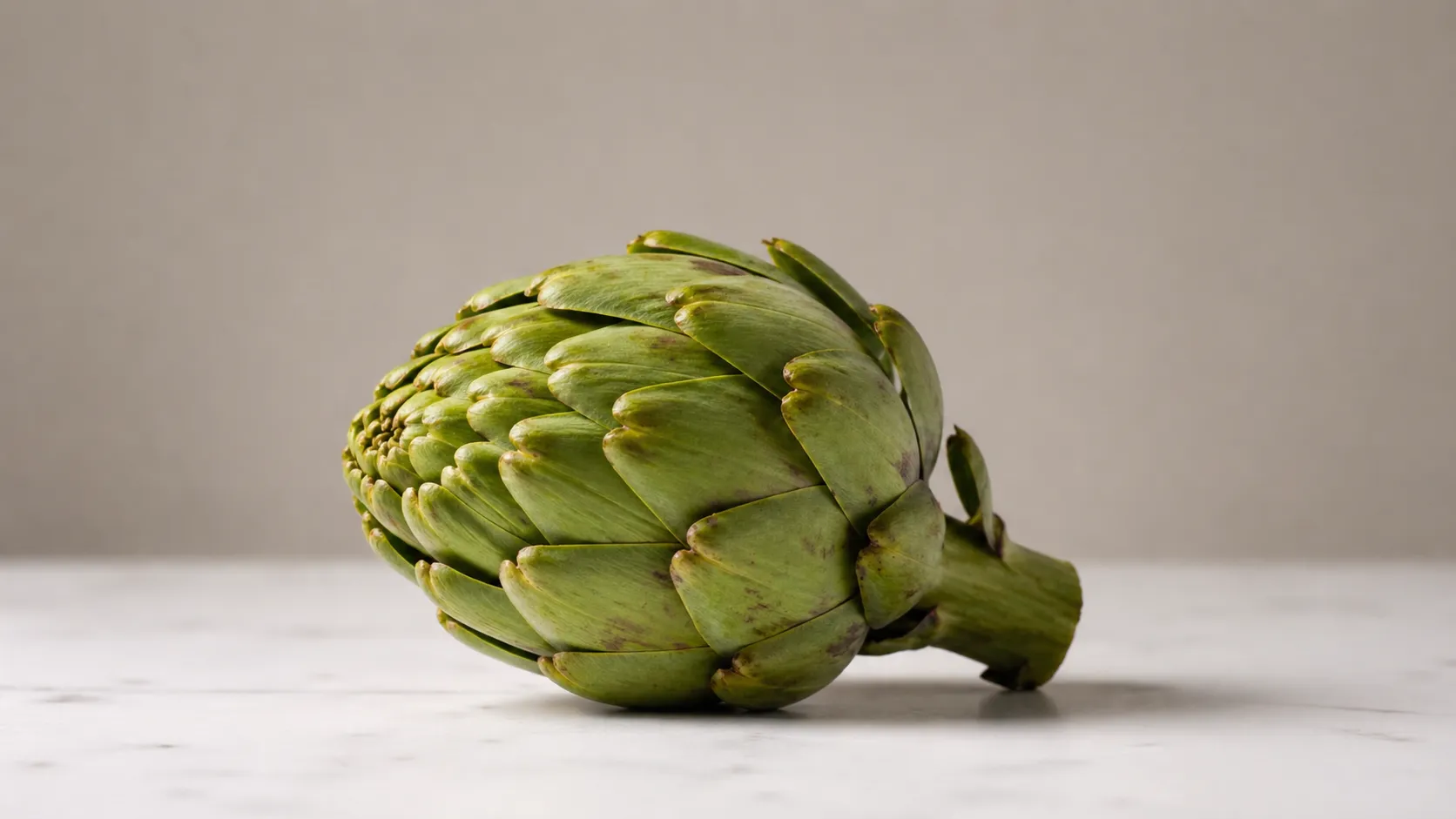
Artichoke is a moderate choking risk - the tough leaves are too fibrous for a baby to chew down, and the fuzzy choke in the center is worse: a mat of fine fibers that's hard to swallow and earned its name honestly.
Only the heart is served. Cook the artichoke until the heart is soft, strip away every leaf, scrape out all of the choke, and serve the heart mashed or in pieces that press easily between two fingers. See how to serve for age-by-age prep.
Allergens
Artichoke is not a common food allergen, so a true allergy to it is rare.[2]
Start with a small amount and watch for a reaction.
If baby refuses
For a baby's portion, skip the whole fresh artichoke - the prepared hearts are the practical route. Frozen hearts or canned hearts packed in water work well: rinse them before cooking, and check the label says plain.
Marinated hearts - the ones from a jar or the deli counter - are a different thing: they're brined and salty, so save those for the grown-ups.
Cooked artichoke keeps like any cooked vegetable: into the fridge within 2 hours, eaten within 3 to 4 days.
How to serve
6+ months old
Smooth mash, or a whole soft heart to hold
Heart only, leaves and choke removed
Serve only the soft heart, with every leaf and the fuzzy choke removed. Mash it smooth and stir it into avocado, yogurt, or mashed potato so baby can scoop it from a pre-loaded spoon, or offer a whole cooked heart to hold: it should press easily between two fingers, and be big enough that baby holds it and bites soft pieces from it rather than fitting it all in the mouth. Small hearts are the ones to mash.
Plain hearts - frozen, or canned in water with no added salt - work just as well as fresh, rinsed before cooking.
How to cook
Frozen or canned hearts: rinse, then steam or simmer until a piece presses easily between two fingers - frozen take about 10 minutes, canned just need warming through.
For a whole fresh artichoke: boil or steam it for 25 to 35 minutes, until the leaves pull off easily and the heart is completely soft, then strip the leaves, scrape out all of the choke, and use only the heart. A squeeze of lemon in the cooking water keeps the hearts from browning.
9+ months old
Small soft pieces
About 1/2 inch, bite-sized
Cut the soft, fully cooked heart into small pieces for pincer-grasp practice, keeping only the heart with all leaves and the choke removed. Make sure each piece squashes easily between your fingers. Mashed heart mixed into other foods still works well.
How to cook
Boil or steam until very tender, then trim to the heart and chop. Hearts can also be roasted or braised until soft. Keep them soft enough to squash easily between your fingers.
12+ months old
Soft pieces or in family dishes
Offer soft-cooked heart pieces for self-feeding, and let baby practice with a fork. Keep serving the heart only, with leaves and choke removed. This is a good time to stir chopped heart into family dishes like pasta, risotto, grain bowls, and dips.
How to cook
Boil, steam, roast, or braise until soft. Roasting trimmed hearts at 400°F for 20 to 25 minutes brings out a sweeter flavor. Keep the heart soft and avoid adding salt to baby's portion.