 HeySolids
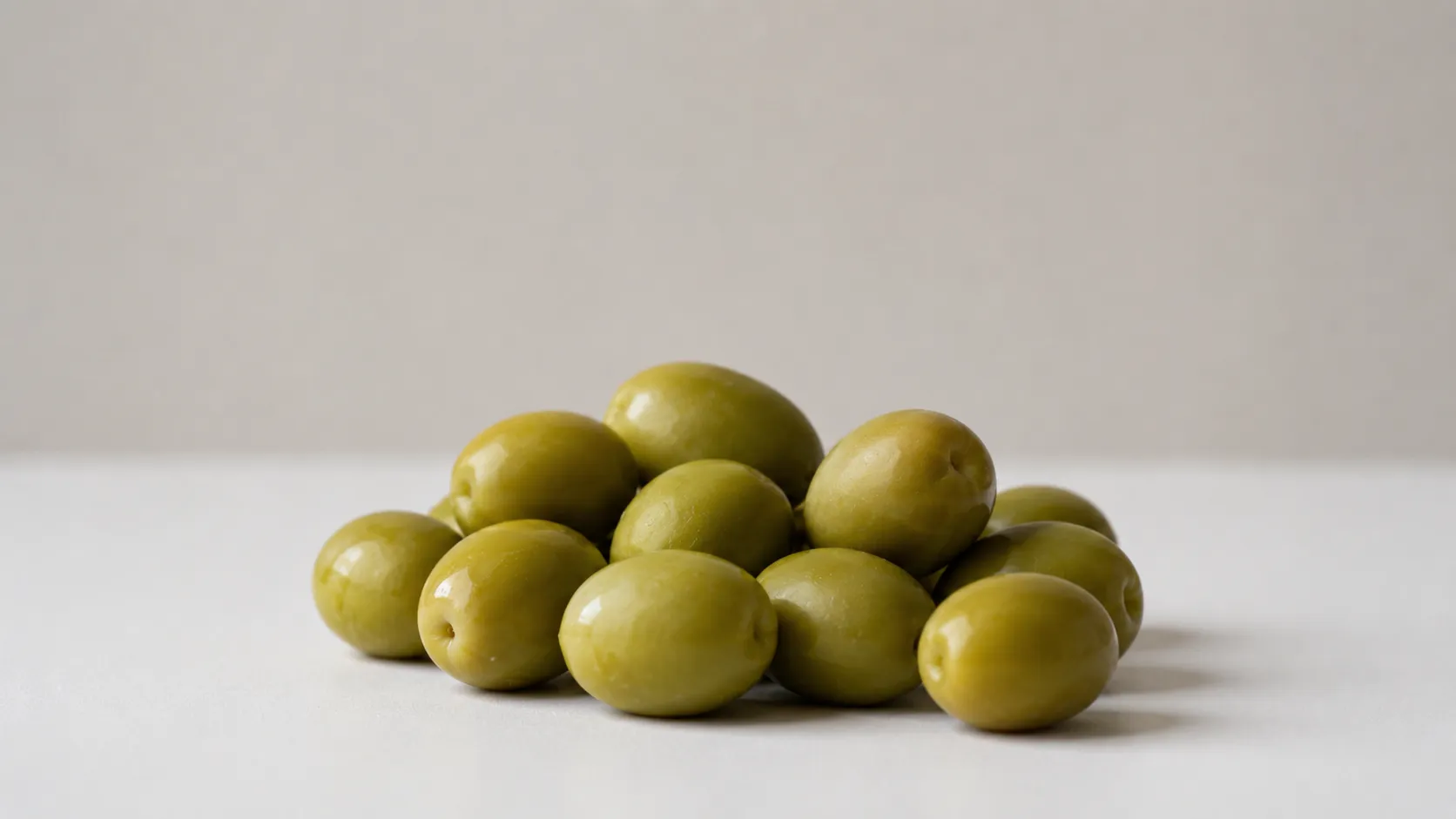
Choking risk
Olives are a high choking risk - round, firm, and exactly the size that's difficult for a baby to manage, and the pit is a hazard of its own.
Even olives sold as pitted can hide a pit or a fragment, so check each one through. Then quarter lengthwise or chop fine - never whole, and never in round halves, which keep the coin shape. See how to serve for age-by-age prep.
Allergens
Olives are not a common food allergen, so a true allergy to them is rare.[2]
Stuffed or marinated olives can carry other ingredients, such as cheese, nuts, or garlic, so read the label before serving. Start with a small amount and watch for a reaction.
If baby refuses
Olives are salty and intense - a lot on first meeting. Stir a tiny amount of rinsed, finely chopped olive into a dish baby already likes, such as a tomato pasta sauce, where a little seasons the whole thing, and build up slowly from there.
Food safety
Olives are a cured food - the brine isn't added salt on top, it's what makes an olive an olive, so there's no unsalted version to reach for. Babies should have no added salt in the first 12 months, kept low after that, which makes olives an occasional small taste, not a regular food. Rinsing helps: a good rinse under water takes the surface brine off, and lower-salt olives are worth choosing where they exist.[3]
How to serve
12+ months old
Pitted, rinsed, chopped small
Small chopped pieces, never whole
Check each olive through - even olives sold as pitted can hide a pit or a fragment - then rinse well and quarter lengthwise or chop fine.
Never whole, and never in round halves, which keep the coin shape.
Stir the pieces into family dishes where a little seasons a lot: a tomato pasta sauce, a grain bowl, a stew.
Olives stay an occasional small taste, not a regular food, and lower-salt olives are worth choosing where they exist.
Whole olives wait until around age 4, with the other firm round foods - and always pitted, at every age.
How to prepare
No cooking needed. Rinse under running water for a few seconds - it takes the surface brine off, though the olive stays a salty food through and through. Chop small on a board, checking for pit fragments as you go, and stir into the dish at the end so the flavor stays bright.
Tips
- Start with the mild black ones. The canned black olives are the gentlest door - the mildest cure, the lowest salt, and the softest flesh. Intensely brined olives like kalamata run saltiest and sharpest, so they're the ones to hold for later. Check the sodium line on the label; olives vary more than you'd guess jar to jar.
- Roll the olive before you trust it. The fastest pit check: press each olive flat under your thumb on the cutting board before chopping. A hidden pit or fragment announces itself instantly under pressure - and the flattened olive is already halfway to chopped.
- Tapenade is one for the grown-ups. Olive spreads and tapenades are concentrated olive plus capers, anchovies, and more salt - the saltiest form the food takes. Baby's olives arrive as a few rinsed, chopped pieces in a dish, not as a spread.