 HeySolids
Choking risk
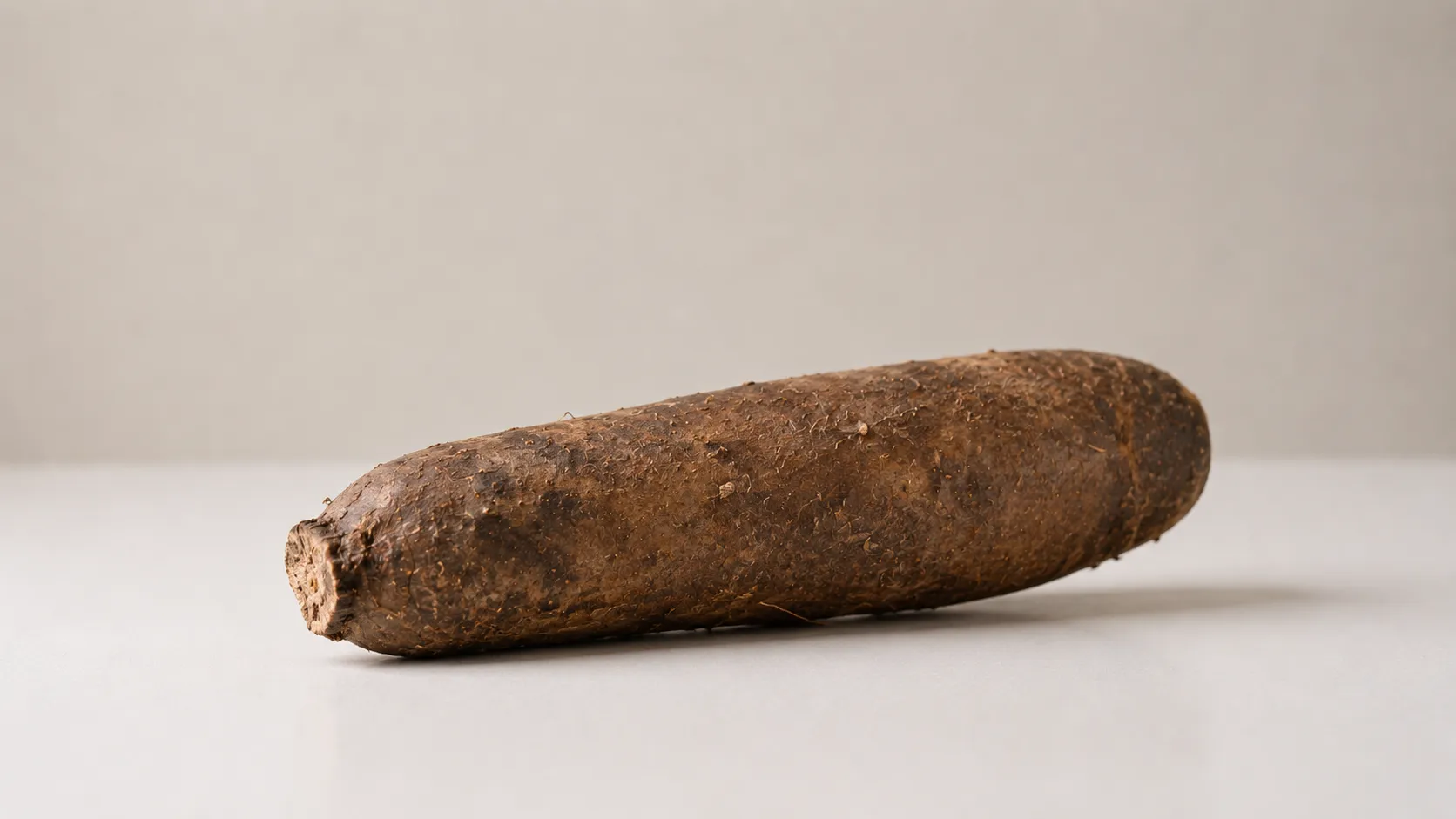
Yam is a moderate choking risk - raw or undercooked, it's hard and firm, and firm pieces are the hazard.
Peel it and cook it until a piece presses easily between two fingers, then serve smooth mash or large soft pieces. Skip firm chunks and round coins. See how to serve for age-by-age prep.
Allergens
Yam is not a common food allergen, so a true allergy to it is rare.[2]
Start with a small amount and watch for a reaction.
If baby refuses
Yam is starchy and mild, so flavor is rarely the problem - dryness usually is. Roast it instead of boiling for a sweeter, caramelized version, and stir in a little butter or coconut milk for richness. Serve it warm, and try again in a day or two. Keep offering it - tastes change with repeat tries.
How to serve
6+ months old
Large soft piece or smooth mash
Wedge about the width of two adult fingers
Offer a large soft piece for baby to grip and gnaw, or mash the cooked flesh smooth and serve on a pre-loaded spoon.
Yam is drier than sweet potato, so stir in a little breast milk, formula, oil, or butter to loosen the mash. Keep it unsalted.
How to cook
Peel off the thick skin, then boil or steam chunks for 20 to 25 minutes, or bake at 400°F for 45 to 60 minutes, until completely tender. It's done when the flesh squashes easily between two fingers.
9+ months old
Small soft pieces
About 1/2 inch, bite-sized
Cut soft-cooked yam into small pieces for pincer-grasp practice, or keep offering a larger piece or some mash alongside if baby struggles with small pieces.
Make sure every piece squashes easily between two fingers.
How to cook
Peel, then boil, steam, bake, or roast until tender throughout. Pieces should still squash easily between two fingers. Keep it unsalted and skip frying.
12+ months old
Small pieces or soft family-style portions
Bite-sized, about 1/2 to 1 inch
Offer bite-sized pieces alongside a fork for utensil practice.
Soft-cooked yam fits into family meals now - mashed, stirred into stews, or roasted until soft. Keep pieces soft and unsalted, and avoid heavily seasoned, fried yam dishes.
How to cook
Peel, then boil, steam, bake, or roast as part of family meals. As chewing skills grow you can cook it a little less for more texture, but keep pieces soft enough to squash easily between two fingers.