 HeySolids
Choking risk
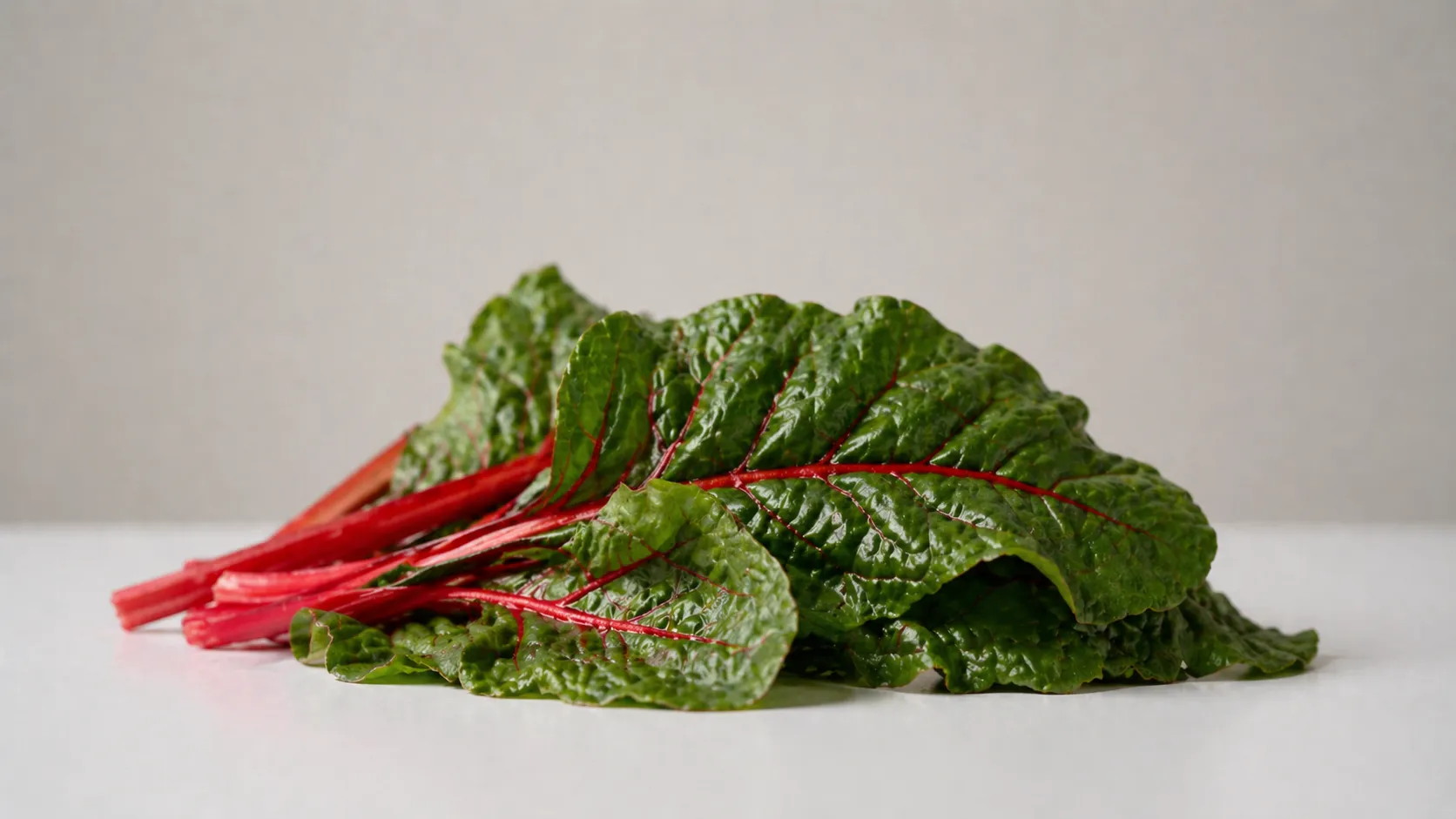
Chard is a low choking risk cooked soft - the thing to manage is the leaf itself, which can bunch up or stick to the roof of the mouth raw or undercooked, and the firm stalk is too hard for a baby as it comes.
Cut the stalks out, cook the leaves until very soft, then chop them fine or blend them into soft food rather than serving whole leaves. See how to serve for age-by-age prep.
Allergens
Swiss chard is not a common food allergen, so a true food allergy to it is rare.[2]
Start with a small amount and watch for a reaction.
If baby refuses
Chard is earthy with a slightly bitter edge, and that puts some babies off. Two fixes: cook it a little longer, which mellows it, and stir the chopped leaves through something mild - pasta sauce, mashed potato, an omelette, a soft grain dish. Keep offering it - tastes change with repeat tries.
Food safety
Chard holds grit in its folds and stalk grooves - wash the leaves well in a bowl of water, swishing and lifting them out so the sand sinks, before cooking.
How to serve
6+ months old
Finely chopped or blended into a soft food
A spoonful stirred through a soft food or puree
Cut out the firm stalks, cook the leaves until very soft, then chop them fine or blend them smooth. Stir the chard through something soft - mashed vegetables, oatmeal, yogurt - which keeps the leaf from sticking. Mixed half-and-half with a food baby already knows, the flavor lands gently too.
How to cook
Steam or simmer the stripped leaves for 5 to 8 minutes, until fully soft - chard cooks much faster than sturdier greens like collards, so don't walk away. Squeeze the cooked leaves gently to press out the extra water, then chop fine on a board or blend with a splash of baby's usual food.
12+ months old
Cooked and chopped into family dishes
Serve cooked chard chopped small and stirred through family dishes - soups, an omelette or frittata, beans and grains - and let your toddler practice with a fork.
The stalks get their turn now too: sliced thin and simmered until fully soft, they're a mild vegetable of their own, not waste. Serve chard as one green among several across the week, rather than the daily one.
How to cook
Cut out the stalks, then steam, simmer, or sauté the leaves until soft - chard cooks much faster than sturdier greens, so a few minutes does it. For the stalks, slice them thin across and give them a head start in the pan; they take a few minutes longer than the leaves. Cook family dishes without added salt and season the grown-ups' bowls at the table.