 HeySolids
Choking risk
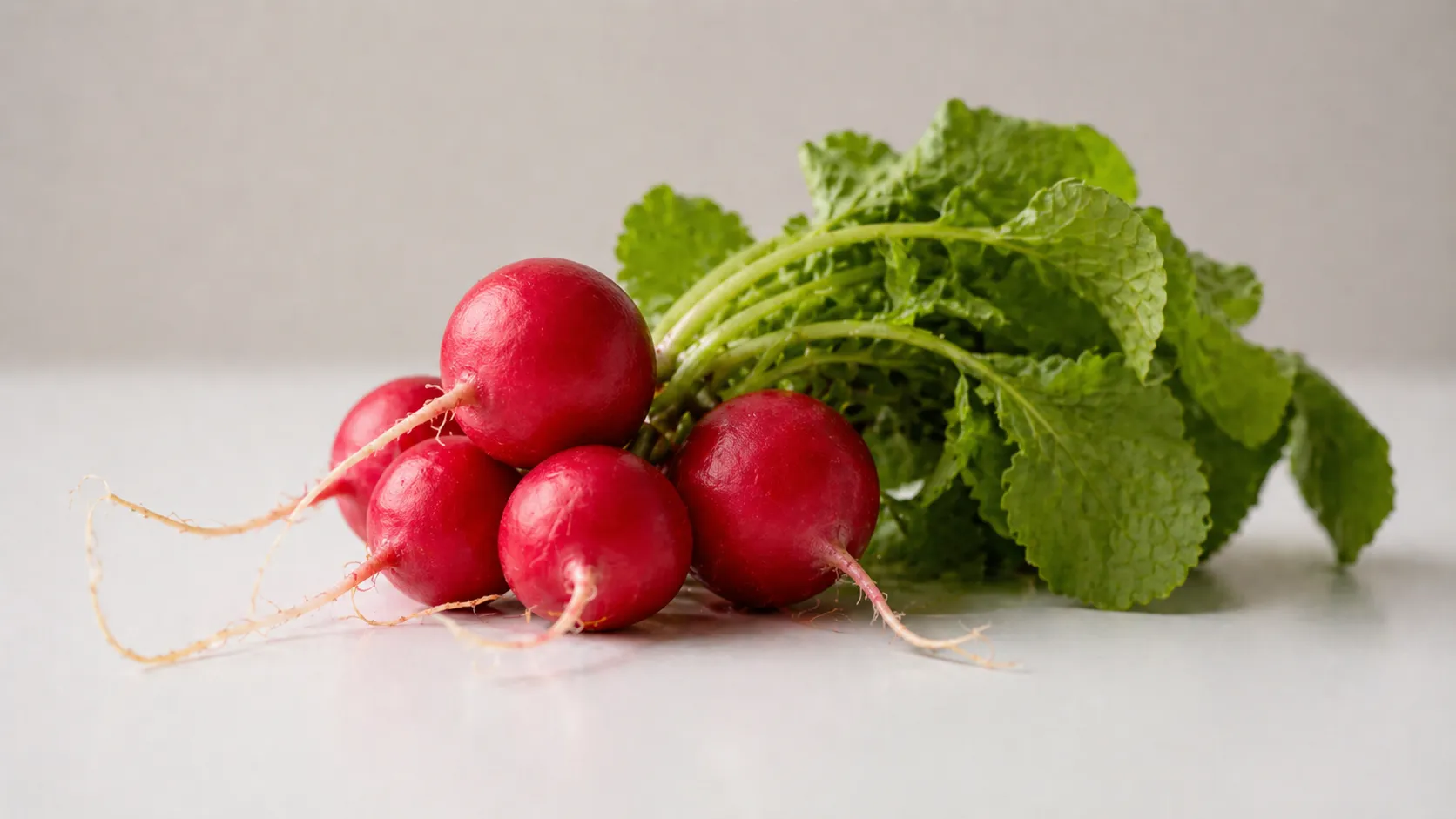
Radish is a moderate choking risk - small, hard, and round, exactly the size and firmness that's difficult for a baby to manage.
Cook it until a piece presses easily between two fingers, or serve it raw only grated or sliced paper-thin. Never whole, and never in firm round chunks. See how to serve for age-by-age prep.
Allergens
Radish is not a common food allergen, so a true allergy to it is rare.[2]
Radish is in the cabbage family, and like its relatives it can give some babies a little gas. That is normal and not a sign of an allergy.
Start with a small amount and watch for a reaction.
If baby refuses
Many babies pull a face at raw radish's peppery heat, which is fine - let baby decide and never force it. Cooking makes it milder and sweeter, so try roasting or steaming it soft, or mash it into potato or another root. It can take many tries before a new taste is accepted.
How to serve
6+ months old
Soft cooked pieces or smooth mash
Soft mash, or blended into other veg
Cook radish until very soft, then mash or blend it smooth and serve it on a pre-loaded spoon, or offer a large soft piece for baby to hold. It mixes well with potato or other roots, which softens the peppery flavor.
Never whole, and never in firm round chunks.
How to cook
Trim and wash, then steam or boil for 8 to 12 minutes, or roast at 400°F for around 20 minutes - cooking also mellows the pepper into something mild and sweet. It's done when a piece presses easily between two fingers. Add a little cooking water when blending for a smoother mash.
9+ months old
Small soft pieces or grated raw
About 1/2 inch soft pieces, or finely grated
As baby's pincer grasp develops, offer small soft pieces of cooked radish to pick up.
Finely grated raw radish stirred into other foods is another way to introduce its flavor.
Keep cooked radish soft and avoid firm round chunks of raw radish, which can break into hard pieces.
How to cook
Steam or boil for about 8 to 12 minutes, or roast at 400°F for around 20 minutes, which brings out more sweetness. Pieces should squash easily between two fingers.
12+ months old
Bite-sized soft pieces or paper-thin raw slices
Keep offering soft cooked radish alongside a fork or spoon for utensil practice.
As your toddler manages more texture, you can offer very thin raw slices or grated raw radish, and stir it into family dishes like roasted veg or salads.
Keep raw radish thinly sliced or grated rather than in firm round chunks through the toddler years.
How to cook
Steam, boil, or roast until soft, or slice raw radish very thinly. Roasting at 400°F for around 20 minutes mellows the heat and adds sweetness. As chewing skills grow you can leave a little more texture on cooked pieces.
Tips
Roast them like you would potatoes. Most people only ever eat radishes raw - cooked, they turn mild, juicy, and a little sweet, closer to a turnip than to their peppery raw self.