 HeySolids
Choking risk
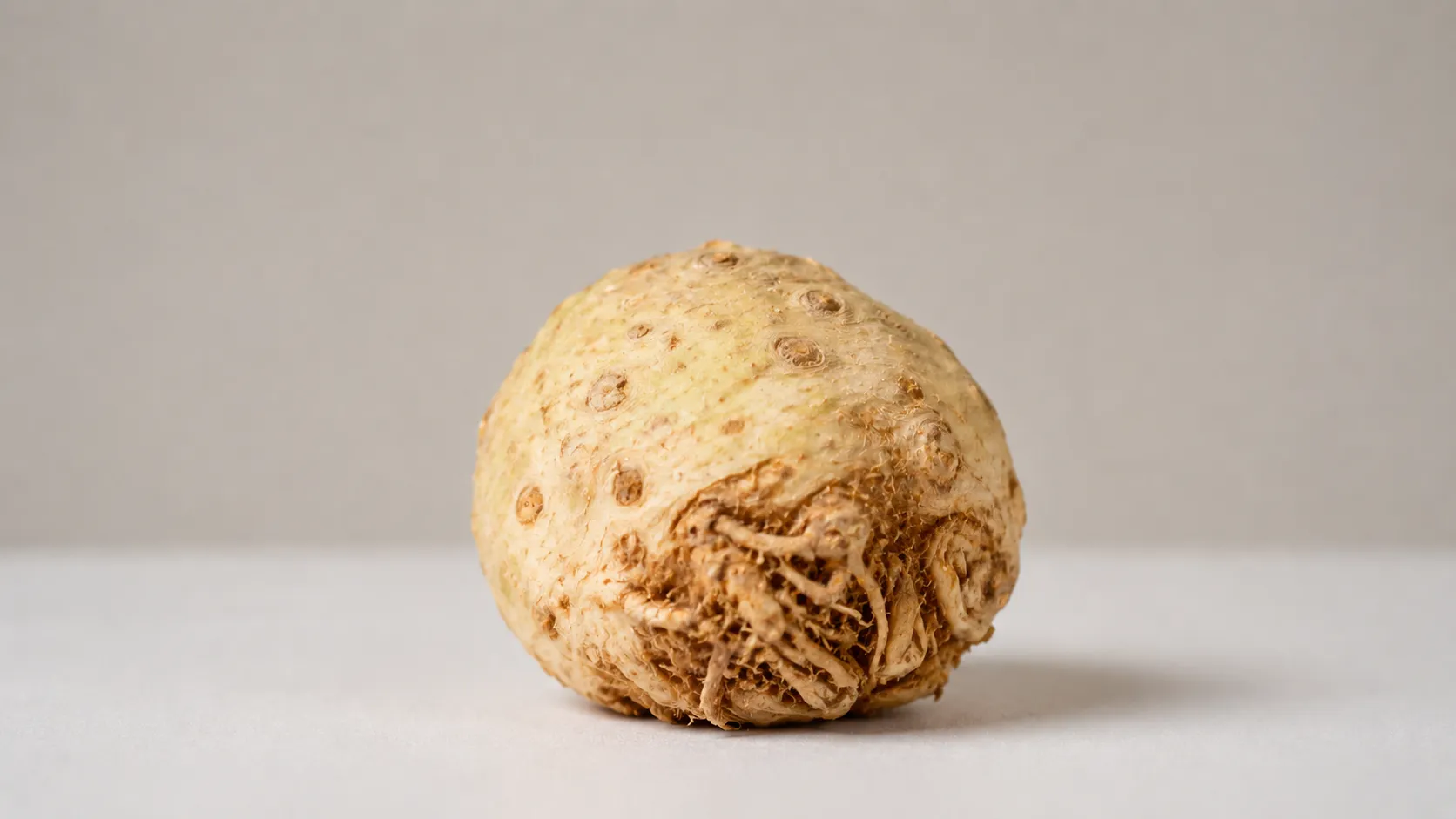
Celeriac is a moderate choking risk - raw or undercooked, it is hard and firm, and firm pieces are the hazard.
Peel away the thick skin, cook it until a piece presses easily between two fingers, then serve smooth mash or large soft batons. Skip firm chunks and round coins. See how to serve for age-by-age prep.
Allergens
Celeriac is a close cousin of celery - the same plant species, grown for its root instead of its stalks. Celery is not one of the major allergens here, though any food can cause a reaction, so introduce new foods one at a time.[2]
If you have read stronger celery warnings from European sources, that is real but regional - celery allergy is more common in Europe, where it is a labeled allergen; in the US it stays rare.
If baby refuses
The celery flavor can read as unusual at first. Mash it with potato to soften the taste, or roast it for a sweeter, nuttier flavor.
How to serve
6+ months old
Large soft baton or smooth mash
Finger-length, about the width of two adult fingers
Offer a large peeled baton of cooked-soft celeriac for baby to hold, or mash it smooth and serve it on a pre-loaded spoon. It mashes well with potato, which mellows the savory, celery-like flavor. If a piece breaks off, stay calm and give baby a moment to move it forward.
How to cook
Cut away the thick, knobbly skin with a knife - it is too rough for a peeler - then cut into batons or chunks. Drop the cut pieces into water with a squeeze of lemon if you are not cooking right away, since celeriac browns quickly. Steam or boil for 20 to 25 minutes, or roast at 400°F for 30 to 35 minutes, until very soft. It is done when a piece presses easily between two fingers. Blend with a little cooking water for a smooth mash.
9+ months old
Small soft pieces
About 1/2 inch, bite-sized
Cut soft-cooked celeriac into small pieces for pincer-grasp practice, and keep offering a larger baton alongside if baby struggles with small pieces. It also works as mash with a little texture, mixed with potato. Keep it cooked soft, since raw celeriac is too firm to chew.
How to cook
Peel and cut into pieces, then steam, boil, or roast until soft throughout. Roasting at 400°F for about 30 minutes brings out a sweeter, nuttier flavor. Pieces should still squash easily between two fingers.
12+ months old
Small soft pieces or roasted wedges
Bite-sized, about 1/2 to 1 inch
Offer soft roasted pieces alongside a fork for utensil practice. Celeriac fits easily into family meals now - mashed, roasted soft, or stirred into soups and stews. Mild spices like cumin and nutmeg pair nicely. Keep it cooked soft, since raw celeriac is still too firm to chew.
How to cook
Roast pieces or wedges at 400°F for 30 to 35 minutes until soft, or boil and mash. As chewing skills grow you can leave a little more texture, but keep it cooked through. Use plain fresh celeriac and avoid celery salt and salty stock cubes.