 HeySolids
Choking risk
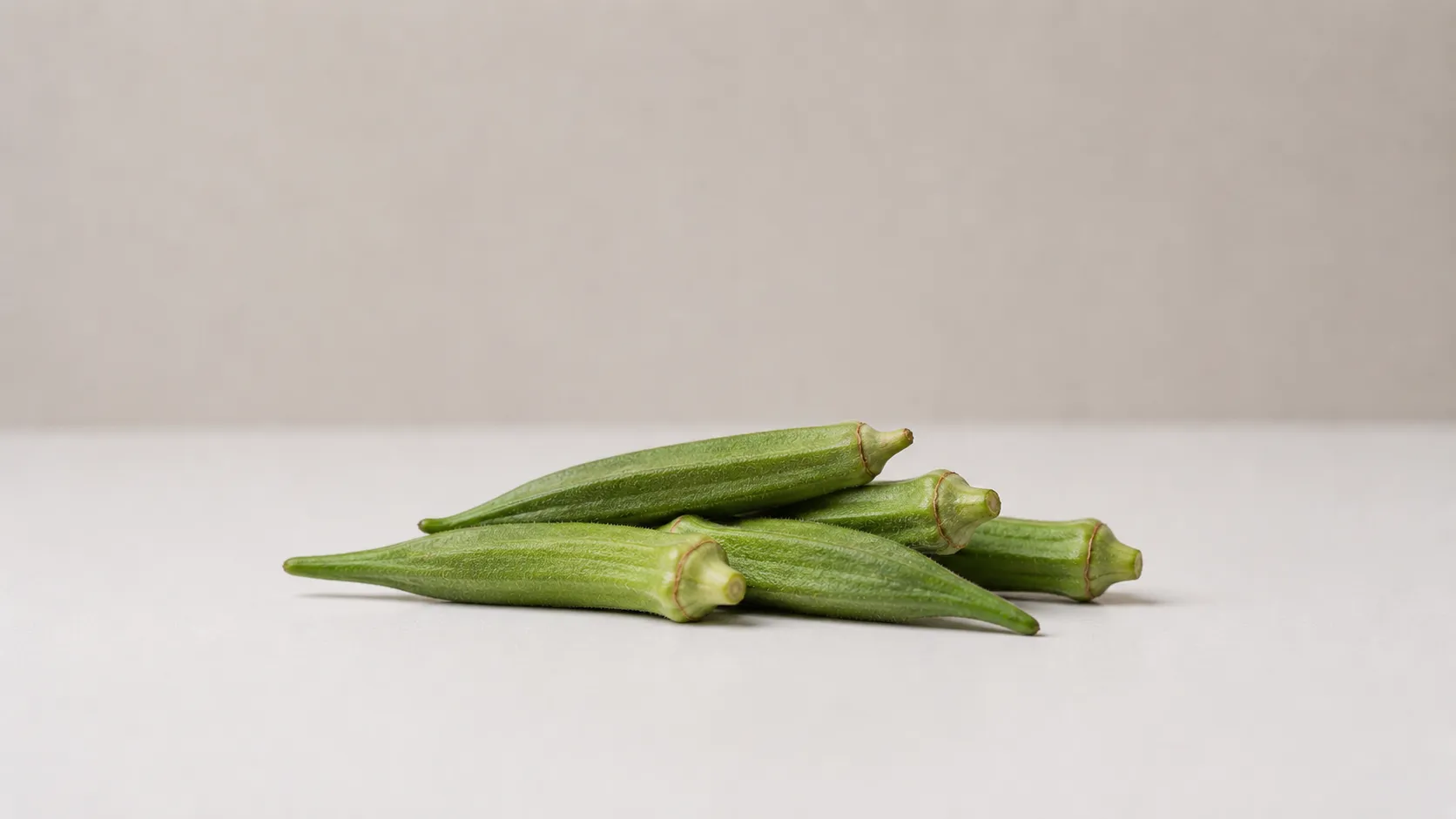
Okra is a low choking risk cooked soft - a whole firm pod is the thing to avoid, and raw okra stays too firm for a baby.
Cook it until a piece presses easily between two fingers, trim off the firm stem end, and serve it in soft pieces - halve any rings so nothing is a round coin. The soft seeds inside can stay; they're too small and soft to cause trouble. See how to serve for age-by-age prep.
Allergens
Okra is not a common food allergen, so a true allergy to it is rare.[2]
Start with a small amount and watch for a reaction.
If baby refuses
The slippery texture is the usual sticking point. Try roasting it hot until the edges crisp and the sliminess cooks off, or stir chopped okra into a well-flavored tomato sauce or curry where it blends in. Keep offering it different ways, since acceptance builds over time.
How to serve
6+ months old
Soft cooked pod or stirred into a soft dish
Cook okra until very soft and trim off the firm stem end, then offer a whole soft pod for baby to hold and gnaw, or stir chopped okra through a soft dish like a tomato and vegetable stew - eaten with hands or from a pre-loaded spoon. A piece should press easily between two fingers. The soft seeds can stay; they're too small and soft to cause trouble.
How to cook
Stew or steam for 10 to 15 minutes, or roast at 400°F for 15 to 20 minutes, until completely soft. Okra's slipperiness is actually on baby's side - it makes the pieces easy to swallow - but if it's not on yours, roasting or a little tomato in the pot cuts it right down.
9+ months old
Soft cooked pieces or halved rings
Bite-sized, about 1/2 inch
As the pincer grasp develops, offer soft cooked okra in bite-sized pieces - halve any rings so nothing is a round coin - with the firm stem end trimmed off, for picking-up practice. Slippery pieces are hard for small fingers: roll them in fine breadcrumbs for grip, or keep stirring chopped okra through soft dishes. A piece should press easily between two fingers.
How to cook
Stew or steam for 10 to 15 minutes, or roast at 400°F for 15 to 20 minutes, until completely soft, then slice and halve into bite-sized pieces.
12+ months old
Soft pieces in family dishes
Bite-sized, about 1 inch
Soft cooked okra works well in family dishes now - curries, gumbo-style stews - with a fork alongside for utensil practice.
Cook it fully soft, and expect some chewing and inspecting: okra can stay a little fibrous, and a toddler chewing a piece and spitting out a tougher bit is doing exactly the right thing.
Cook the family pot without added salt and season the grown-ups' bowls at the table - traditional gumbo runs salty, so baby's version is the pot before the seasoning goes in.
How to cook
Stew, roast, or stir-fry until completely soft as part of the family meal. A piece should press easily between two fingers, even at this age.
Tips
- Small pods are the tender ones. Big okra is old okra - woody and fibrous no matter how long it cooks. Pick pods around finger-length or shorter, and test one if you can: the tip should snap off clean. A pod that bends instead of snapping will be tough on the plate too.
- Slime is a choice. If the slipperiness bothers your family, three things cut it: dry heat (roast or sear rather than stew), acid (cook it with tomatoes), and keeping pods whole until after cooking. If it doesn't bother you, stew away - the silkiness is half of what makes okra easy for a baby to eat.