 HeySolids
Choking risk
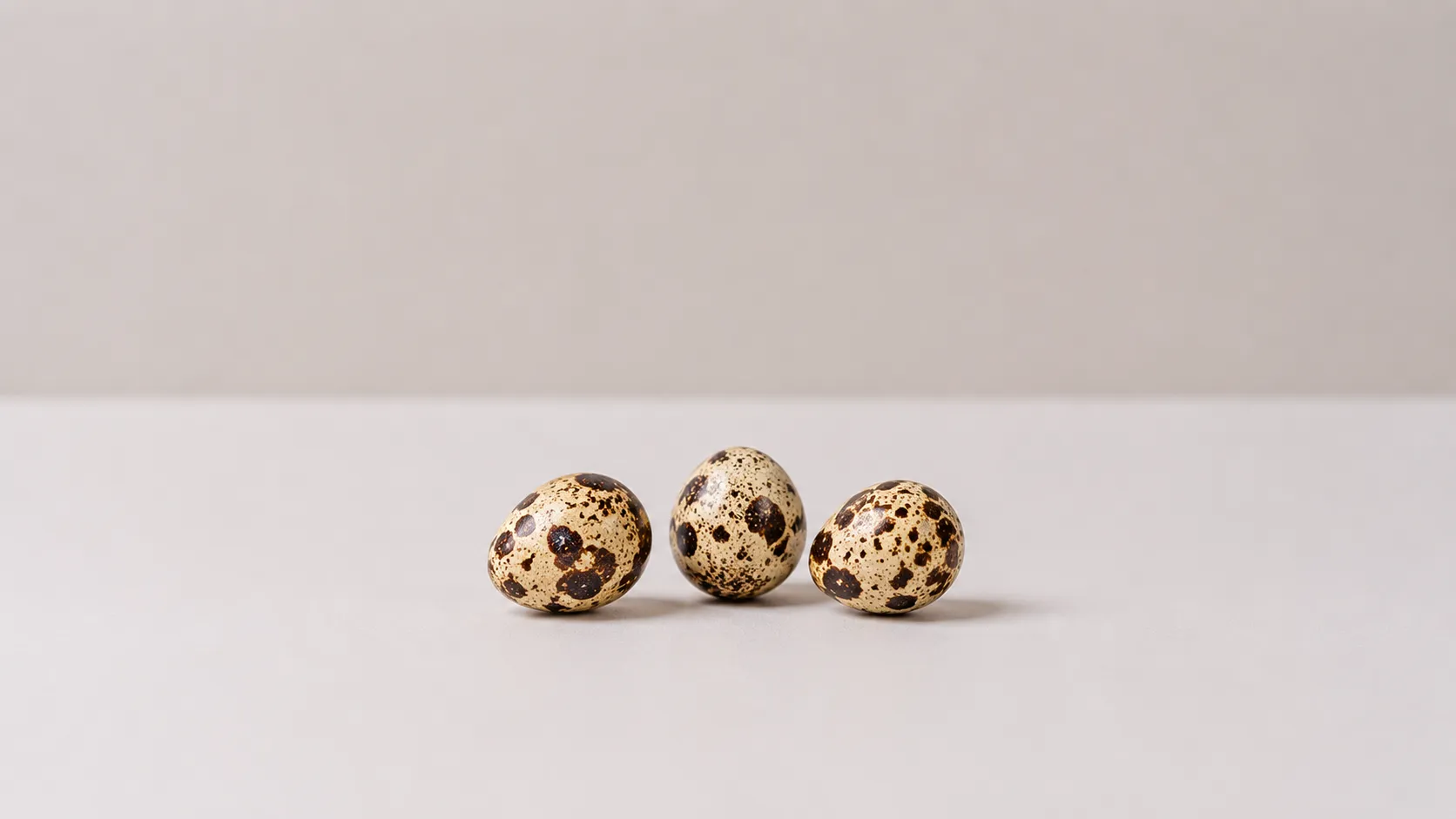
A whole quail egg is a high choking risk. It is small, round, and firm - close to the size of a young child's airway - and the shape itself is the hazard.
Never serve one whole. Quarter it, mash it, or soft-scramble the cooked egg instead. Never serve one whole - quarter, mash, or soft-scramble the cooked egg instead. See how to serve for age-by-age prep.
Allergens
Quail egg is a common food allergen. Egg allergy is one of the most frequent in young children, and quail egg carries the same main egg proteins as hen's egg.[1] Introducing well-cooked egg from around 6 months and keeping it in the diet lowers the risk of an egg allergy, so there's no reason to wait.
If your baby is allergic to hen's egg, quail egg is not a safe substitute. It works the other way round too - reactions to quail egg have been reported in children who eat hen's egg without any trouble. Treat quail egg as a new food and introduce it on its own, even if hen's egg is already established.
If your baby has severe eczema or an existing food allergy, check with your pediatrician before starting allergens.
Start with about 1/4 teaspoon of well-cooked quail egg mixed into a familiar food, earlier in the day, not near bedtime. Watch for a reaction over the next couple of hours. Build up gradually from there, and keep egg in the diet a few times a week.[2]
If baby refuses
Quail egg has a slightly richer flavor than hen's egg. If one style is refused, try another - swap quartered hard-boiled egg for soft scrambled, or stir well-cooked egg into mashed potato or pasta. Keep it soft, never rubbery.
Food safety
Raw or runny egg can carry salmonella, so cook quail eggs until both the white and yolk are fully solid - they are not pasteurized and should never be served runny to babies.[3]
How to serve
6+ months old
Mashed or soft scrambled
Never a whole egg
Mash hard-boiled quail egg with a little breast milk, formula, or water, or offer soft scrambled egg on a pre-loaded spoon.
How to cook
Hard-boil quail eggs for 3 to 4 minutes, or scramble them over low heat. Cook them through, with both white and yolk fully set and no runny parts.
9+ months old
Quartered or chopped well-cooked egg
Quarters, never a whole egg
Keep egg on the menu a couple of times a week. Well-cooked quail egg cut into quarters is good pincer-grasp practice. Still never offer it whole, as the small round shape is a choking risk. Soft scrambled egg and pieces of omelet or frittata also work well.[4]
How to cook
Hard-boil about 3-4 minutes, scramble, or make a thin omelet, cooked fully through. Peel hard-boiled eggs and quarter or chop them small before serving.
12+ months old
Cut-up cooked egg, or stirred into dishes
Bite-sized pieces, never a whole egg
Toddlers can enjoy fully cooked quail egg cut into small pieces or scrambled, and it is a nice addition to curries, noodle dishes, and other family meals. Even now, cut it up rather than serving it whole, since a small round egg is still a choking risk.
How to cook
Any preparation works as long as the egg is cooked solid - hard-boiled, scrambled, in an omelet or frittata, or stirred into family dishes. Always cook the white and yolk through fully, then cut the egg up before serving.