 HeySolids
Choking risk
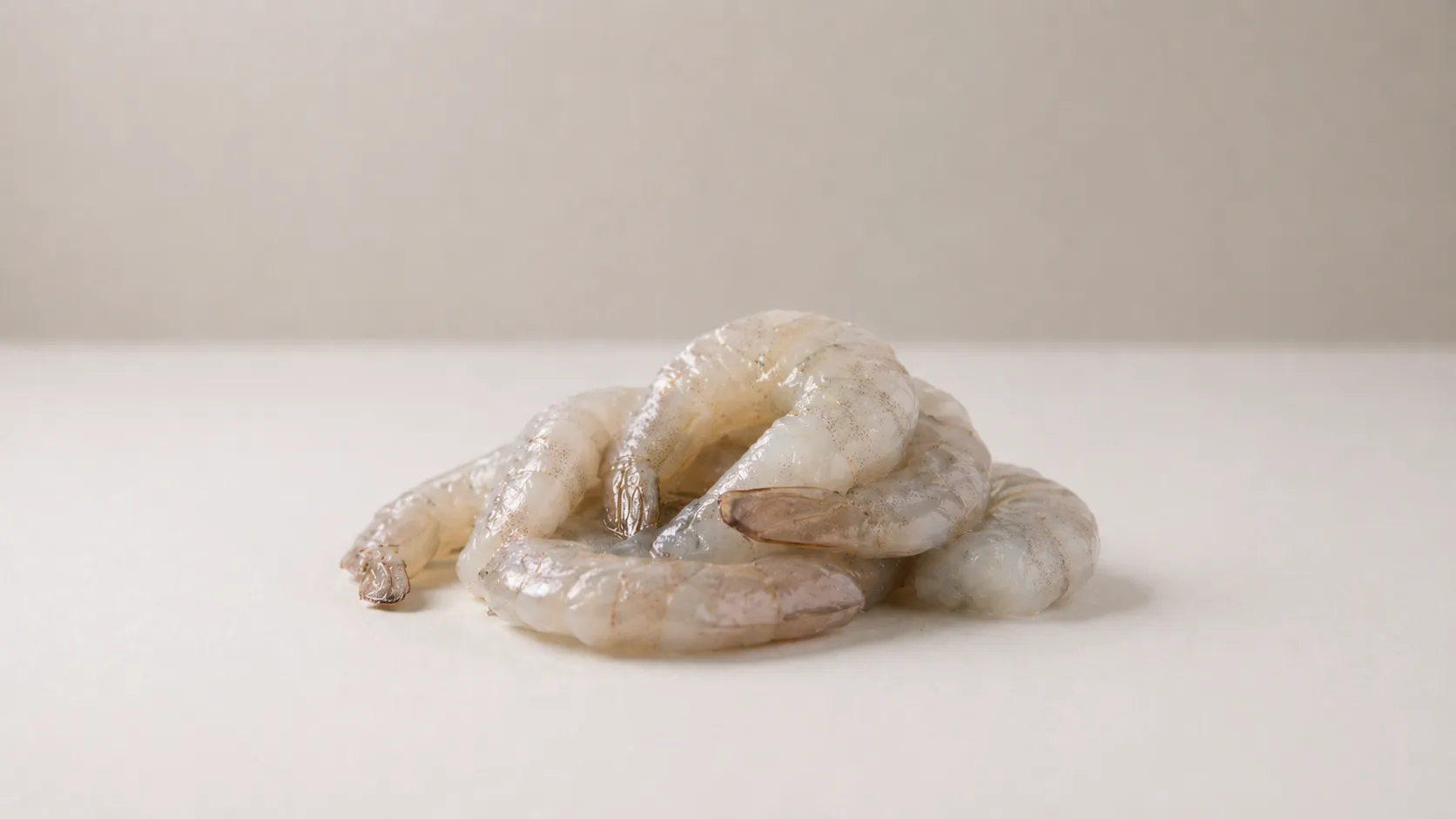
Whole shrimp is a moderate choking risk for babies, since it is firm, springy, and round.
Peel and devein it, then finely chop or mince it so no round pieces remain. See how to serve for age-by-age prep.
Allergens
Shrimp is a common food allergen - shellfish is one of the nine major allergens - and there's no reason to delay it.[2]
Shellfish is also a separate allergen from finned fish, so doing fine with salmon doesn't tell you anything about shrimp.
Start with about ¼ teaspoon of finely chopped, well-cooked shrimp mixed into a familiar food, earlier in the day, not near bedtime. Wait 10 minutes, and if all looks well, carry on with the meal.
Watch for a reaction over the next couple of hours. Build up gradually from there, and keep shrimp in the diet a few times a week.
If baby refuses
Springy texture is the usual sticking point. Mince it finely and stir it into rice, pasta, or a mild sauce, and cook it just until done so it does not turn rubbery. Keep offering it now and then - tastes change with repeat tries.
Food safety
Cook shrimp until pink and opaque all the way through - 145°F - and never serve it raw or undercooked. Raw and undercooked shellfish can carry Vibrio bacteria, and babies are more vulnerable to food poisoning than adults.[4]
How to serve
6+ months old
Finely minced and stirred through soft food
Peel and devein cooked shrimp, then mince it finely and stir it through rice, mashed vegetables, or a mild sauce, so no firm or round pieces are left. A soft shrimp patty works too - make it palm-sized, too big to fit in the mouth in one go, so baby holds it and bites off soft pieces.
How to cook
Boil, steam, or pan-fry until pink and opaque all the way through - 145°F - then cool, peel, and devein before mincing. Never serve shrimp raw or undercooked - babies are more vulnerable to food poisoning than adults.
9+ months old
Small soft pieces, finely chopped
About ¼ inch, with nothing round left
As the pincer grasp develops, offer finely chopped pieces of cooked shrimp for picking-up practice, on their own or mixed into rice or pasta. Shrimp stays firmer than vegetables, so keep the pieces small - cut across each piece so no round segments remain, and keep removing the shell and vein.
How to cook
Boil, steam, or pan-fry to 145°F until pink and opaque, then cool and chop. Do not overcook, or shrimp turns tough.
12+ months old
Halved shrimp and small pieces in family meals
Cut lengthwise, so nothing keeps its curved shape
Offer cooked shrimp halved lengthwise, or in small pieces stirred into low-salt family meals - paella, a stir-fry, pasta - and let your toddler practice with a fork. The lengthwise cut is the one that matters: a whole shrimp keeps its firm, curved shape, so keep splitting them until chewing is well established. Keep removing the shell and vein.
How to cook
Boil, steam, grill, or sauté until pink and opaque all the way through - 145°F. Never serve shrimp raw or undercooked - babies are more vulnerable to food poisoning than adults. Cook it just until done, though: past that, shrimp turns rubbery.
Tips
- Check the label for added salt. Shrimp is often treated with a salt solution before freezing - look for plain shrimp with nothing but shrimp on the ingredients list, and rinse before cooking. Pre-cooked cocktail shrimp is usually the saltiest option, so cook from raw when you can.
- Frozen is just as good. Most "fresh" shrimp at the counter is previously frozen anyway - a bag of frozen raw shrimp is cheaper, keeps for months, and lets you cook a few at a time for baby.
- Take the tail off every time. Tails and stray bits of shell are firm, sharp little pieces that are easy to miss once shrimp is chopped into a meal - make removing them the first step, before cutting, so nothing gets lost in the mix.