 HeySolids
Choking risk
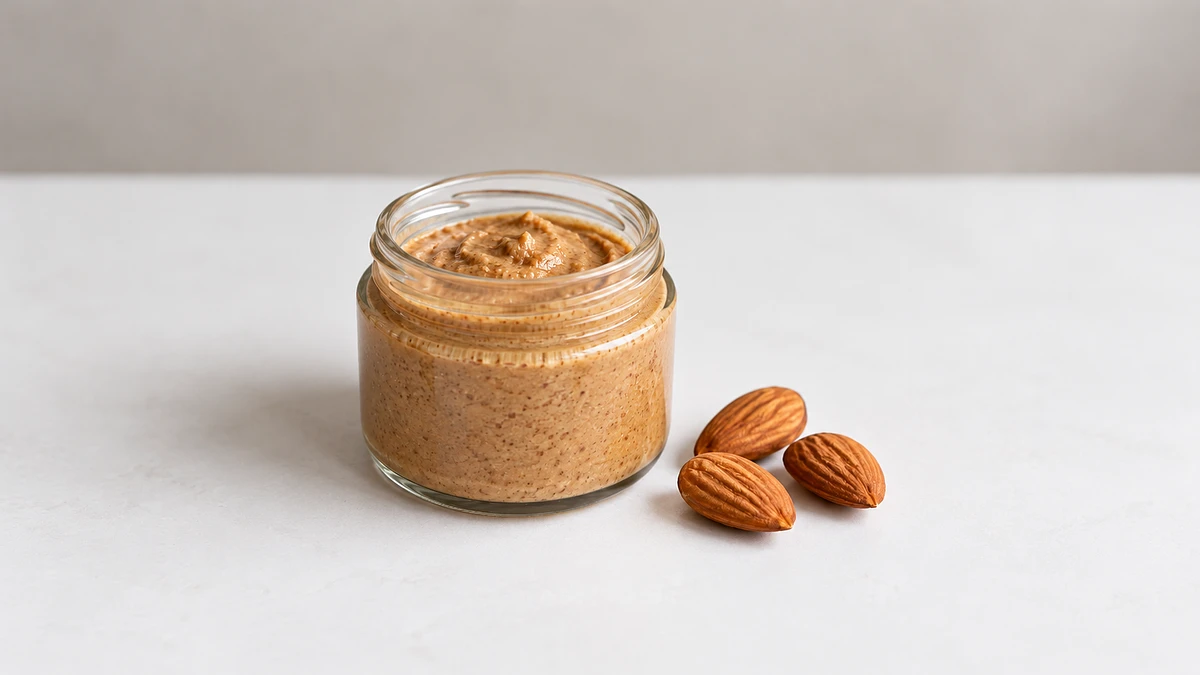
Thick almond butter is a moderate choking risk - a sticky glob from the spoon can cling and be hard for a baby to clear, the same way peanut butter can.
Serve it thinned with warm water, breast milk, or formula, or spread in a thin layer - never by the spoonful. See how to serve for age-by-age prep.
Allergens
Almond is a tree nut, one of the nine most common food allergens - and almond butter, thinned, is the practical way to introduce it, since a spoonful carries real almond protein.[2]
There's no reason to delay it - offer it around 6 months, one new allergen at a time, then keep it in the diet regularly.[3]
Offer it on its own the first time, earlier in the day and when you can watch baby for about two hours afterward. Start with a small taste, around a quarter teaspoon thinned, and watch for a reaction.
If your baby has severe eczema or an egg allergy, talk to your pediatrician before introducing nuts.
If baby refuses
Almond butter is mild and a touch sweet, so refusal is usually about the sticky texture, not the taste. Loosen it more than you think you need to and stir it through oatmeal, yogurt, or mashed banana. Keep offering it now and then rather than dropping it - once a nut is in the diet, it's worth keeping there.
How to serve
6+ months old
Thinned to a loose paste
About 1/4 teaspoon to start
Thin a small amount of smooth almond butter with warm water, breast milk, or formula into a loose paste, then offer it on your clean fingertip or a pre-loaded spoon, or stir it into oatmeal, yogurt, or a familiar puree.
Introduce it on its own, early in the day, so you can watch for a reaction in the hours after. Once tolerated, keep almond in the diet a few times a week.[3]
How to prepare
No cooking needed. Mix about 1 teaspoon of smooth almond butter with 2 to 3 teaspoons of warm liquid until loose, never a thick blob. Use only smooth almond butter or finely ground almond, never whole or chopped nuts.[1]
12+ months old
Thin spread or stirred into food
A thin layer, or a spoonful stirred in
Keep smooth almond butter in the regular rotation - spread thin on toast or soft strips, stirred into breakfast, or loosened into a dip. Offer water alongside to help wash down sticky bites.
Whole and chopped almonds stay a choking hazard until at least age 4.
Tips
- The ingredients list should be one word. Ideally almond butter is just almonds - some brands slip in salt, sugar, or palm oil, and the flavored ones are worse.
- Stir before every use. Natural almond butter separates hard, and the stiff paste at the bottom of the jar is the texture you don't want. Store it upside down between uses to make stirring easier.
- Almond milk doesn't do this job. There's barely any almond in it, so it doesn't count as introducing the allergen. The butter or finely ground almond is what builds and keeps tolerance.