 HeySolids
Choking risk
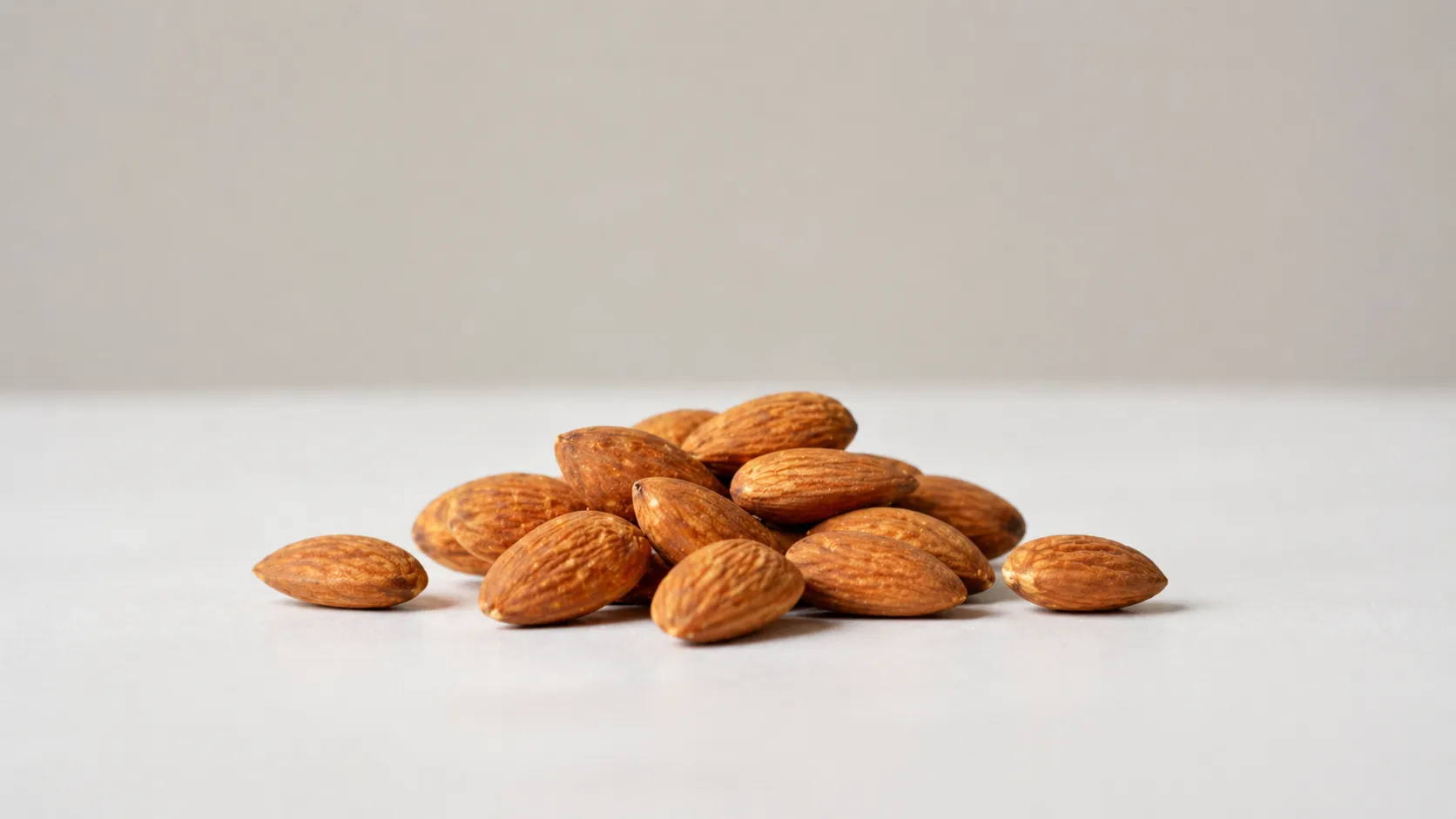
Whole almonds are a high choking risk - small, hard, and exactly the shape that can block a young airway. No whole or chopped nuts before age 4.
Serve almond only as thinned almond butter or finely ground almond - a thick glob of nut butter is a choking risk too, so keep it spread thin or stirred in.
See how to serve for age-by-age prep.
Allergens
Almond is a tree nut, one of the nine most common food allergens.[3] There's no reason to delay it - offer it around 6 months, then keep it in the diet regularly.
Offer almond on its own the first time, earlier in the day and when you can watch baby for about two hours afterward.
Start with a small taste, around a quarter teaspoon of thinned almond butter, and watch for a reaction.
Build up gradually if all's well, and once tolerated, keep it in the diet a few times a week.
If your baby has severe eczema or an egg allergy, talk to your pediatrician before introducing nuts.
If baby refuses
Almond butter is mild and slightly sweet, and works best thinned. If baby turns away, stir a little into a familiar food and build up from there. Keep offering it now and then rather than dropping it - once a nut is in the diet, it's worth keeping there, and new foods often take a good few goes before they land.
How to serve
6+ months old
Thinned smooth almond butter or ground almond
About 1/4 teaspoon to start
Thin a small amount of smooth almond butter with warm water, breast milk, or formula into a loose paste, then offer it on your finger or a pre-loaded spoon, or stir it into oatmeal or yogurt. Finely ground almond blends in too.
The first time
Pick a time earlier in the day when you can watch baby for about two hours. Offer a tiny taste - the tip of a spoon or your finger, around 1/8 to 1/4 teaspoon - then wait about 10 minutes. If there's no reaction, give the rest of the small amount as normal. Build up gradually over the next servings, and once tolerated, keep almond in the diet a few times a week. Watch for a reaction. Don't rub nut butter on baby's skin to test for allergy - it doesn't work and may raise the risk.
How to prepare
No cooking needed. Mix about 1 teaspoon of smooth almond butter with 2 to 3 teaspoons of warm liquid until loose, never a thick blob. Use only smooth almond butter or finely ground almond, never whole or chopped nuts.
12+ months old
Thinly spread almond butter or ground almond
A thin layer, or a spoonful stirred in
Keep offering smooth almond butter and finely ground almond regularly to maintain tolerance. Spread it thin on toast or soft strips, stir it into food, and offer water alongside to help wash down sticky bites.
Whole and chopped nuts stay a choking hazard for children under 4. After that, they can be introduced gradually once your child chews confidently.
How to cook
No cooking needed. Keep almond butter spread thin or thinned into food, or stir ground almond into meals and baking.
Tips
- Buy plain, and stir the jar. Ideally almond butter is just almonds - plenty of brands slip in salt, sugar or palm oil, and the flavoured ones are worse. Check the ingredients list is one word. And give it a proper stir, because natural almond butter separates, and the stiff stuff at the bottom is exactly the texture you don't want.
- Grind your own. Whole almonds in a coffee grinder or small processor give you a fine flour for oatmeal or baking at a fraction of what shop-bought almond flour costs. Stop before it turns to butter. Never use chopped or flaked almonds - those pieces are the choking-hazard size.
- Almond milk isn't a substitute for milk. It's very low in protein and fat next to cow's milk or formula, so it shouldn't stand in for either as a drink. It also doesn't count as introducing almond as an allergen - there's barely any almond in it. Use the butter or ground almond for that.
Sources
- Choking Hazards (Infant & Toddler Nutrition) - CDC
- When to Introduce Egg, Peanut Butter & Other Common Food Allergens - AAP HealthyChildren
- Tree Nut Allergy - FARE
- Pollen Food Allergy Syndrome - ACAAI
- When, What, and How to Introduce Solid Foods - CDC
- Nuts, almonds, raw (FDC 170567) - USDA FoodData Central