 HeySolids
Choking risk
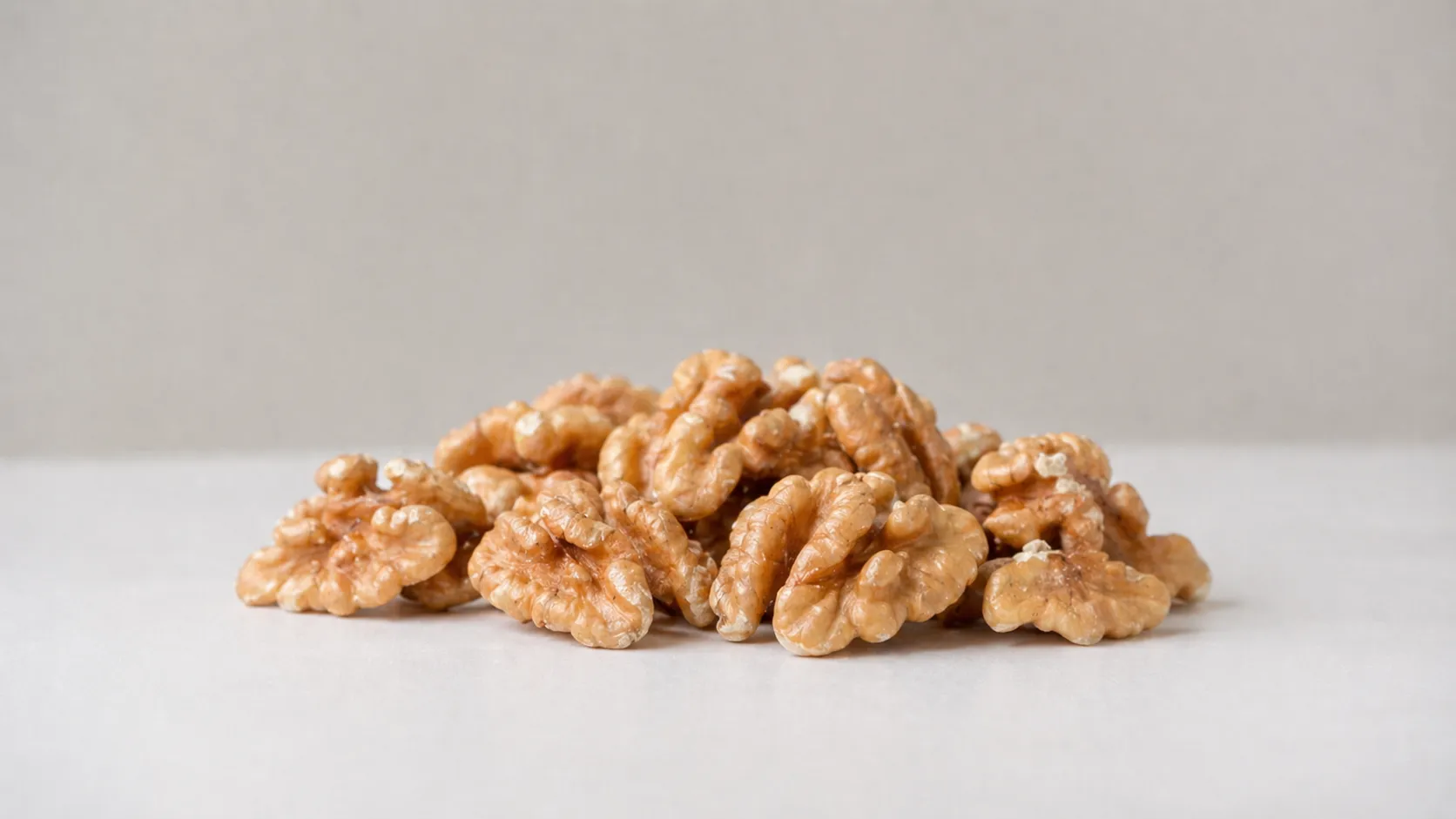
Whole walnuts are a high choking risk - hard, and just the size and shape to block a small airway.
The CDC lists whole nuts as a choking hazard, and whole or chopped nuts should wait until around age 4.
Until then, serve walnut as thinned walnut butter or finely ground walnut. See how to serve for age-by-age prep.
Allergens
Walnut is a tree nut - one of the nine major allergens - and there's no reason to delay it: waiting doesn't prevent allergies, and allergens can start alongside other solids from around 6 months.[3]
If your baby has severe eczema or an existing food allergy, check with your pediatrician before starting allergens.
Start with about ¼ teaspoon of thinned walnut butter mixed into a familiar food, earlier in the day, not near bedtime. Wait 10 minutes, and if all looks well, carry on with the meal.
Watch for a reaction over the next couple of hours. Build up gradually from there, and keep tree nuts in the diet a few times a week.[2]
If baby refuses
Walnut's bitterness can put babies off at first. Stir a little thinned walnut butter into oatmeal or yogurt, then build up. Don't skip it over refusal.
How to serve
6+ months old
Thinned smooth walnut butter or ground walnut
About 1/4 teaspoon to start
Thin smooth walnut butter with warm water or baby's usual milk into a loose paste, then stir it into oatmeal, yogurt, or a fruit mash. Finely ground walnut blends into soft foods too. Never whole or chopped nuts, and never walnut butter thick from the jar.
The first time
Offer walnut earlier in the day, not near bedtime. Dab a little thinned walnut butter on your clean fingertip or the tip of a spoon and let baby taste it - about ¼ teaspoon in total is plenty. Wait 10 minutes, and if all looks well, carry on with the meal. Watch for a reaction over the next couple of hours. Build up gradually from there, and keep tree nuts in the diet a few times a week.
How to cook
No cooking needed. Mix about 1 teaspoon of smooth walnut butter with 2 to 3 teaspoons of warm liquid until loose and pourable.
9+ months old
Thinly spread walnut butter on soft strips
A thin layer on a finger-length strip
Keep walnut on the menu regularly. Spread smooth walnut butter thinly on a soft strip of toast, stir it into oatmeal or yogurt, or fold finely ground walnut into pancakes or muffins. Keep it smooth and thinly spread, never a thick blob.
How to cook
No cooking needed. Spread walnut butter thin rather than in a glob, or stir ground walnut into food or batter. Still no whole or chopped nuts.
12+ months old
Thinly spread walnut butter or ground walnut
A thin layer, or a spoonful stirred in
Spread smooth walnut butter thinly on toast or soft strips, stir it into oatmeal or yogurt, or fold finely ground walnut into pancakes or muffins. Offer water alongside to help wash down sticky bites. Never walnut butter thick from the jar, and never whole or chopped nuts - whole and chopped walnuts wait until around age 4, when chewing can handle them.
How to cook
No cooking needed. Spread the butter in a thin layer that soaks slightly into the toast, or stir ground walnut into batter before baking.
Tips
- Grind your own. Walnut butter is hard to find and pricey - a food processor turns plain walnuts into fine powder in seconds, and into butter in a few minutes. Grind small batches: powder for stirring into food, longer for a spreadable butter.
- Keep walnuts in the fridge. Their oils go rancid faster than other nuts', and rancid walnut tastes bitter - often the real reason a baby refuses it. If a walnut tastes sharp or paint-like to you, the batch is past it.
- Read the jar if you buy. Walnut butter should list one ingredient. Some blends add sweeteners - and if that's honey, it's unsafe under 12 months, not just unwanted.