 HeySolids
Choking risk
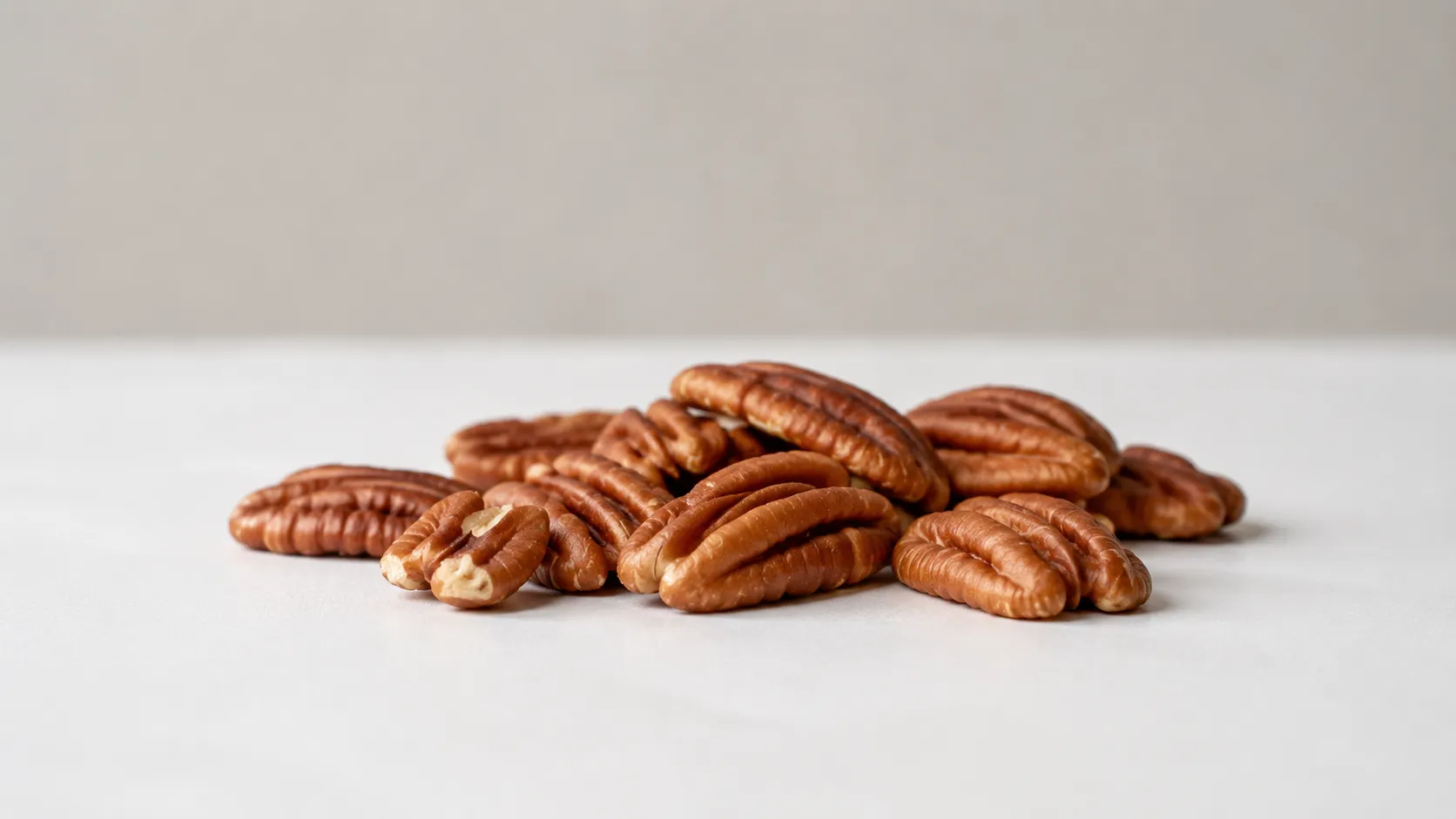
Whole pecans are a high choking risk - hard and chunky, exactly the shape that can block a young airway. No whole or chopped nuts before age 4.
Serve pecan only as thinned pecan butter or finely ground pecan - a thick glob of nut butter is a choking risk too, so keep it spread thin or stirred in. See how to serve for age-by-age prep. See how to serve for age-by-age prep.
Allergens
Pecan is a tree nut, one of the nine most common food allergens.[3] There's no reason to delay it - offer it around 6 months, then keep it in the diet regularly. Older advice said to hold nuts back until age two or three, but that's changed: waiting doesn't reduce the risk of allergy.
Offer pecan on its own the first time, earlier in the day and when you can watch baby afterward. Start with a small taste, around a quarter teaspoon of thinned pecan butter, and watch for a reaction. Build up gradually if all's well, and once tolerated, keep it in the diet a few times a week.[2]
If your baby has severe eczema or an egg allergy, talk to your pediatrician before introducing nuts.
Offer it on its own, start with a small amount, and watch for a reaction. Once your baby is comfortable with it, keep it in their regular diet.
If baby refuses
Pecan butter is rich and sweet, and works best thinned. If baby turns away, stir a little into a familiar food and build up from there. Keep offering it now and then rather than dropping it - once a nut is in the diet, it's worth keeping there, and new foods often take a good few goes before they land.
How to serve
6+ months old
Thinned smooth pecan butter or ground pecan
About 1/4 teaspoon to start
Thin a small amount of smooth pecan butter with warm water, breast milk, or formula into a loose paste, then offer it on your finger or a pre-loaded spoon, or stir it into oatmeal or yogurt. Finely ground pecan blends in too.
The first time: pick a time earlier in the day when you can watch baby afterward. Offer a tiny taste - the tip of a spoon or your finger, around 1/8 to 1/4 teaspoon - then wait about 10 minutes. If there's no reaction, give the rest of the small amount as normal. Build up gradually over the next servings, and once tolerated, keep pecan in the diet a few times a week. Watch for a reaction. Don't rub nut butter on baby's skin to test for allergy - it doesn't work and may raise the risk.
How to prepare
No cooking needed. Mix about 1 teaspoon of smooth pecan butter with 2 to 3 teaspoons of warm liquid until loose, never a thick blob. Use only smooth pecan butter or finely ground pecan, never whole or chopped nuts.
12+ months old
Thinly spread pecan butter or ground pecan
A thin layer, or a spoonful stirred in
Keep offering smooth pecan butter and finely ground pecan regularly to maintain tolerance. Spread it thin on toast or soft strips, stir it into oatmeal or yogurt, or fold ground pecan into pancakes, muffins, and soft bakes. Keep it smooth and thinly spread, never a thick blob. Whole and chopped nuts stay a choking hazard for children under 4.
How to prepare
No cooking needed. Keep pecan butter spread thin or stirred into food, or mix ground pecan into meals and baking.
Tips
- Grind your own - pecan butter is hard to find. Unlike almond or peanut, pecan butter isn't on most shelves. Pecans are soft and oily, so they blitz to a fine meal or a smooth butter easily in a small grinder or processor - stop at meal for stirring into oatmeal and baking, or keep going for butter. Never chopped or flaked, though; those pieces are choking-hazard size.
Sources
- Choking Hazards (Infant & Toddler Nutrition) - CDC
- When to Introduce Egg, Peanut Butter & Other Common Food Allergens - AAP HealthyChildren
- Tree Nut Allergy - FARE
- Translating tree nut cross-reactivity into clinical practice (walnut-pecan) - JACI 2020
- When, What, and How to Introduce Solid Foods - CDC
- Nuts, pecans (FDC 170182) - USDA FoodData Central