 HeySolids
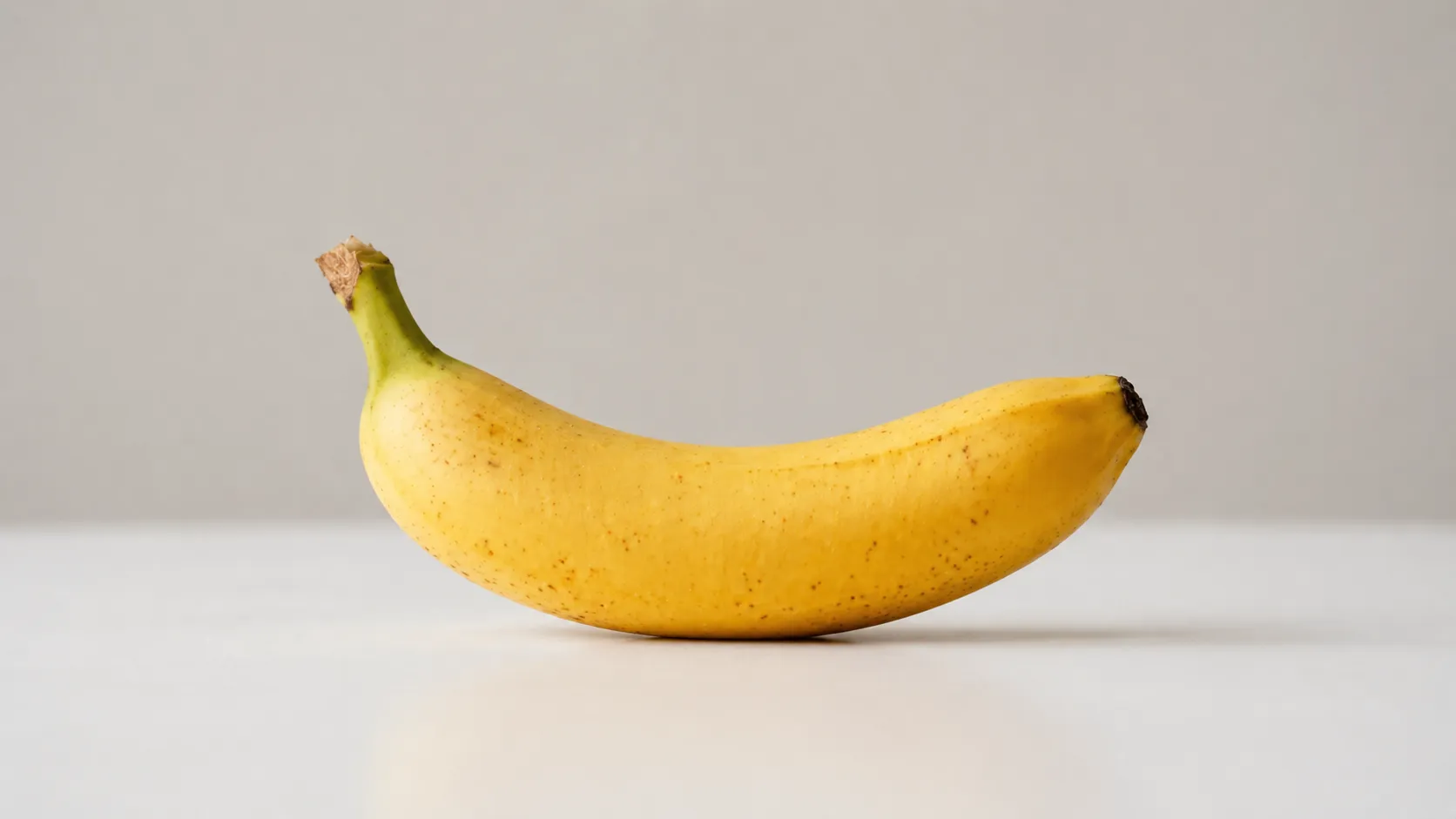
Choking risk
Banana is a low choking risk - it's soft enough for most babies to manage from the start.
Serve very ripe banana in lengthwise spears or broken into irregular pieces, not round coins, which can slip down whole. See how to serve for age-by-age prep.
Allergens
Banana is not a common food allergen, so a true food allergy to it is rare.
Start with a small amount and watch for a reaction.
If baby refuses
Banana is rarely refused. If your baby turns it down, offer it riper, or mash it into oatmeal or yogurt. If the problem is that a spear keeps slipping out of their hand, roll it in a little infant cereal or ground oat.
How to serve
6+ months old
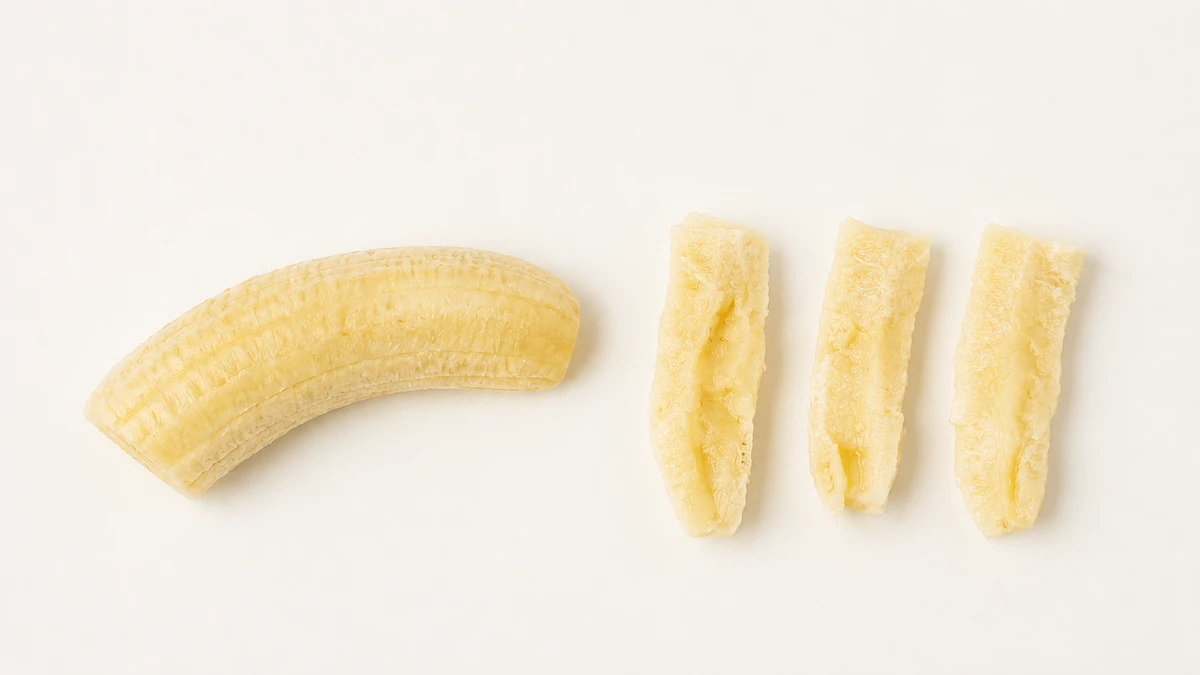
Large piece, spears, or smooth mash
Half a peeled banana, or spears split lengthwise
Offer half a peeled banana for baby to hold and gnaw. To make it less slippery, push a finger through the cut end - it splits into three natural spears that are easier to grip. Or mash very ripe banana smooth and serve it on a pre-loaded spoon.
How to cook
No cooking needed. Use very ripe bananas with brown-spotted skins - they're softer, sweeter, and easier to mash.
9+ months old
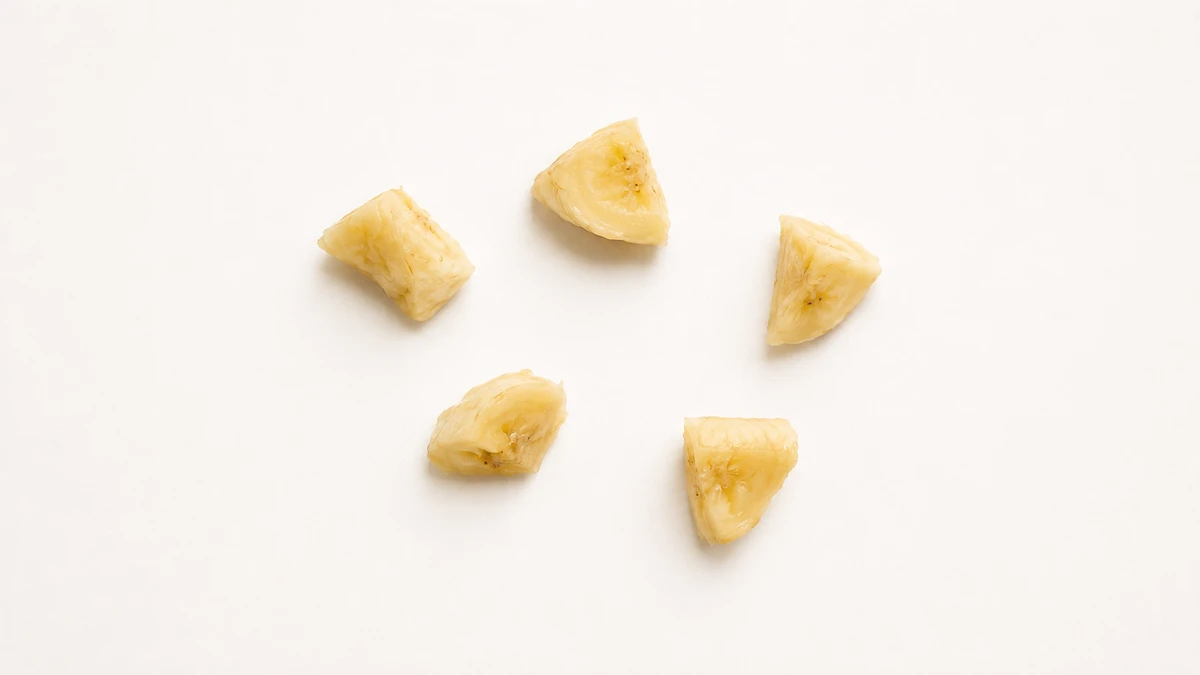
Small pieces
Small, bite-sized pieces
Cut into small pieces for pincer-grasp practice, or keep offering spears and mash. If pieces are too slippery to pick up, roll them in a little ground oat or infant cereal for grip.
How to cook
No cooking needed. Keep using very ripe banana. Frozen banana works once fully thawed and soft - partly frozen banana is too firm for babies.
12+ months old
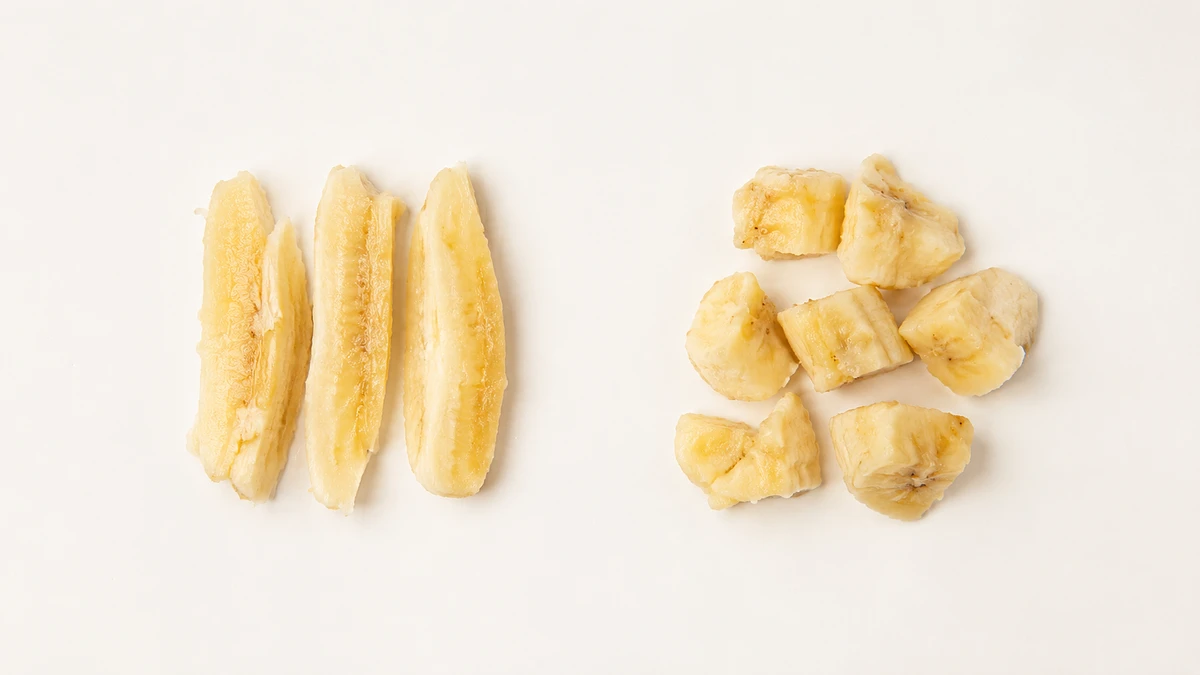
Lengthwise strips or irregular pieces
Short strips or bite-sized pieces
Offer banana in irregular pieces or strips alongside a fork for utensil practice. Mash it into oatmeal, blend it into yogurt, or use it to sweeten pancakes, muffins, and bakes.
How to cook
Banana works freely in baking now - overripe ones are best. Blended frozen banana makes a simple one-ingredient "ice cream" most toddlers love.
18+ months old
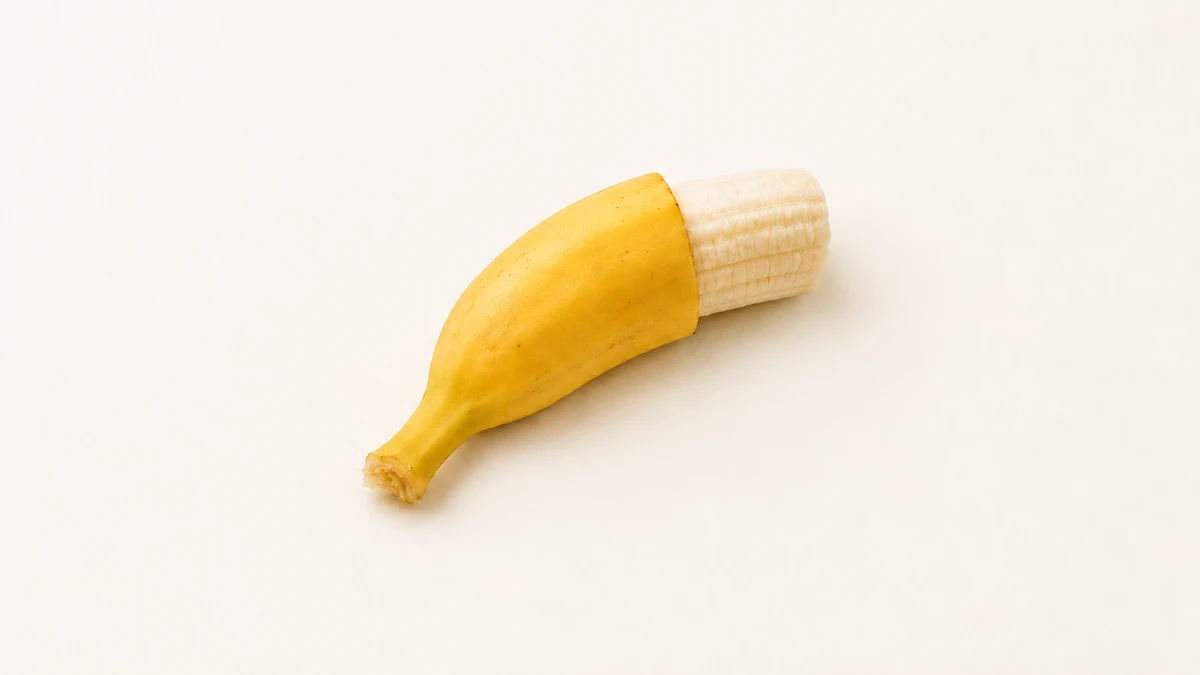
Whole banana
Peel and hand over the whole banana to bite from - leave a strip of peel on if they still need a grip. Or split it lengthwise into spears. If you slice it, cut the rounds in half into half-moons rather than full coins.
How to cook
No cooking needed. Mash into pancakes or muffins, stir through porridge, or blend into a smoothie.
Tips
- Freeze it for sore gums. A peeled half banana, frozen for an hour, is cold and soft enough to gnaw on during teething without being hard.
- Slow the browning. Cut bananas turn brown within an hour. A squeeze of lemon or lime juice over the pieces keeps them looking fresh if you're prepping ahead.