 HeySolids
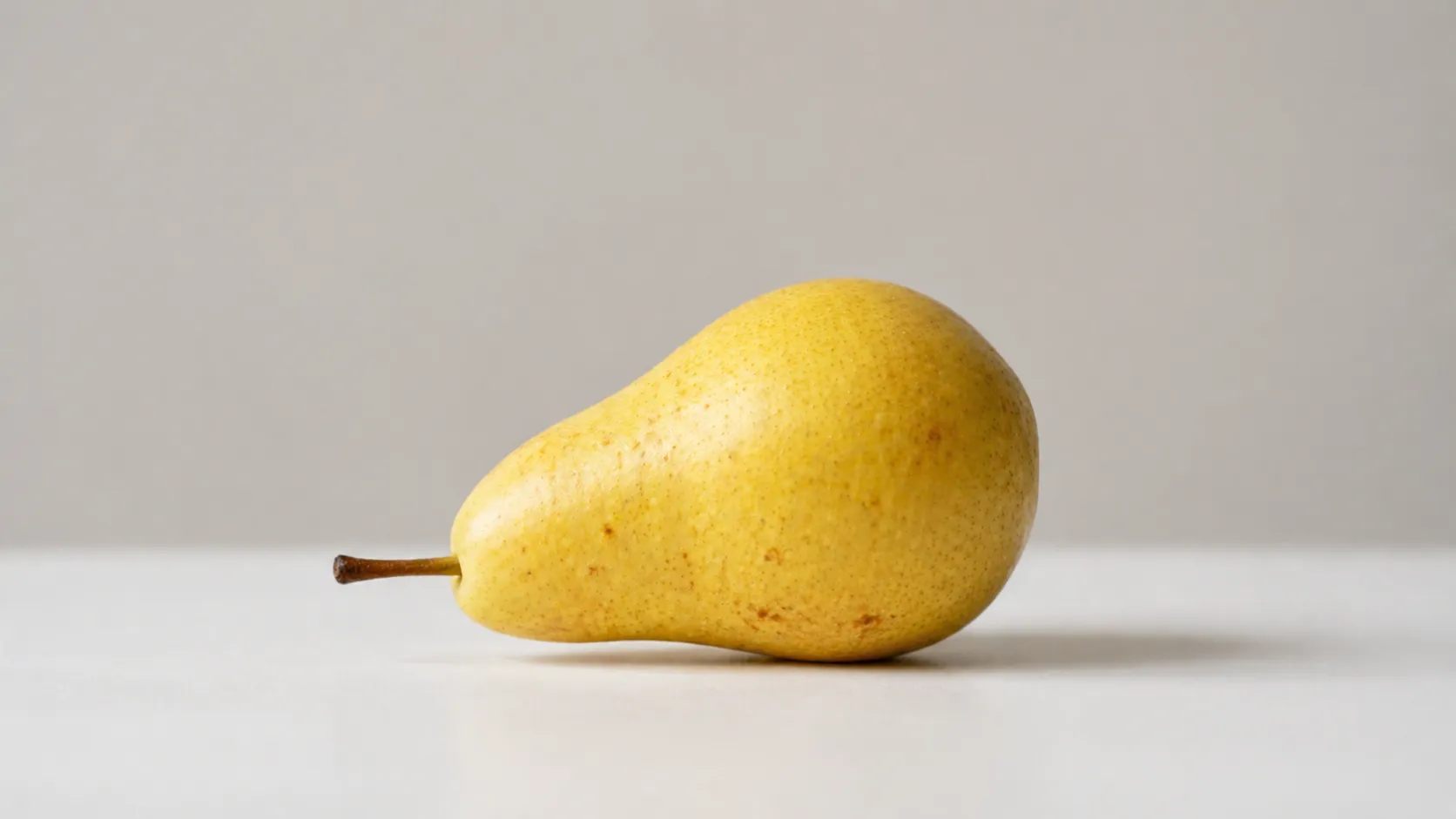
Choking risk
Raw pear is a moderate choking risk - ripe pear is soft, but firm or underripe pear is hard and can lodge in the airway.
For young babies, peel and cook pear until it squashes easily between two fingers, then serve as puree or soft pieces; always remove the core and seeds, and skip firm chunks or round coins. See how to serve for age-by-age prep.
Allergens
Pear is not a common food allergen, so a true food allergy to it is rare.
Start with a small amount and watch for a reaction.
If baby refuses
Pear is rarely refused. If yours turns it down, make sure it's fully ripe, since underripe pear is tart and firm. Try it with cooked apple and a pinch of cinnamon, or stirred into oatmeal or yogurt.
How to serve
6+ months old
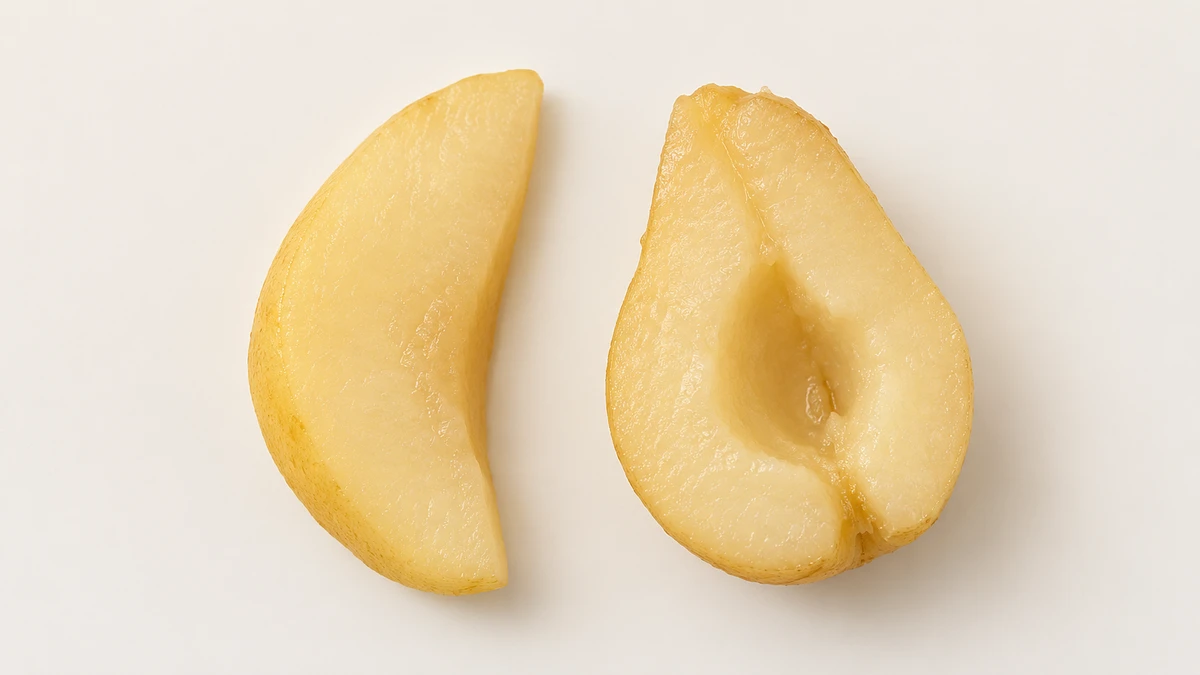
Large cooked wedge, cooked half or soft puree
Cooked wedge or a half too big to choke on
Serve cooked pear as a smooth puree on a pre-loaded spoon, or hand baby a large soft-cooked wedge to grip and gnaw. Cooking is safest at this age - skip it only if the pear is so ripe it squashes completely between your fingers.
How to cook
Peel and core, then steam for 8 to 10 minutes until very soft, so a piece squashes easily between two fingers. Pear is high in water, so you may not need extra liquid when blending.
9+ months old
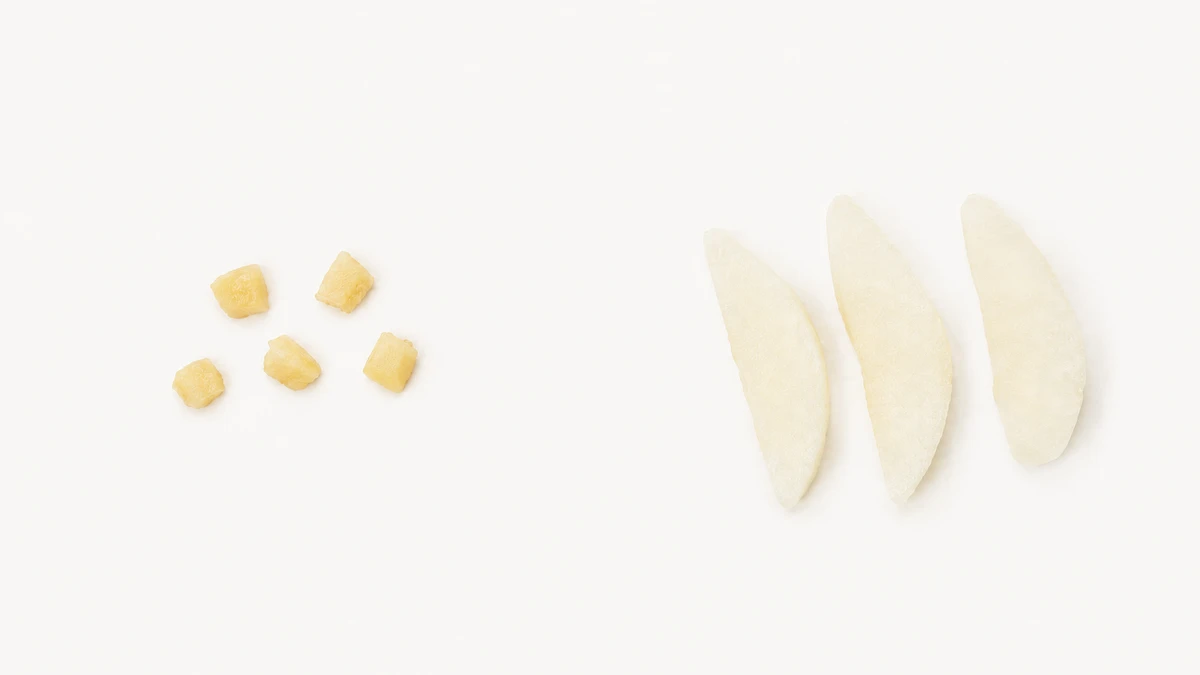
Soft-cooked pieces or thin ripe slices
About 1/2 inch cooked pieces, or thin raw slices
Offer soft-cooked pear in small pieces for pincer practice. Very ripe raw pear can now be served in thin peeled slices if it squashes easily between your fingers. Keep offering a larger wedge alongside if small pieces are tricky.
How to cook
Steam until soft, about 6 to 8 minutes. For raw pear, pick a very ripe variety like Bartlett or Anjou, peel it, and press the flesh - if it gives with no resistance it's safe raw; any firmness means cook it first.
24+ months old
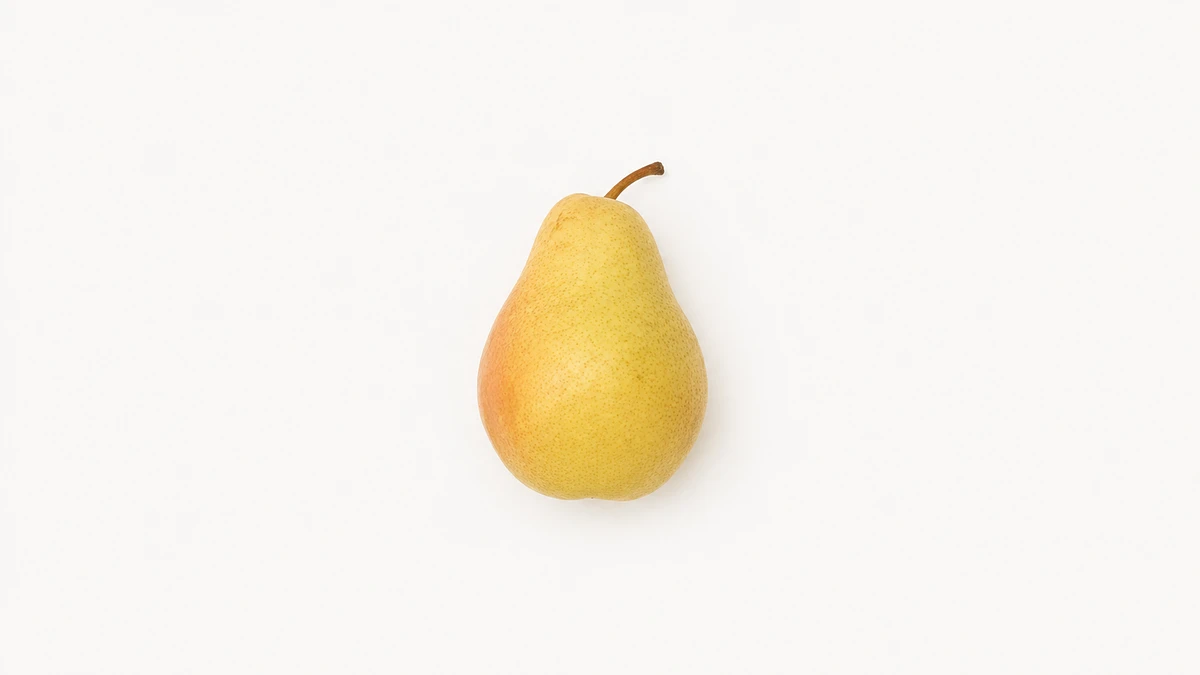
Whole ripe and soft pear
A very ripe, very soft whole pear can be offered once your toddler reliably takes small bites, chews thoroughly, and sits calmly to eat. Test ripeness first — it should squash easily between your fingers. Firm or underripe pear isn't safe whole yet, so keep cooking it until tender.
Tips
Buy pears a few days ahead, since they're often sold underripe and ripen at room temperature; press gently near the stem and it should give a little. Pear's fiber makes it a gentle helper for constipation. Batch cook and freeze puree in portions.