 HeySolids
Choking risk
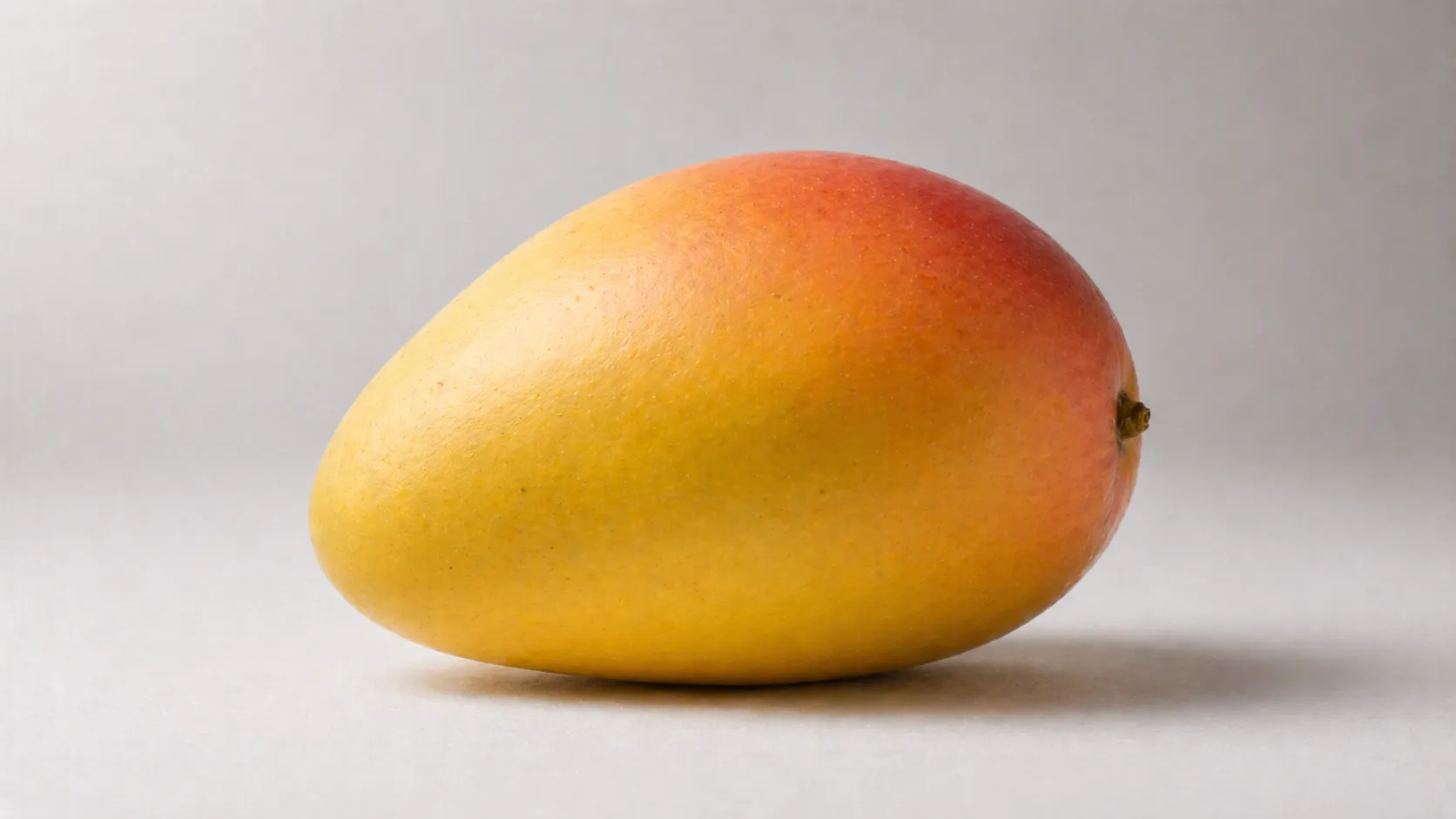
Fully ripe mango is a low choking risk - the flesh is soft enough to squash between two fingers.
Always peel it and serve soft, ripe flesh in long graspable spears - skip firm, underripe mango, which is hard and fibrous. See how to serve for age-by-age prep.
Allergens
Mango is not a common food allergen, so a true food allergy to it is rare.[3]
Start with a small amount and watch for a reaction.
If baby refuses
Mango is sweet and rarely refused. If yours turns it down, make sure it's fully ripe, since underripe mango is tart and fibrous. Try it at room temperature, or stir it through yogurt or oatmeal to soften the new flavor.
How to serve
6+ months old
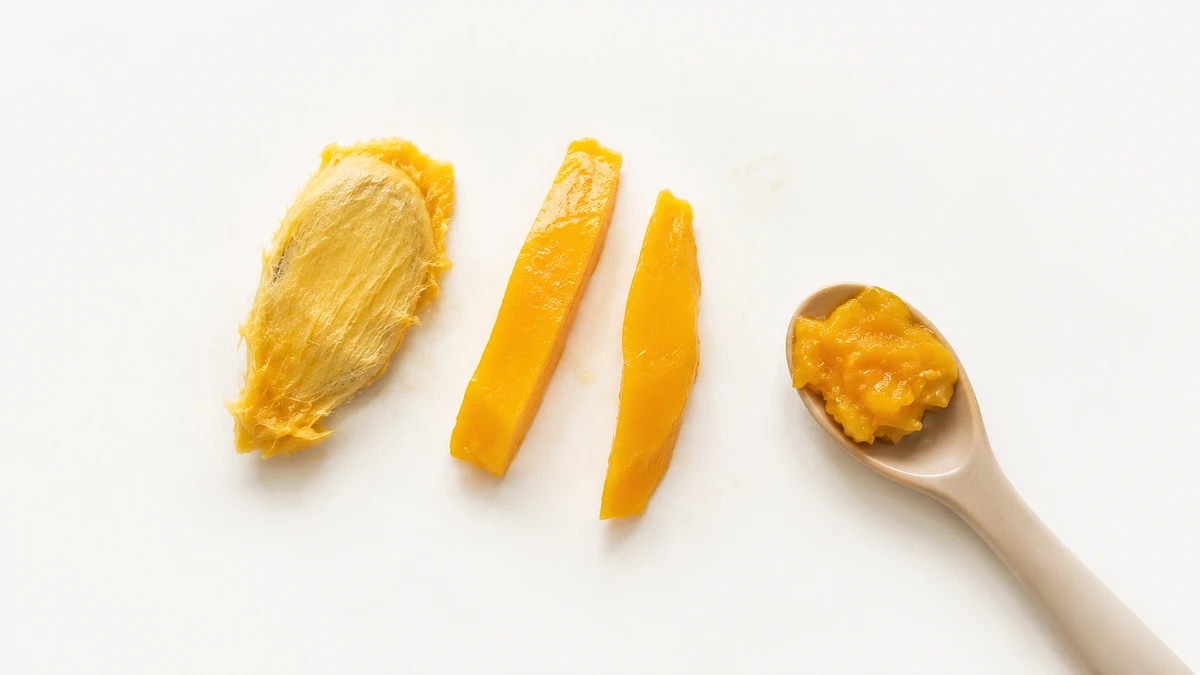
Peeled pit or long spears
Peeled pit with flesh left on or long spear about finger length
Peel the mango, cut the flesh from the pit, and slice it into spears about the length of an adult finger, so baby can grip a strip with some sticking out of their fist. The peeled pit with a little flesh left on also makes a good piece to hold and gnaw.
Ripe mango is slippery, so if it's hard to grip, roll the spears in a little ground oat or baby cereal, or serve it mashed on a pre-loaded spoon.
How to cook
No cooking needed - fully ripe mango is already very soft. It should squash easily between your thumb and finger before serving.
9+ months old
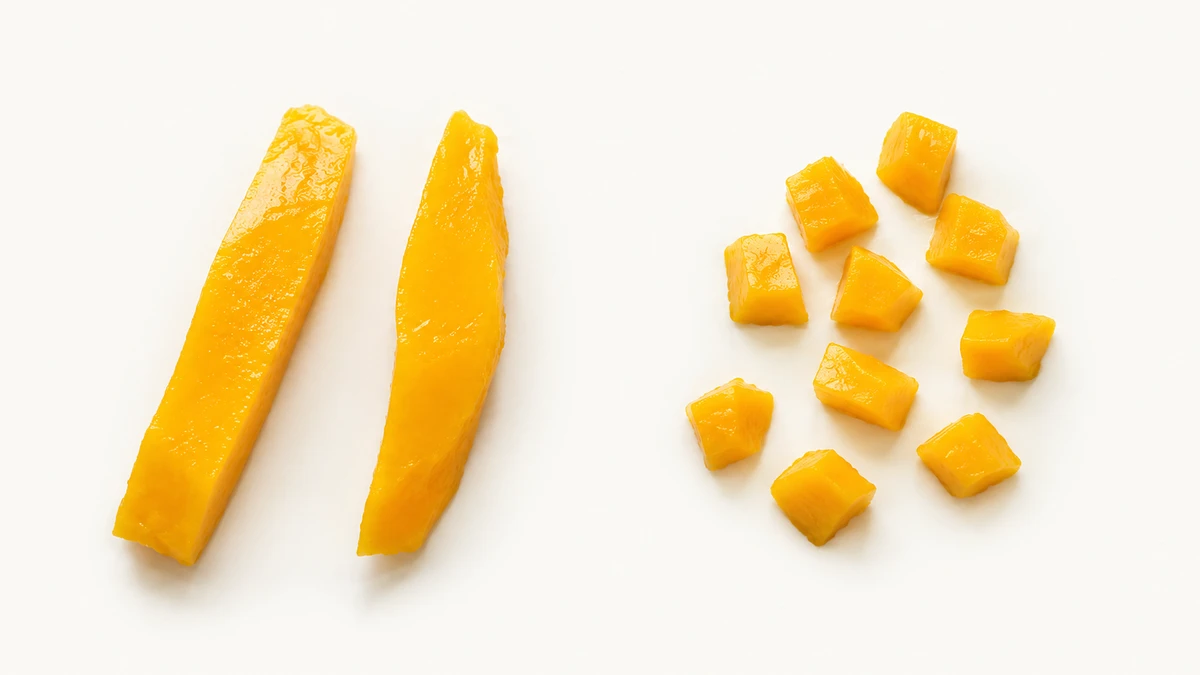
Spears or bite-sized pieces
Finger-length spears, or about 1/2 inch pieces
Keep offering spears, and as baby's pincer grasp develops start adding small bite-sized pieces to pick up, or offer them on a pre-loaded fork. The pieces are still slippery, so a light coating of ground oat or fine cereal helps. Mashed mango stirred into yogurt or oatmeal is another easy option at this stage.
How to cook
No cooking needed. Serve ripe mango raw as spears or small soft pieces. Check it squashes easily between your fingers before serving.
12+ months old
Diced pieces or spears
About 1/2 inch pieces, or finger-length spears
Offer diced ripe mango as finger food alongside a fork for utensil practice - pre-spear a piece and rest the loaded fork next to the fruit for your toddler to pick up. Mango also works well blended into smoothies or stirred through fruit salads and yogurt.
How to cook
No cooking needed. Serve ripe mango raw, diced or in spears, or blended into smoothies and fruit salads.