 HeySolids
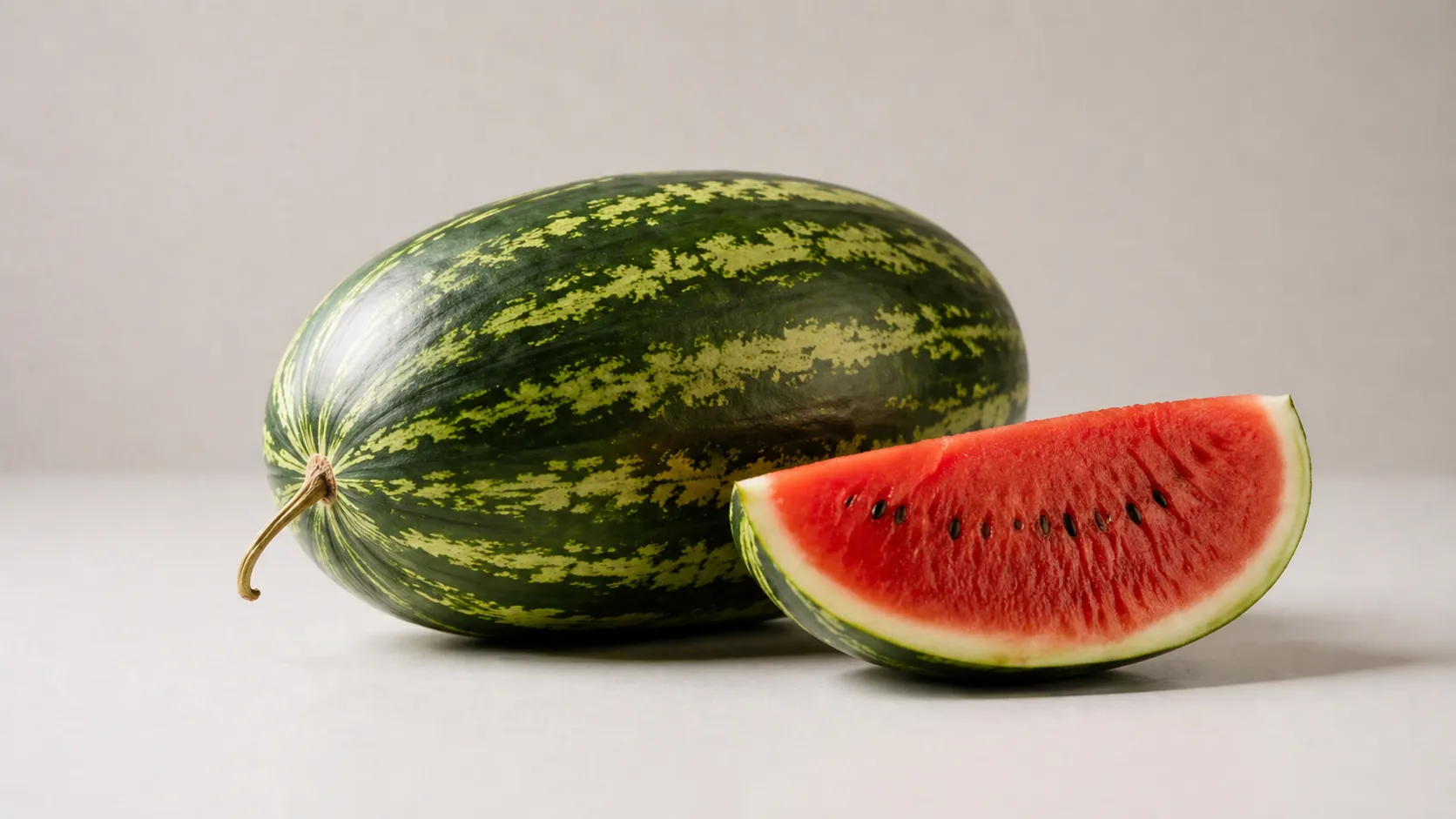
Choking risk
Soft, seeded watermelon is a low choking risk when served in large strips, though seeds and small round pieces are the things to watch.
Pick out every seed, then offer a large graspable strip rather than small slippery cubes that can slide to the back of the mouth. See how to serve for age-by-age prep.
Allergens
Watermelon is not a common food allergen, so a true food allergy to it is rare.[3]
Start with a small amount and watch for a reaction.
If baby refuses
Watermelon is rarely refused. If yours is unsure, try it lightly chilled or offer a frozen strip to soothe sore gums. Mashing it into plain whole-milk yogurt tames the loose juice while baby gets used to the texture.
How to serve
6+ months old
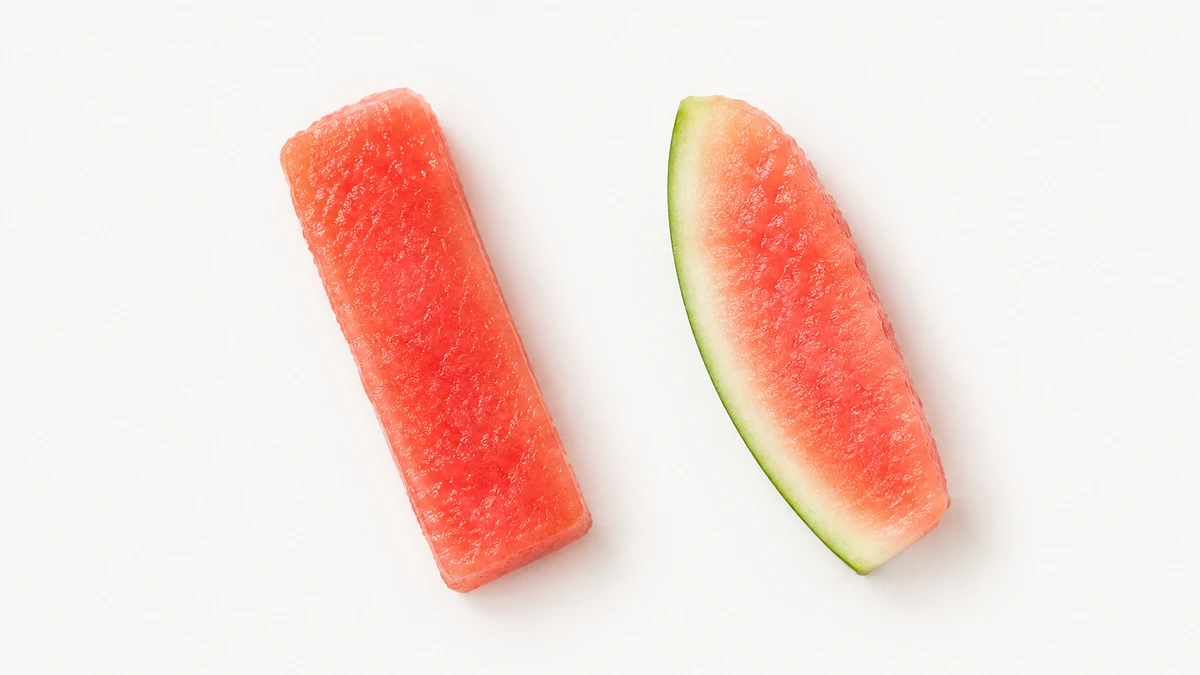
Large strip or rind-on wedge to hold
A finger-length strip about as thick as an adult finger
Cut a thick, deseeded strip of flesh, finger-length and firm enough to hold its shape, for baby to grip and gnaw. A wedge with the rind left on works too, giving baby something firm to hold and slowing them down so they take less at once. Remove every seed first.
How to cook
No cooking needed. Choose a ripe, seedless variety, pick out the seeds, and cut into strips or wedges.
9+ months old
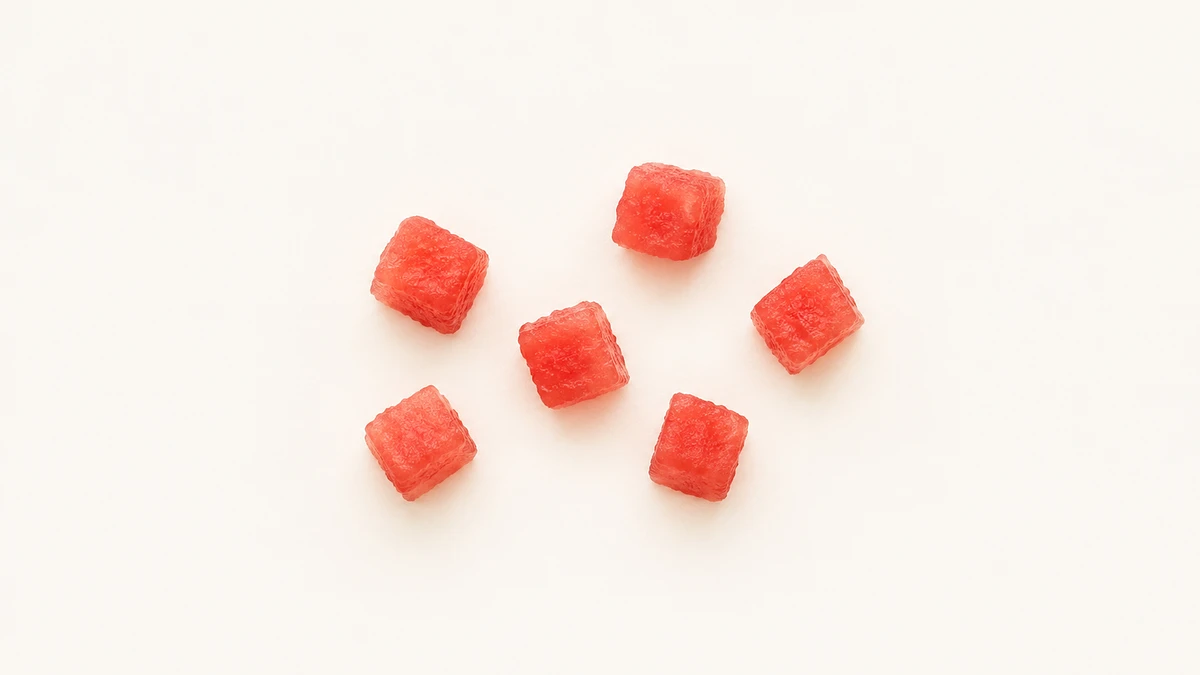
Smaller soft pieces or strips
Bite-sized pieces, about 1/2 inch, or thin strips
As the pincer grasp develops, offer smaller bite-sized pieces of deseeded flesh alongside strips baby can still hold. Serving on the rind stays a handy way to slow down a baby who tends to overfill their mouth. Keep removing every seed.
How to cook
No cooking needed. Remove the seeds, then cut into small pieces or strips. Mashed or blended watermelon can be stirred through plain whole-milk yogurt.
12+ months old
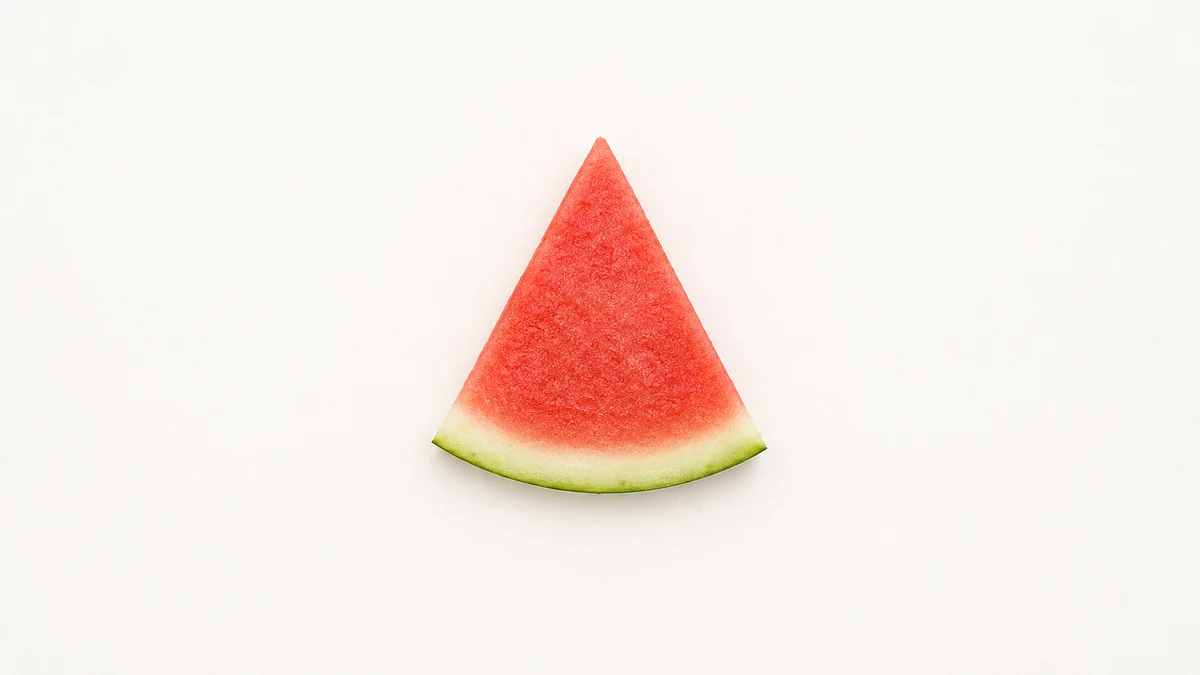
Classic triangle, rind on or off
Thin triangle slices (pizza-slice shape), seeds removed
From around 12 months, once your toddler self-feeds confidently, offer watermelon in the classic triangle (pizza-slice) shape. Leave the rind on as a natural handle - it gives baby something to hold and helps stop them biting off more than they can manage.
Once your toddler can bite clean through the rind, switch to rind-off triangles or bite-sized pieces, since bitten-off rind is a choking risk. Always remove seeds first.
How to cook
No cooking needed. Remove the seeds and serve raw in pieces or triangles, blend into a drink, or freeze into pops.
Tips
Pick a ripe, deep-colored watermelon and a seedless variety when you can. A chilled piece soothes sore gums. Expect a little coughing at first - the soft flesh and loose juice take practice to manage.