 HeySolids
Choking risk
Ground black pepper is a low choking risk - it's a seasoning stirred through food, not a piece of food.
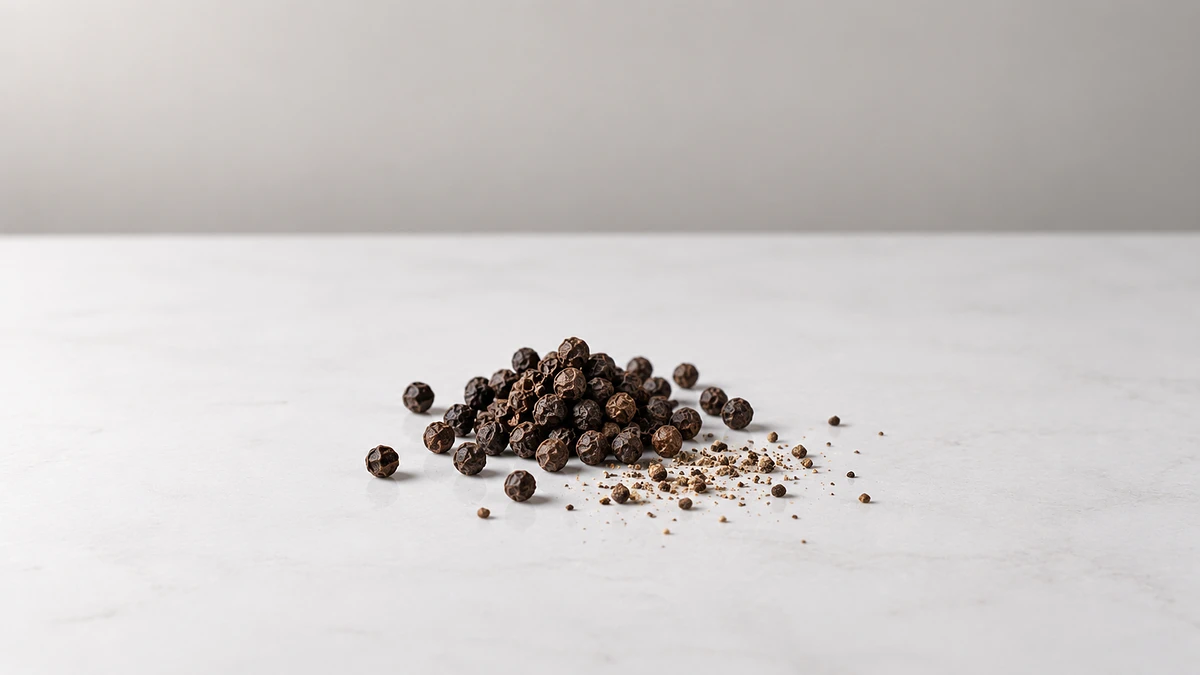
Whole peppercorns are the exception - hard, round, and just the wrong size, so keep them in the grinder and out of baby's dish. See how to serve for how to season by age.
Allergens
Black pepper is not a common food allergen, so a true allergy to it is rare.[1]
Start with a small amount and watch for a reaction.
If baby refuses
Pepper announces itself, so a heavy grind can startle a new eater. Drop back to a lighter hand for a while - flavor learning happens in small, repeated doses - and grind it into the pot during cooking, where it mellows, rather than over the finished plate.
How to serve
6-24 months +
A light grind, cooked into food
A pinch in the family pot
From 6 months, season baby's food with a light grind of black pepper - eggs, beans, meat, roasted vegetables, rice. Pepper's warmth comes from piperine, not the capsaicin that makes chiles burn, so it reads as aroma and gentle bite rather than heat. It's also one of the best ways to make food interesting without reaching for the salt shaker, which stays off baby's food in the first year. Start with a small pinch and let dishes grow gradually more peppery toward full family seasoning through the toddler years.
How to cook
Grind it fresh if you can - pre-ground pepper fades fast. Add it toward the end of cooking or bloom it briefly in a little oil; a long boil dulls the aroma, and never offer the dry powder on its own, which can set off coughing.