 HeySolids
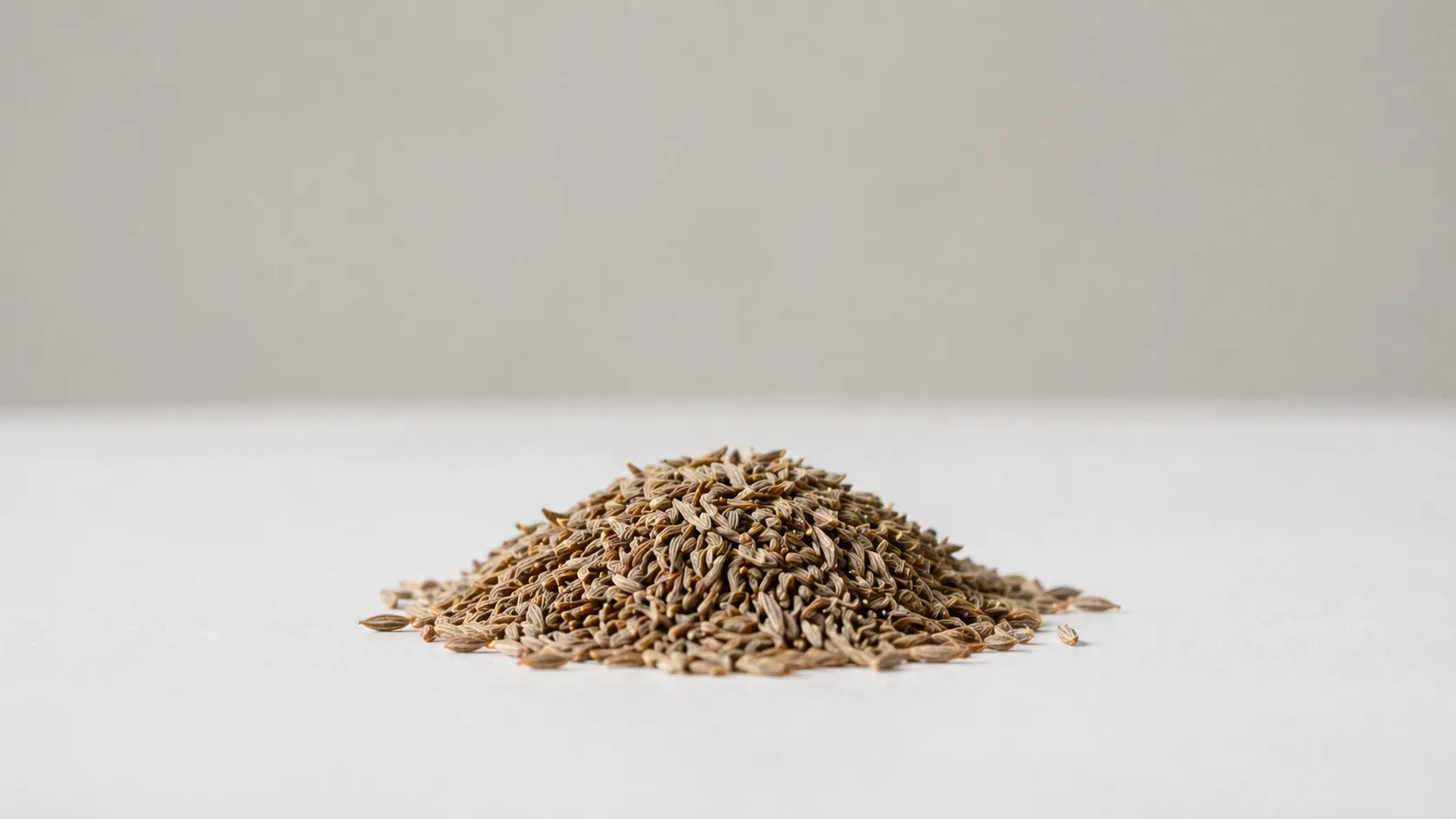
Choking risk
Cumin cooked into food is a low choking risk, and neither the CDC nor the AAP lists it as one to avoid.
Mix it into food rather than offering dry powder, which can make baby cough, and cook whole seeds into a dish so they soften and blend in. See how to serve for age-by-age prep.
Allergens
Cumin is not a common food allergen, so a true allergy to it is rare.[1]
Start with a small amount and watch for a reaction.
If baby refuses
Cumin has a bold, earthy flavor that can be a lot for a new palate. Use a smaller pinch next time and build up slowly, and try it cooked into a dhal, soup, or roasted vegetables, where other flavors balance it out.
How to serve
6-24 months+
A pinch of ground cumin in cooking
Stirred into food, not sprinkled on top
From 6 months, cook a pinch of ground cumin into baby's food - lentils, vegetable mashes, rice, beans. Spice is about flavor, not heat: cumin is warm and earthy, not spicy, so there's no reason to wait.
Start with a small pinch and let dishes get gradually more fragrant as baby gets used to it - by the toddler years, cumin can season family curries, stews, and roasted vegetables at full family strength.
Skip pre-mixed spice blends like taco or curry seasoning unless you've checked the label - salt is usually the first or second ingredient.
How to cook
Stir ground cumin into the pot while the food cooks so the flavor mellows into the dish. If you're using whole seeds, toast them briefly in a dry pan and grind them - whole seeds are safe but can taste sharp and catch in the throat as a dry sprinkle.