 HeySolids
Choking risk
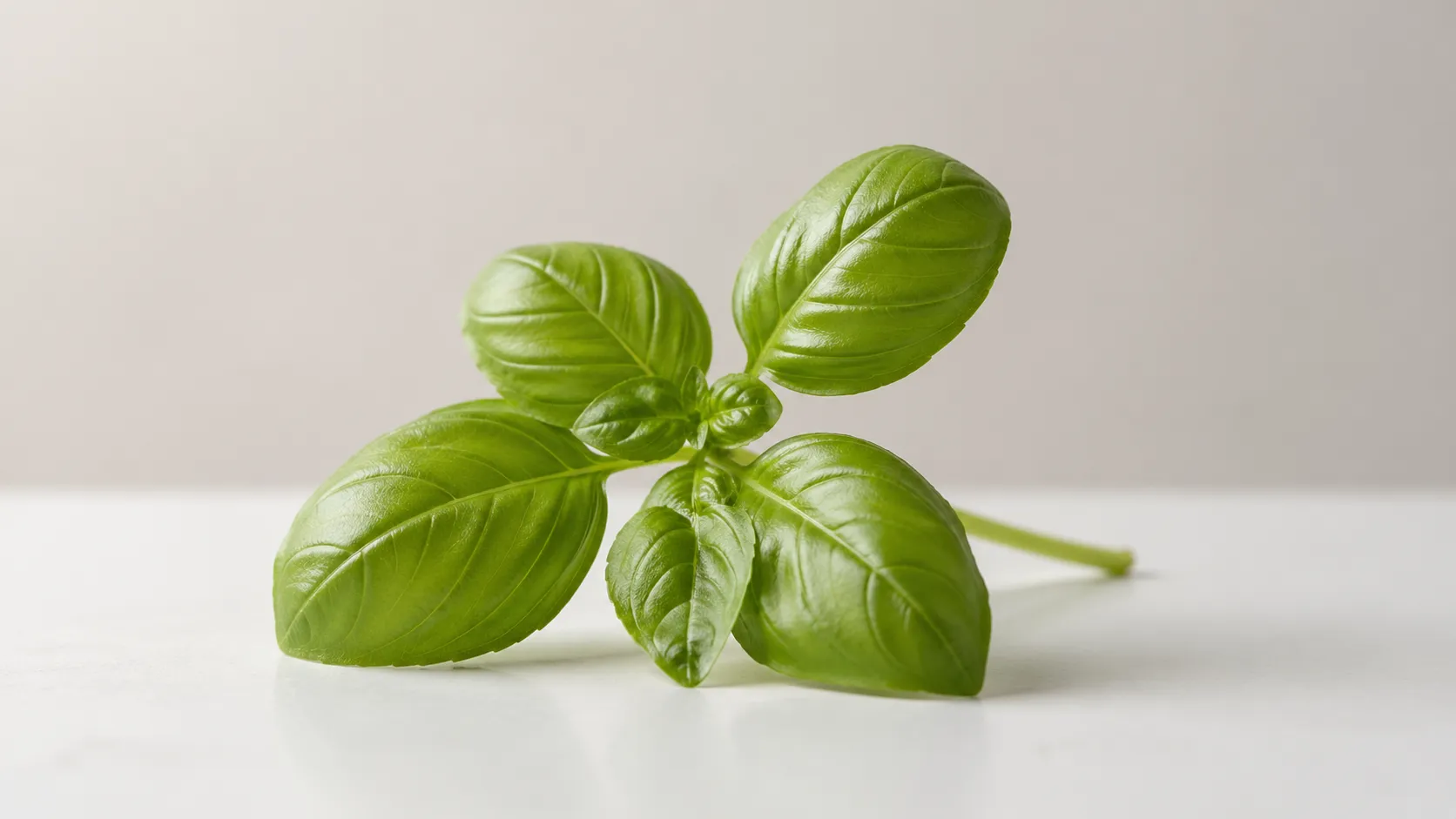
Basil stirred into food is a low choking risk - a soft leaf used as a flavoring, not a piece baby eats on its own.
Chop or tear basil small, or blend it into a sauce, so a large whole leaf does not stick to the roof of the mouth. See how to serve for age-by-age prep.
Allergens
Basil is not a common food allergen, so a true allergy to it is rare.[1]
Start with a small amount and watch for a reaction.
If baby refuses
Basil has a distinctive, aromatic flavour with a slight aniseed note. If baby pulls a face, use less next time and stir it into a dish they already enjoy, like tomato sauce, where it blends in. A pinch of dried basil cooked into food is a gentler start than fresh.
How to serve
6+ months old
Finely chopped or torn into food
A little chopped basil stirred through a dish
Use basil as a flavoring, not a food on its own. Tear or finely chop a little fresh basil into soft, scoopable foods like tomato and vegetable sauces, pasta, or scrambled egg. Keep the pieces small, or blend the basil into the sauce, and start small while baby gets used to the flavor.[5]
How to cook
Fresh basil needs no cooking - stir it in near the end so it keeps its aroma, or blend it smoothly into a sauce. A pinch of dried basil can be cooked into the dish instead. Add no salt.
9+ months old
Chopped into family-style dishes
To taste, stirred into food
Keep building flavor and be a little bolder with basil in family-style dishes like tomato pasta sauces, soups, eggs, and homemade low-salt pesto. Keep the leaves finely chopped or blended in rather than served whole, and let basil and other aromatics do the seasoning instead of salt.[5]
How to cook
Stir chopped fresh basil through sauces and pasta, or blend it into a homemade pesto. Keep any pesto low in salt; it usually contains hard cheese and pine nuts or cashews.
12+ months old
Used across family meals
A small amount in everyday cooking
Basil can now be used across family meals much as you would for everyone else - chopped into tomato and pasta dishes, eggs, salads, and homemade pesto. Keep the everyday amounts small and culinary, and use a low-salt homemade pesto or plain chopped basil rather than salty store-bought versions.[4]
How to cook
Chop or tear basil into family dishes as usual, or blend it into a homemade pesto. Keep larger whole leaves small if baby is still managing texture.
6-24 months+
A pinch, stirred into food
A small amount, fresh or dried
Basil is a flavouring rather than a food on its own - a little lifts tomato sauces, pasta, soups, eggs, and roasted vegetables.
Tear or finely chop fresh leaves and stir them in, or use a pinch of dried basil, which is milder. Add fresh basil near the end of cooking, since the flavour fades with heat, and start with a small amount and build up as baby gets used to it.
There's no reason to hold basil back - herbs are a good way to add flavour without salt.
How to prepare
Wash fresh basil well, then tear or finely chop the leaves so there are no large pieces, and stir them through the dish. Dried basil can go straight in. A little goes a long way, so add gradually and taste as you go.
Sources
- Food Allergies (the 9 major US allergens) - FDA
- Pollen Food Allergy Syndrome - ACAAI
- Higher Risk for Sensitization to Commonly Consumed Herbs among Birch, Mugwort or Grass Pollinosis - Int J Environ Res Public Health (PMC9820039)
- Foods and Drinks to Avoid or Limit (honey, added sugar, salt) - CDC
- When, What, and How to Introduce Solid Foods - CDC
- Basil, fresh (FDC 172232) - USDA FoodData Central