 HeySolids
Choking risk
Mint is a low choking risk - a soft herb used as a flavoring, not a food baby eats on its own.
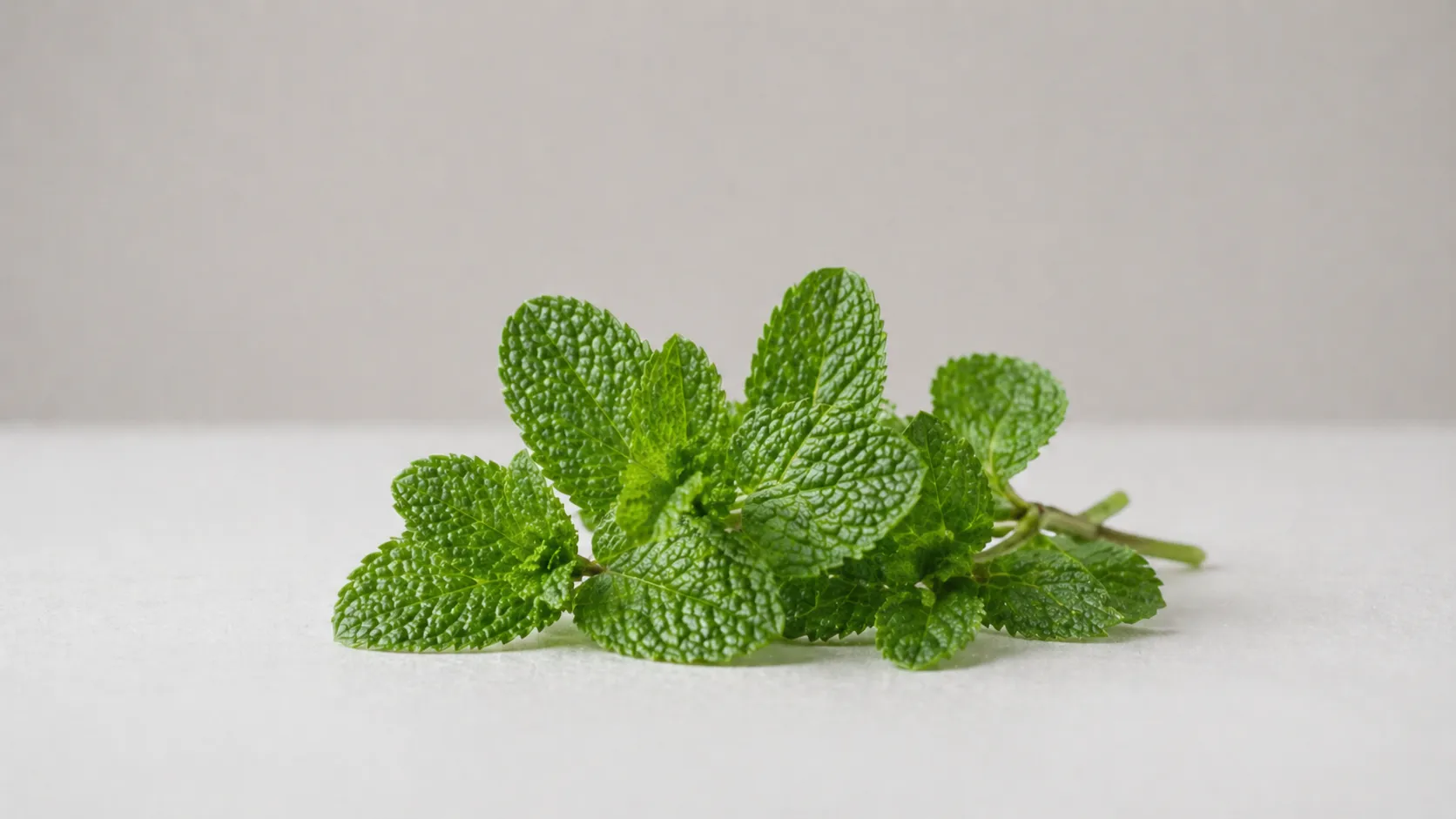
Chop the leaves fine or blend them into a sauce or yogurt, since whole leaves are tough and papery for a baby, and pick the leaves off the stems - stems stay tough and bitter. See how to serve for age-by-age prep.
Allergens
Mint is not a common food allergen, so a true allergy to it is rare.[1]
Start with a small amount and watch for a reaction.
If baby refuses
Mint has a cool, slightly menthol flavor that some babies find surprising. If baby pulls a face, use less next time and stir it into a dish they already enjoy - plain yogurt, mashed peas, or soft fruit.
How to serve
6+ months old
Finely chopped fresh mint in soft food
A pinch of chopped leaves, stirred in
From 6 months, stir a pinch of finely chopped fresh mint into baby's food - plain yogurt, mashed peas, soft fruit, or a vegetable mash. Mint is cool and fresh, not spicy, so there's no reason to wait.
Chop it fine and stir it in just before serving: whole leaves are tough and papery for a baby, so at this age mint arrives chopped, never as a loose leaf.
How to prepare
No cooking needed. Pick the leaves off the stems - stems stay tough and bitter - then stack, roll, and slice them fine, and chop again across. A few leaves is plenty; mint gets stronger as it's cut.
12+ months old
Mint across family dishes
Chopped into food, or cooked into dishes
Mint can go further now - chopped through grain salads and mint-yogurt sauces, cooked into peas and stews, stirred into soft fruit salads.
Keep it chopped rather than whole-leaf: even at this age, a whole mint leaf is chewy enough to be spat out rather than eaten, so fine chopping is still the way it works.
A mint-yogurt dip alongside vegetables is an easy first sauce a toddler can dip into.
How to prepare
Pick the leaves off the stems - stems stay tough and bitter - then stack, roll, and slice them fine, and chop again across. Add mint at the end of cooking: long heat dulls it to nothing, so it goes in when the pot comes off.
Sources
- Food Allergies (the 9 major US allergens) - FDA
- Pollen Food Allergy Syndrome - ACAAI
- Higher Risk for Sensitization to Commonly Consumed Herbs among Birch, Mugwort or Grass Pollinosis - Int J Environ Res Public Health (PMC9820039)
- Foods and Drinks to Avoid or Limit (honey, added sugar, salt) - CDC
- When, What, and How to Introduce Solid Foods - CDC
- Spearmint, fresh (FDC 173475) - USDA FoodData Central