 HeySolids
Choking risk
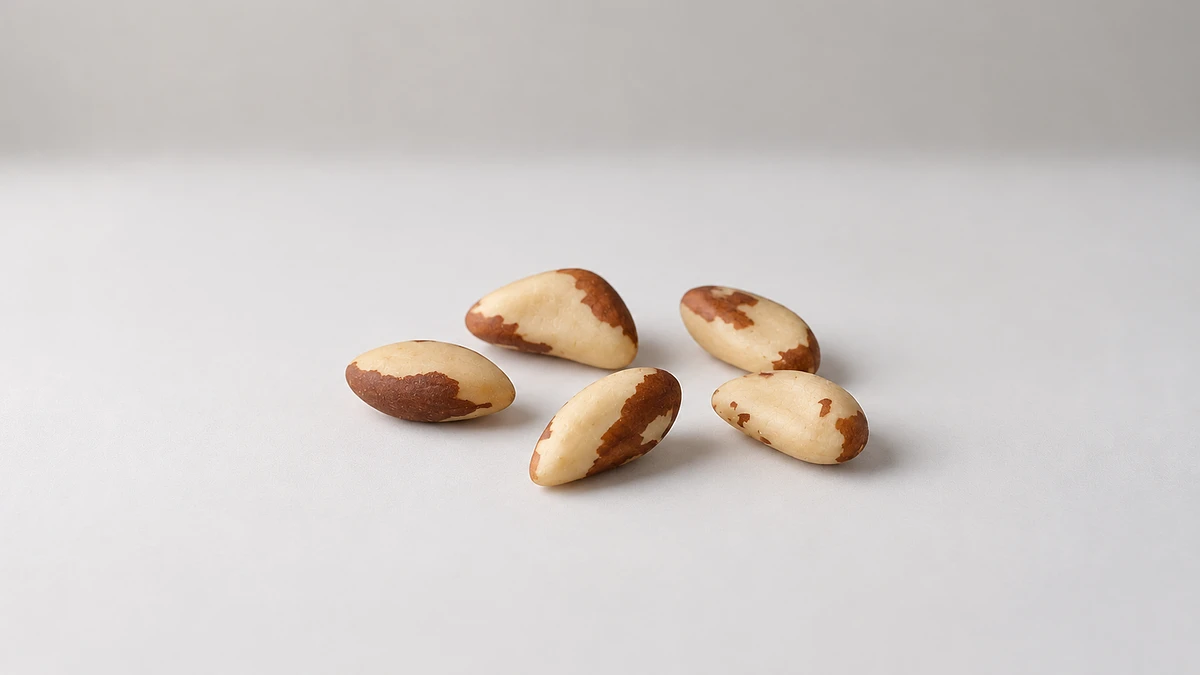
Whole Brazil nuts are a high choking risk - large, hard and smooth, and the CDC lists whole and chopped nuts among the foods to keep from children under 4.
Until then, serve Brazil nut only as a fine powder stirred into food or as thinly spread, well-thinned nut butter. See how to serve for age-by-age prep.
Allergens
Brazil nut is a tree nut, one of the nine major allergens, and there's no reason to delay it: waiting doesn't prevent allergies, and allergens can start alongside other solids from around 6 months.[3]
If your baby has severe eczema or an existing food allergy, check with your pediatrician before starting allergens. Offer it earlier in the day, not near bedtime, starting with a small pinch of ground nut mixed into a familiar food, and wait 10 minutes before carrying on with the meal.[4]
Watch for a reaction over the next couple of hours. Brazil nut is one tree nut among several - tree-nut allergies often travel together, so once it's tolerated, keep it in the rotation with almond, cashew, walnut and the rest, in the small amounts selenium allows.[3]
If baby refuses
Brazil nut is mild and buttery, so refusal is usually about texture. A pinch of fine powder in oatmeal or yogurt is close to invisible; a drop of thinned butter on a fruit mash is the next step. Don't push the amount up to win acceptance - the limit here is selenium, not taste.
Food safety
Selenium is the limit. Brazil nuts are the richest food source there is - an ounce (6 to 8 nuts) can hold over 500 µg, and a single nut more than 100 µg - against an upper intake level of 60 µg a day for a 7-to-12-month-old and 90 µg at 1 to 3 years. Regular excess causes selenosis, which shows first as brittle or lost hair and nails, upset stomach and tiredness. A pinch of ground nut now and then is far below that; a nut a day for a toddler is not.[1][2][6]
Store them cold and use them fresh: Brazil nuts are high in oil and go rancid quickly, and a rancid nut tastes sharp and paint-like - often the real reason a baby refuses. Buy small bags, keep them in the fridge or freezer, and taste one yourself first.
How to serve
6+ months old
A pinch of finely ground Brazil nut, or well-thinned butter
About 1/4 teaspoon, a fraction of one nut
Grind a few Brazil nuts to a fine powder and stir a pinch - about 1/4 teaspoon - into oatmeal, yogurt or a fruit mash. Or thin a small amount of smooth Brazil nut butter with warm water or baby's usual milk into a loose paste. Never whole or chopped nuts, and never butter thick from the jar. Keep it to a fraction of a nut's worth, and not every day.
The first time
Offer Brazil nut earlier in the day, not near bedtime. Dab a little thinned butter or a pinch of powder onto a familiar food and let baby taste it - about 1/4 teaspoon in total. Wait 10 minutes, and if all looks well, carry on with the meal. Watch for a reaction over the next couple of hours.
How to cook
No cooking needed. Pulse the nuts in a food processor until powdery, or mix about 1/2 teaspoon of smooth butter with 2 teaspoons of warm liquid until loose and pourable.
9+ months old
Ground nut stirred in, or a thin smear on soft strips
A thin layer on a finger-length strip
Keep Brazil nut in the rotation, in small amounts: a pinch of powder folded into pancakes or a mash, or a thin layer of butter on a soft strip of toast. Keep it smooth and thinly spread, never a blob, and still no whole or chopped nuts. Once or twice a week is plenty - the selenium adds up.
How to cook
No cooking needed. Spread butter thin enough to see the toast through it, or stir ground nut into batter before cooking.
12+ months old
A thin spread or a spoonful of ground nut, occasionally
A thin layer, or a pinch stirred in
A toddler can have Brazil nut butter spread thinly on toast or a pinch of ground nut in baking, with water alongside to help wash down sticky bites. The ceiling at 1 to 3 years is 90 µg of selenium a day, which one nut can exceed on its own - so a fraction of a nut's worth per serving, a couple of times a week at most. Whole and chopped Brazil nuts wait until around age 4, and until then they come out of the mixed-nut bowl before it reaches the table.[2][1]
How to cook
No cooking needed. Spread the butter in a thin layer that soaks slightly into the toast, or fold ground nut into pancake or muffin batter.
Tips
- Think in fractions of a nut, not handfuls. One Brazil nut can carry more selenium than a baby's daily upper limit. Grind a few nuts to a powder and use a pinch, or thin a little Brazil nut butter - and don't make it a daily food.
- Grind your own. Brazil nut butter is rare on shelves. A few seconds in a food processor turns the nuts to a fine powder for stirring into food; longer makes a spreadable butter. Store ground nuts in the fridge - their oils go rancid fast and taste bitter when they do.
- Mixed-nut bags count. Brazil nuts are a standard part of mixed nuts and some trail mixes, which is where older children tend to meet them whole - the whole nut stays off the menu until around 4.
Sources
- Selenium (a single Brazil nut may provide more than 100 µg) - Linus Pauling Institute, Oregon State University
- Selenium Fact Sheet for Health Professionals (UL 60 µg/day at 7-12 months, 90 µg at 1-3 years) - NIH Office of Dietary Supplements
- Tree Nut Allergy - FARE
- When to Introduce Egg, Peanut Butter & Other Common Food Allergens - AAP HealthyChildren
- Choking Hazards (Infant & Toddler Nutrition) - CDC
- Nuts, brazilnuts, dried, unblanched (FDC 170569) - USDA FoodData Central