 HeySolids
Choking risk
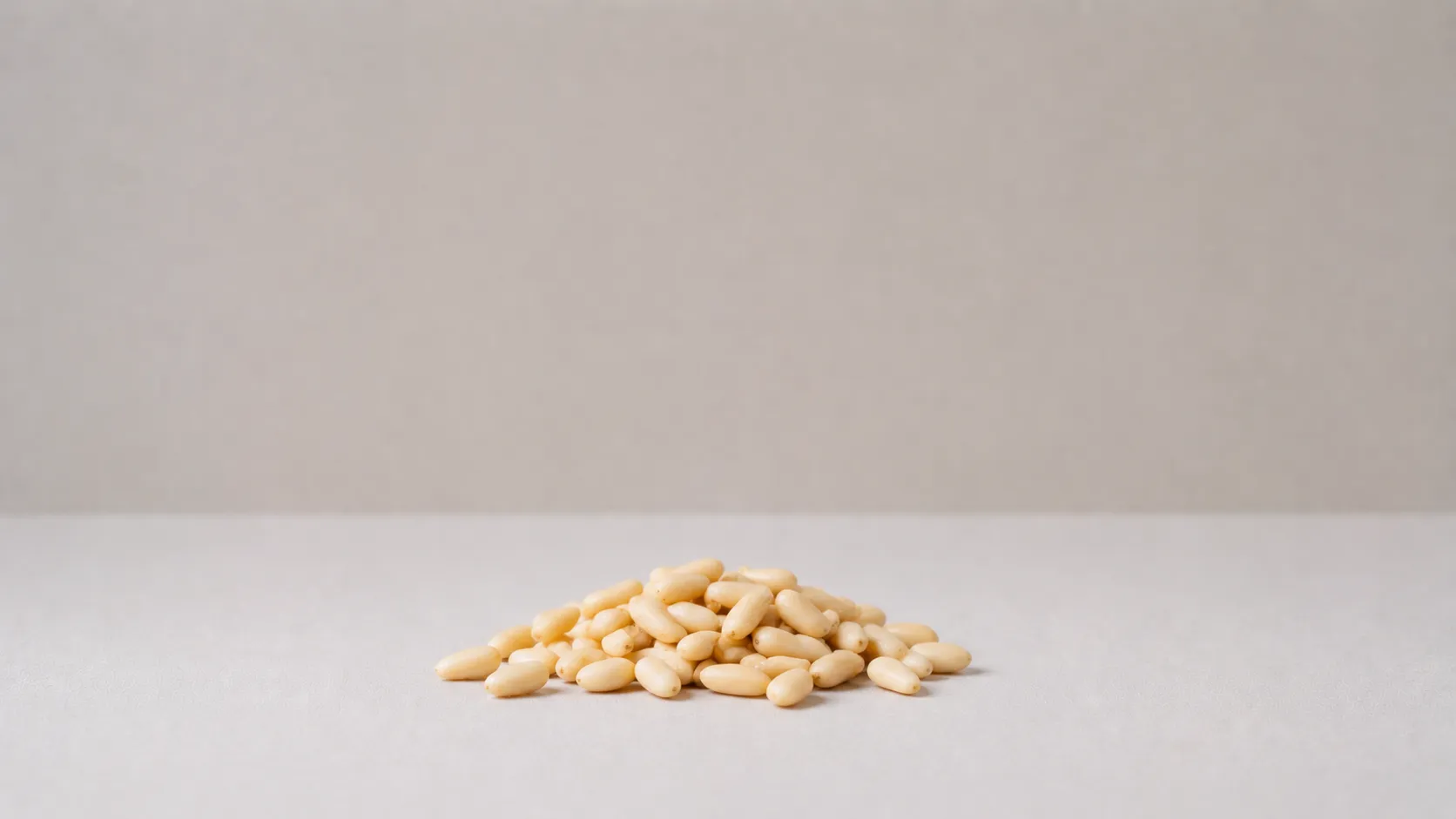
Pine nuts are a high choking risk. They are small, hard, and smooth, which is the shape most likely to block an airway, and whole nuts are not served before age 4.
Serve them finely ground or blended smooth into a sauce, never whole. See how to serve for age-by-age prep.
Allergens
Pine nuts are a common food allergen. Botanically they are seeds, but the FDA groups them with tree nuts, so they appear on labels that way.[3] There's no reason to delay them: waiting doesn't prevent allergies, and allergens can start alongside other solids from around 6 months.
Tree nuts are not one allergen. A reaction to pine nuts can happen on its own, without any allergy to almond, cashew, or the others - so each nut is introduced separately.
If your baby has severe eczema or an existing food allergy, check with your pediatrician before starting allergens.
Start with about 1/4 teaspoon of finely ground pine nut mixed into a familiar food, earlier in the day, not near bedtime. Wait 10 minutes, and if all looks well, carry on with the meal. Watch for a reaction over the next couple of hours. Build up gradually from there, and keep pine nuts in the diet a few times a week.[2]
If baby refuses
Pine nut has a mild, buttery flavor that is rarely turned down. If baby is unsure, stir a little ground pine nut or homemade pesto into a familiar food like soft pasta or mash, then build up.
Pine mouth
Some people get a bitter or metallic taste in the mouth a day or two after eating pine nuts. It is harmless and it passes on its own, usually within a week or two, but while it lasts it makes everything else taste bitter too.[7] If your baby eats pine nuts and then turns down foods they normally like, this is worth knowing about - it is easy to read as fussiness or as a reaction, and it is neither.
How to serve
6+ months old
Finely ground pine nut or smooth pesto, stirred in
About 1/4 teaspoon to start
Stir a small amount of finely ground pine nut into puree, yogurt, or oatmeal, or blend homemade pesto smooth and mix it into soft mash or pasta. Always ground or blended, never whole.
First taste
For the very first taste, mix a pinch of finely ground pine nut into a little of baby's usual food and offer it on the tip of a clean finger for them to suck off. That way you can see exactly how much went in. If all looks well after 10 minutes, carry on with the rest of the meal.
How to cook
Grind pine nuts in a clean grinder until completely fine with no pieces, then stir into wet food. For pesto, blend with basil and a little oil, no added salt.[5]
9+ months old
Ground pine nut stirred or baked in, or pesto
A small spoonful stirred in
Keep pine nut on the menu. Stir finely ground pine nut into soft food, fold it into muffin or pancake batter, or blend it into a low-salt pesto through soft pasta. Still ground or blended, never whole nuts.
How to cook
No cooking needed. Grind pine nuts fine and stir into food or batter, or blend smooth into pesto. Toasting lightly before grinding deepens the flavor.
12+ months old
Ground or blended pine nut across dishes
A small spoonful, stirred or baked in
Use pine nut across family food: ground into mashes, sauces, and bakes, or blended into homemade pesto for soft pasta. Make the pesto without salt and season the grown-ups' bowls at the table. Whole nuts are not served before age 4.
How to cook
No cooking needed. Grind pine nuts fine or blend them into smooth pesto, then add to dishes. Leave the salt out - shop-bought pesto is too salty for this age.
Sources
- Choking Hazards (Infant & Toddler Nutrition) - CDC
- When to Introduce Egg, Peanut Butter & Other Common Food Allergens - AAP HealthyChildren
- Food Allergies (the 9 major US allergens, including tree nuts such as pine nut) - FDA
- When, What, and How to Introduce Solid Foods - CDC
- Foods and Drinks to Avoid or Limit (added salt) - CDC
- Nuts, pine nuts, dried (FDC 170591) - USDA FoodData Central
- An investigational report into the causes of pine mouth events in US consumers," Food and Chemical Toxicology, 2013