 HeySolids
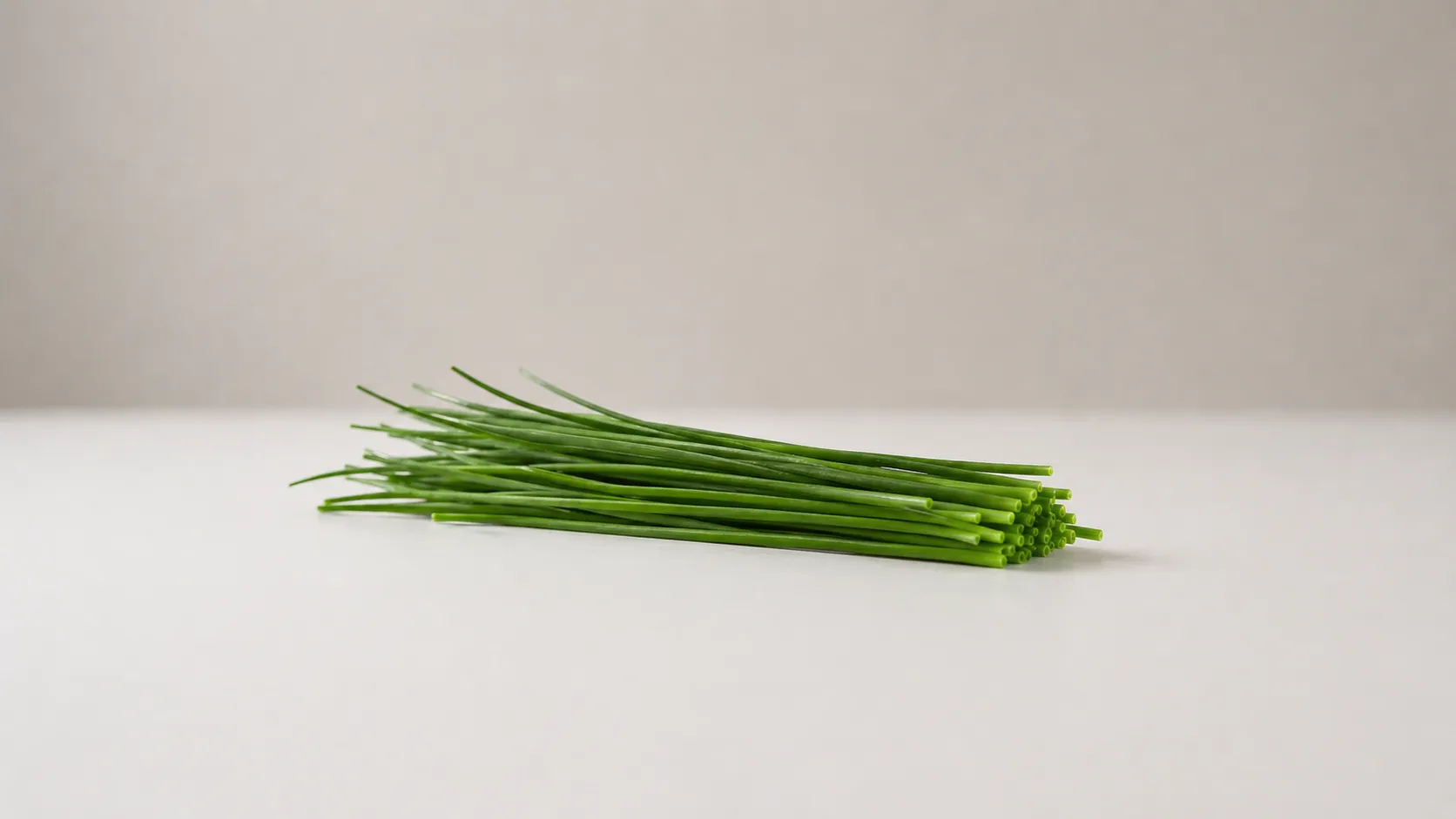
Choking risk
Chives are a low choking risk - a soft seasoning, not a food baby eats on its own.
Snip them fine with scissors before stirring them in, since long whole strands turn stringy in the mouth. See how to serve for age-by-age prep.
Allergens
Chives are not a common food allergen, so a true allergy to them is rare.[1]
Start with a small amount and watch for a reaction.
If baby refuses
Chives are a background flavor, so a refused dish usually means the meal itself, not the chives. Use a smaller amount next time and stir it into a mild base baby already enjoys, like mashed potato or scrambled egg.
How to serve
6+ months old
Finely snipped into food
A small amount stirred through a dish
Use chives as a flavoring, not a food on its own. Snip a little fresh chives finely and stir them into soft, scoopable foods such as mashed potato, scrambled egg, or soft cooked vegetables. Snip the strands short so they are not stringy, and keep the amount small while baby gets used to the gentle oniony taste.[4]
How to cook
Fresh chives need no cooking - snip them finely with scissors and stir them in toward the end so they keep their flavor. Keep the amount small and add no salt.
9+ months old
Snipped into family-style dishes
To taste, stirred into food
Keep building flavor and be a little bolder with chives in family-style dishes such as soft cheese dips, soups, potato salad, and egg dishes. Keep the strands finely snipped rather than served long, and let the chives and other aromatics do the seasoning instead of salt.[4]
How to cook
Stir finely snipped fresh chives through dips, soups, potato dishes, and eggs toward the end of cooking to keep their fresh flavor. Keep the amount small and culinary.
12+ months old
Used across family meals
A small amount in everyday cooking
Chives can now be used across family meals much as you would for everyone else - snipped into mashed and baked potato, eggs, soft cheese dips, soups, and salads. Keep the everyday amounts small and culinary, and snip longer strands short if baby is still managing texture.[3]
How to cook
Snip fresh chives into family dishes as usual, stirring them in toward the end to keep their fresh flavor. Keep baby's portion salt-free.
6-24 months +
Snipped fine over food, off the heat
A pinch of snipped chives stirred in
From 6 months, snip a pinch of chives over baby's food - scrambled egg, mashed potato, yogurt sauces, soft vegetables.
Chives are the gentlest of the onion family: all the flavor, none of the sharpness, so there's no reason to wait.
Start with a small pinch and use them more freely as baby gets used to the taste - by the toddler years, chives can go over the family's eggs, potatoes, and soups as generously as you like. If onions themselves get refused, chives are the soft way back in.
How to cook
No cooking - ever, really. Chives lose their flavor in heat faster than any other herb, so they go on after the pot comes off, snipped straight over the plate with scissors.
Snip them fine, long strands turn stringy in the mouth.