 HeySolids
Choking risk
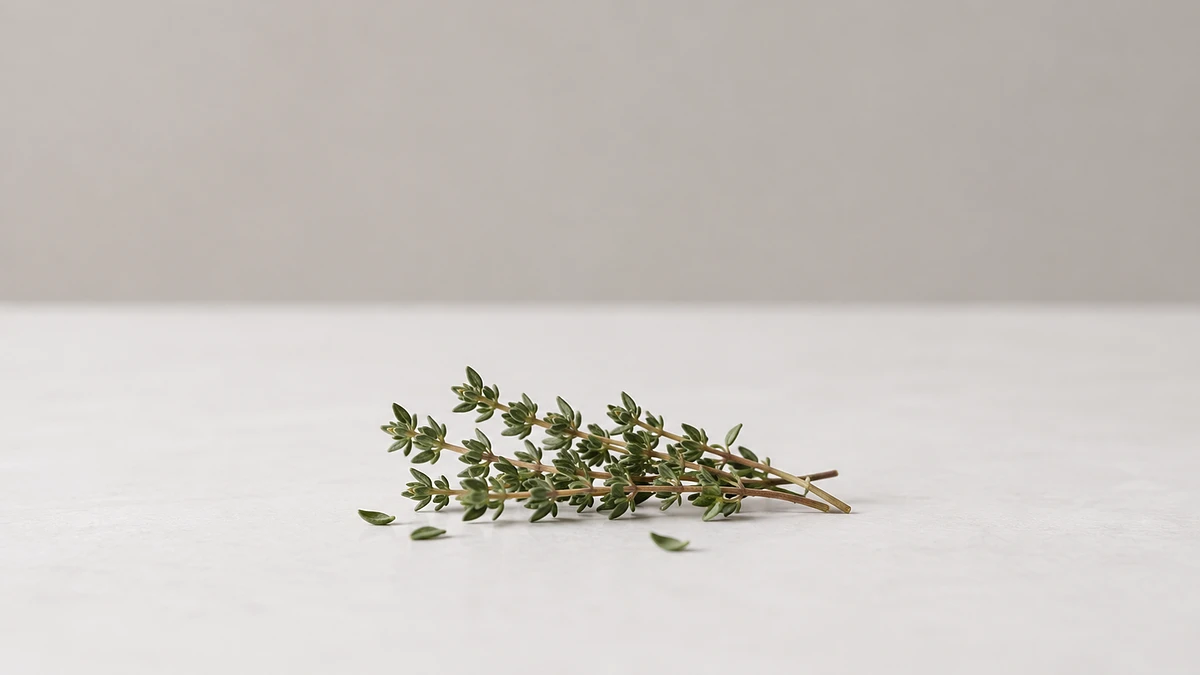
Thyme is a low choking risk as a flavoring - the leaves are tiny and soften in cooking, but the stems are woody and should never end up in baby's food.
Cook whole sprigs into the dish and lift them out before serving, or strip the leaves off the stems first and chop them fine. See how to serve for age-by-age prep.
Allergens
Thyme is not a common food allergen, so a true allergy to it is rare.[1]
Start with a small amount and watch for a reaction.
If baby refuses
Thyme tastes earthy, with a hint of lemon, but it turns bitter if you use too much. If your baby pulls a face, try cooking a whole sprig in the pot next time and taking it out before serving. You get the flavour without it being too strong. Serving it with a food they already enjoy, like roasted carrots or white beans, helps too.
How to serve
6+ months old
Finely chopped or infused into food
A pinch of leaves, or a sprig lifted out before serving
Use thyme as a flavoring, not a food on its own. Drop a whole sprig into a soup, stew, or vegetable puree while it cooks and lift it out before serving, or strip the tiny leaves off the stem and chop them fine into soft foods like mashed sweet potato, beans, or scrambled egg. Start small while baby gets used to the flavor.
How to cook
Thyme likes long, gentle heat - add it at the start so it mellows into the dish. A small pinch of dried, or the leaves from one sprig, is plenty for a family-sized pot. Check for stray stems before serving, and add no salt.
12+ months old
Used across family meals
A small amount in everyday cooking
Thyme can now season family meals much as it does for everyone else - roast chicken and vegetables, soups, beans, tomato sauces, and savory baking. Keep the amounts culinary, and keep stripping the leaves off woody stems or lifting sprigs out before the plate reaches your toddler.
How to cook
Cook thyme into dishes as usual, fresh or dried. Lemon thyme is a milder, citrusy variety worth trying if regular thyme reads as too strong. Still add no salt to your toddler's portion.
Tips
- Tie a bouquet garni. A sprig of thyme, a bay leaf, and a few parsley stems tied with kitchen string go into soups, stews, and beans as one bundle - and come out in one lift, so nothing woody is left behind in baby's bowl.
Sources
- Food Allergies (the 9 major US allergens) - FDA
- Pollen Food Allergy Syndrome - ACAAI
- Higher Risk for Sensitization to Commonly Consumed Herbs among Birch, Mugwort or Grass Pollinosis - Int J Environ Res Public Health (PMC9820039)
- Foods and Drinks to Avoid or Limit (honey, added sugar, salt) - CDC
- When, What, and How to Introduce Solid Foods - CDC
- Spices, thyme, dried (FDC 170938) and Thyme, fresh (FDC 173470) - USDA FoodData Central