 HeySolids
Choking risk
Garlic cooked into food is a low choking risk - it is a seasoning, not a piece baby eats on its own.
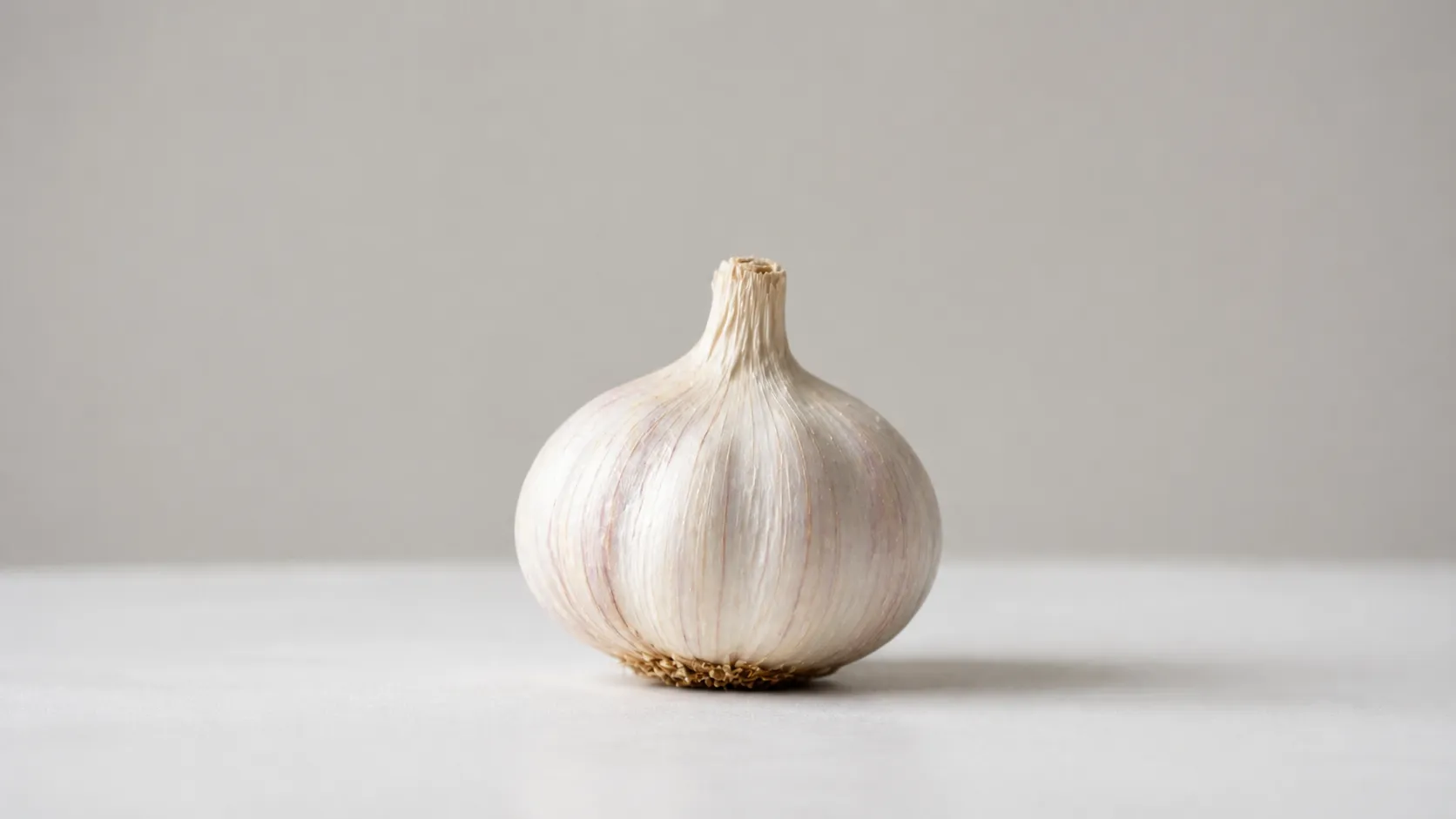
Cook garlic and crush or finely mince it into the dish, and never offer a whole raw clove or large pieces of raw garlic. See how to serve for age-by-age prep.
Allergens
Garlic is not a common food allergen, so a true allergy to it is rare.[1]
Start with a small amount and watch for a reaction.
If baby refuses
Raw or heavily cooked garlic can taste sharp and lingering, which is a lot for a new palate. Cook it gently rather than browning it - roasted or slowly softened garlic turns sweet and mellow, nothing like the bite of raw. Use less than you would for yourself, tuck it into a dish baby already likes rather than making it the star, and give it a few tries: strong flavours often take several meetings before they land.
How to serve
6-24 months+
Cooked and crushed into food
A small amount stirred through a dish
Garlic is a flavouring, not a food on its own, and that doesn't change as your baby grows. Stir a little cooked, crushed, or finely minced garlic into vegetable purees, mashes, sauces, pasta, stews, dals, and roasted vegetables.
Cooked garlic is much milder than raw, so start small and be bolder as your baby gets used to it - let garlic and other aromatics do the seasoning instead of salt.
Once your child is eating family food, blended raw garlic in dips like hummus works well too. Never offer whole raw cloves or large pieces of raw garlic at any age.
How to cook
Soften minced garlic in a little oil over low heat until fragrant but not browned, then stir it through the dish. To roast, wrap a whole head in foil and bake at 375°F until the cloves are soft, then squeeze them out and mash them in - roasted garlic is sweet and mellow.
Use fresh garlic rather than garlic salt or other salty shortcuts.
Tips
- Roasting turns it sweet. Raw garlic is sharp, but a whole head wrapped in foil and roasted until soft goes mellow and almost sweet - squeeze the cloves out and mash them into anything. It's the easiest way to introduce garlic to a cautious eater.
- Don't let it brown. Garlic burns fast and turns bitter - a bitter dish is a refused dish. Soften it gently in oil over low heat until it smells good, not until it colours.
- Fresh, not garlic salt. Garlic powder is fine, but garlic salt is mostly salt - and it's an easy one to grab by accident. Fresh cloves or plain powder give you the flavour without it.
Sources
- Food Allergies (the 9 major US allergens) - FDA
- Allergic hypersensitivity to garlic and onion in children and adults - Allergol Immunopathol (ScienceDirect)
- Foods and Drinks to Avoid or Limit (honey, added sugar, salt) - CDC
- When, What, and How to Introduce Solid Foods - CDC
- Garlic, raw (FDC 169230) - USDA FoodData Central