 HeySolids
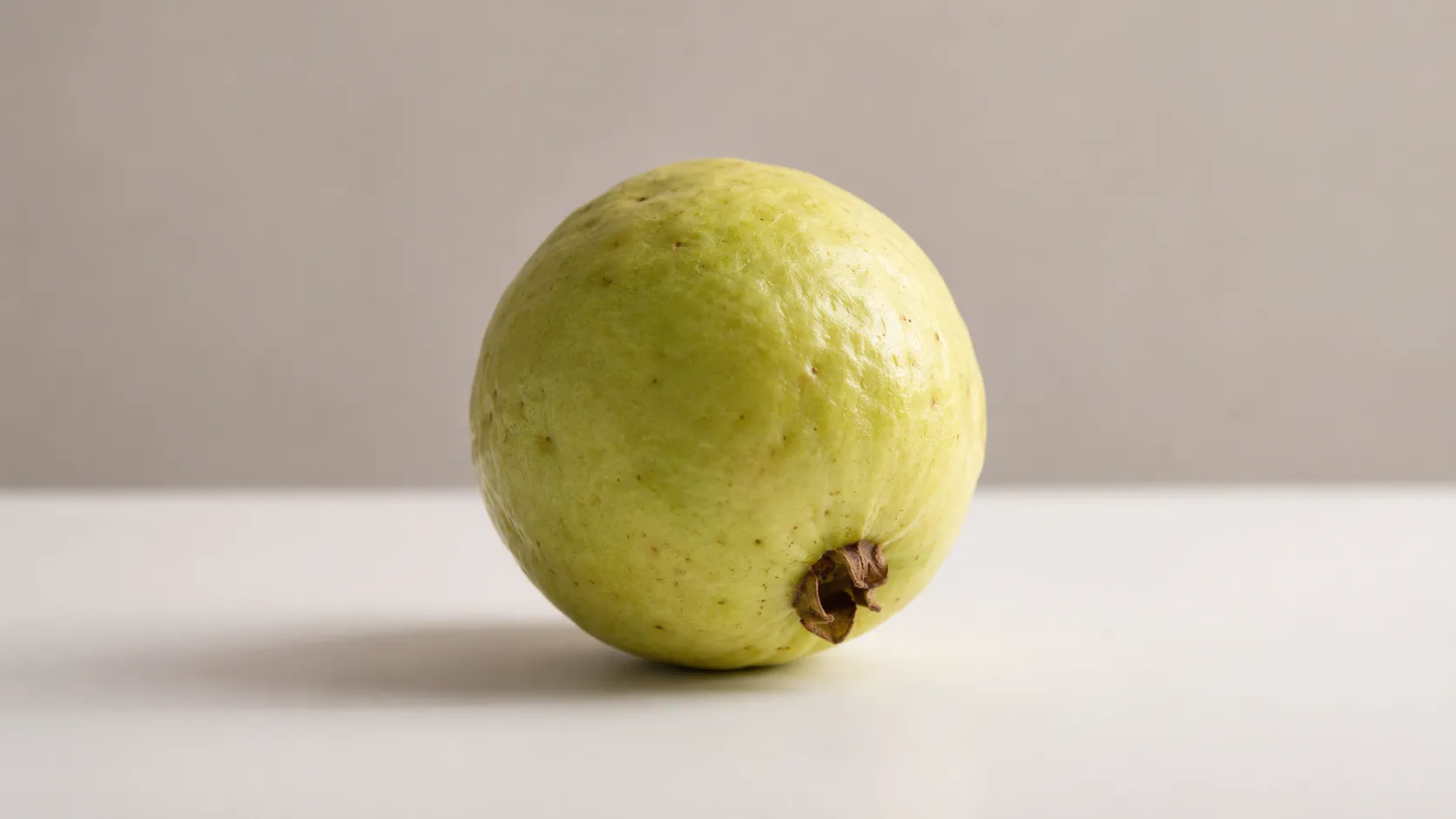
Choking risk
Guava is a moderate choking risk - the center holds many small, hard seeds, and firm or underripe flesh can lodge in the airway.
Use only fully ripe guava, scoop out and discard the hard seedy center, and serve the soft flesh mashed or in small soft pieces. See how to serve for age-by-age prep.
Allergens
Guava is not a common food allergen, so a true allergy to it is rare.[2]
Start with a small amount and watch for a reaction.
If baby refuses
Guava is intensely fragrant - you smell it across the room - and that can surprise a baby. First check ripeness: a ripe guava smells sweet and floral and gives slightly to a squeeze, while an underripe one is firm, tart, and barely smells at all. Then soften the introduction: stir the flesh through yogurt or oatmeal, or blend it with banana. Keep offering it - tastes change with repeat tries.
How to serve
6+ months old
Mashed flesh or a large deseeded half
Mash on a spoon, or half a deseeded guava to gnaw
Mash the soft flesh of a fully ripe, deseeded guava and serve it on its own or on a pre-loaded spoon, or stir it through plain whole-milk yogurt or oatmeal. If the guava is at least golf-ball sized and soft, you can hand over a deseeded half to hold and gnaw.[3]
How to cook
No cooking needed - ripe guava is already soft. Halve it, scoop out and discard the hard seedy center, and peel the skin. The flesh should squash easily between two fingers.
9+ months old
Small soft seedless pieces
About 1/2 inch pieces of soft flesh
As the pincer grasp develops, offer small soft pieces of the seedless flesh for picking-up practice. Scoop out the hard seedy center, and serve the fruit fully ripe - a piece should press easily between two fingers. Mashed guava stirred through yogurt or oatmeal still works well.
How to cook
None needed when the fruit is ripe - soft guava is served raw. If yours stays stubbornly firm, don't serve it raw: simmer peeled slices in a little water for 10 minutes or so until they press easily, and serve those soft pieces instead. Peel the skin for now, and scoop the seedy center out either way.
18+ months old
Quartered, to hold and bite from
Wedges of ripe fruit, seedy center scooped
Once your toddler chews well and doesn't stuff their mouth, ripe guava can go to quarters - a wedge to hold and bite soft pieces from, more fruit and less knife-work.
Scoop the seedy center out of each wedge first: the hard seeds don't soften with age or ripeness, so that step doesn't drop off.
The skin can stay on if it's thin and the fruit is fully ripe - peel it whenever it's getting spat out anyway.
If chewing isn't there yet, stay with small pieces - there's no hurry.
How to cook
None needed - quarter a ripe fruit lengthwise, run the knife or a spoon along each wedge to lift out the seedy strip, and serve. A wedge should still press easily between two fingers; a firm quarter means the fruit wasn't ready.
Tips
- Buy with your nose. A ripe guava announces itself - sweet, floral, almost perfume - and one that smells of nothing isn't ready, however it looks. Pick fruit that's fragrant and gives slightly to a squeeze, and let color guide you second: smell is the honest signal.
- Stew the stragglers. Any guava that won't ripen - and the last ones going soft too fast - simmer into a no-sugar compote with apple or pear. Guava's perfume does the work of a dessert on its own, and the stewed version freezes in cubes for months.