 HeySolids
Choking risk
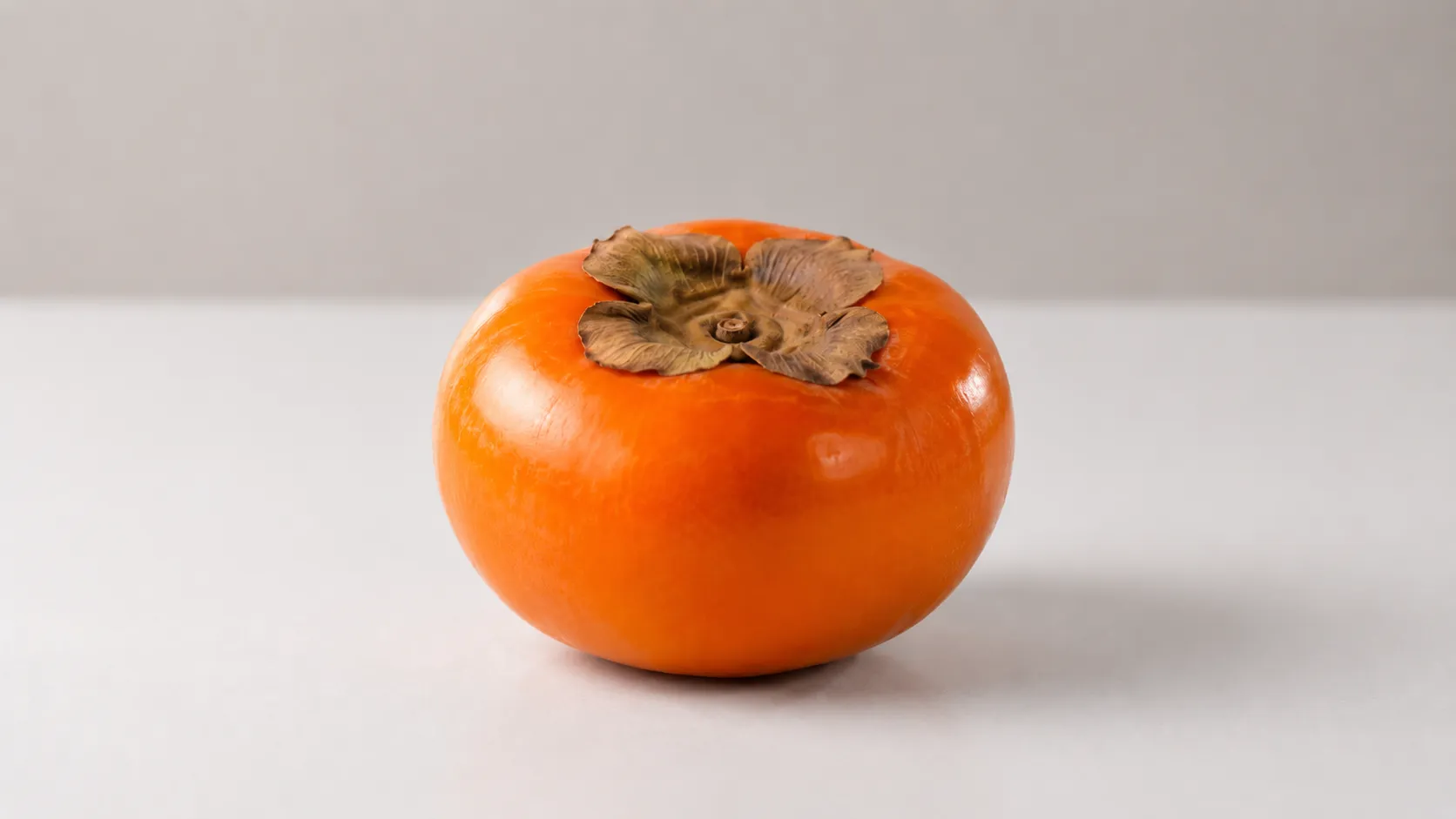
Persimmon is a moderate choking risk - ripe flesh is soft, but a firm or underripe one is hard and round and can block the airway.
Serve only ripe, soft persimmon, peeled and deseeded, and cook until it squashes between two fingers rather than offering crisp chunks or rounds. See how to serve for age-by-age prep.
Allergens
Persimmon is not a common food allergen, so a true allergy to it is rare.[2]
Start with a small amount and watch for a reaction.
If baby refuses
Refusal usually comes down to astringency: an underripe persimmon, especially Hachiya, feels dry and furry in the mouth, so wait until the fruit is fully ripe and soft. Still a no? Stir a little mashed persimmon into yogurt or oatmeal, or serve it at room temperature instead of chilled.
How to serve
6+ months old
Soft mash or large ripe piece
A piece about finger length, peeled and deseeded
Use ripe, soft persimmon. Peel and remove any seeds, then mash the flesh onto a pre-loaded spoon, or offer a large soft piece to grip and gnaw. Scoop ripe Hachiya straight from the skin; soften or cook a firm Fuyu first.
How to cook
Fully ripe persimmon needs no cooking - just peel, deseed, and mash. To soften a firm Fuyu, peel and core it and steam for 8 to 10 minutes until a piece squashes easily between two fingers.
9+ months old
Soft bite-sized pieces
About 1/2 inch pieces for the pincer grasp
As the pincer grasp develops, offer ripe, soft persimmon in small pieces to pick up, peeled and deseeded. Keep using soft Hachiya flesh, a softened Fuyu, or finely grated Fuyu. Skip firm chunks and round slices.
How to cook
Ripe persimmon needs no cooking. For a firmer Fuyu, steam peeled, cored pieces for 6 to 8 minutes until they squash easily, or grate it finely to serve raw.
12+ months old
Soft pieces or thin slices
Bite-sized, about 1/2 inch
Offer ripe persimmon in soft pieces with a fork for utensil practice, peeled and deseeded. As chewing grows you can serve thin slices, but keep a firmer Fuyu cooked tender or very thinly sliced rather than in crisp chunks. It also stirs nicely into yogurt, oatmeal, or smoothies.
How to cook
Ripe persimmon needs no cooking. A firmer Fuyu can be steamed or baked until tender, or grated and thinly sliced to serve raw once your child chews confidently.
Tips
- Know which type you have before you serve it. Fuyu is squat and tomato-shaped and is eaten while still firm. Hachiya is pointed like an acorn and is mouth-puckering until it is completely soft - it needs to feel like a water balloon before it is worth offering.
- To ripen a Hachiya, leave it on the counter and be patient. It can take a week or more. A paper bag with a banana speeds it up.
- Ripe persimmon freezes well. Scoop the pulp into an ice cube tray and freeze it in portions, then thaw a cube to stir through yogurt or oatmeal.