 HeySolids
Choking risk
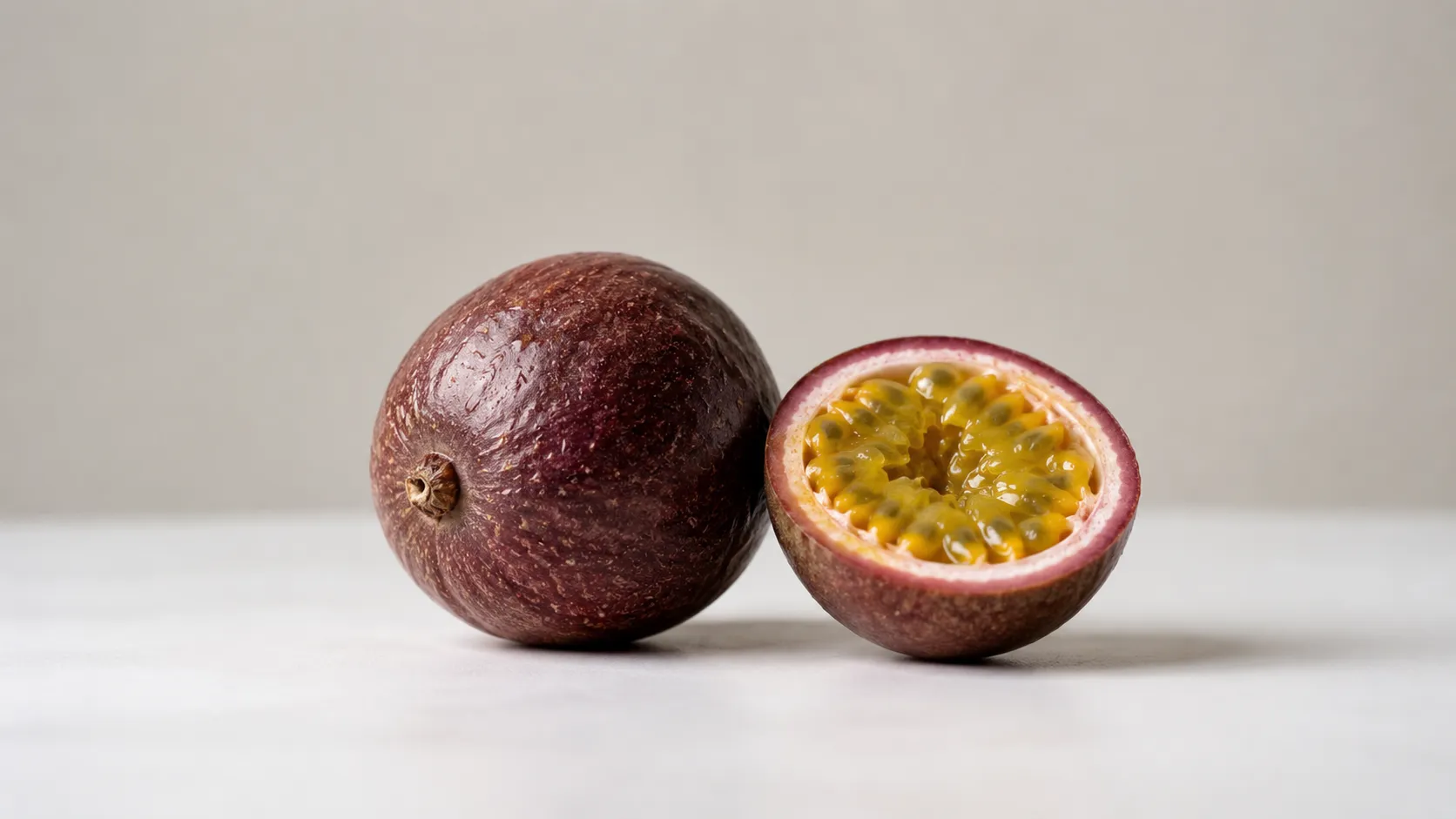
Passionfruit is a low choking risk - the pulp is soft and juicy, and the small seeds are soft enough to eat as they are, crunch and all.
Scoop the pulp from the shell and stir it into soft food rather than handing over a whole half - the shell isn't for eating, and a scooped serving is easier to manage than fruit eaten from the rind. See how to serve for age-by-age prep.
Allergens
Passion fruit is not a common food allergen, so a true allergy to it is rare.[2]
Its natural acids can leave a harmless red rash where the juice touches skin around the mouth. It settles on its own; a gentle face wipe after eating helps.[1]
Start with a small amount and watch for a reaction.
If baby refuses
Passionfruit is genuinely tart, and a sour face is part of the deal - a screwed-up first reaction isn't the same as a refusal. Two fixes: pick a wrinklier fruit, since the wrinkled ones are riper and sweeter, and stir the pulp through plain whole-milk yogurt, oatmeal, or a sweeter fruit puree.
No sugar to win baby over - the sweeter fruit does that job, and sweetened is a habit that outlasts the fruit. Keep offering it - tastes change with repeat tries.
How to serve
6+ months old
Soft pulp stirred into food
A spoonful or two of pulp
Stir the pulp through soft food - plain whole-milk yogurt, oatmeal, a fruit puree - and serve it on a pre-loaded spoon. The tart flavor lands easier mixed into something creamy.
The soft seeds can stay in, crunch and all - unlike pomegranate's, these seeds are soft - or press the pulp through a sieve if you'd rather start smoother. The shell isn't for eating.
How to cook
No cooking needed. Halve a ripe fruit - the wrinklier, the riper - and scoop the pulp out with a spoon, running the spoon right around the shell to get it all. A sieve-press takes the seeds out in a few seconds if you want them out.
12+ months old
Pulp spooned across dishes
A spoonful or two of pulp
Spoon the pulp straight over yogurt or oatmeal, stir it through fruit salad, or blend it into a smoothie. On top rather than hidden is the step here: by now the tartness can be its own flavor, brightened by the sweeter food underneath instead of buried in it. The soft seeds can stay in. The shell isn't for eating. No added sugar.
How to cook
No cooking needed. Halve, scoop, and spoon - a ripe passionfruit is its own single-serving container, and one fruit dresses two or three bowls.
Tips
- Wrinkled is ripe. A smooth, glossy passionfruit isn't ready - the wrinkles mean the sugars have developed and the tartness has settled. Heavy for its size is the other half of the test: a ripe one feels dense with pulp. Smooth and light means you're early; deeply wrinkled and heavy means tonight.
- Buy smooth, wait a few days. Since stores mostly sell them smooth, plan ahead: passionfruit ripens on the counter in three or four days, wrinkling as it goes. Buy a couple ahead of when you want them, and move them to the fridge once wrinkled to hold them there.