 HeySolids
Choking risk
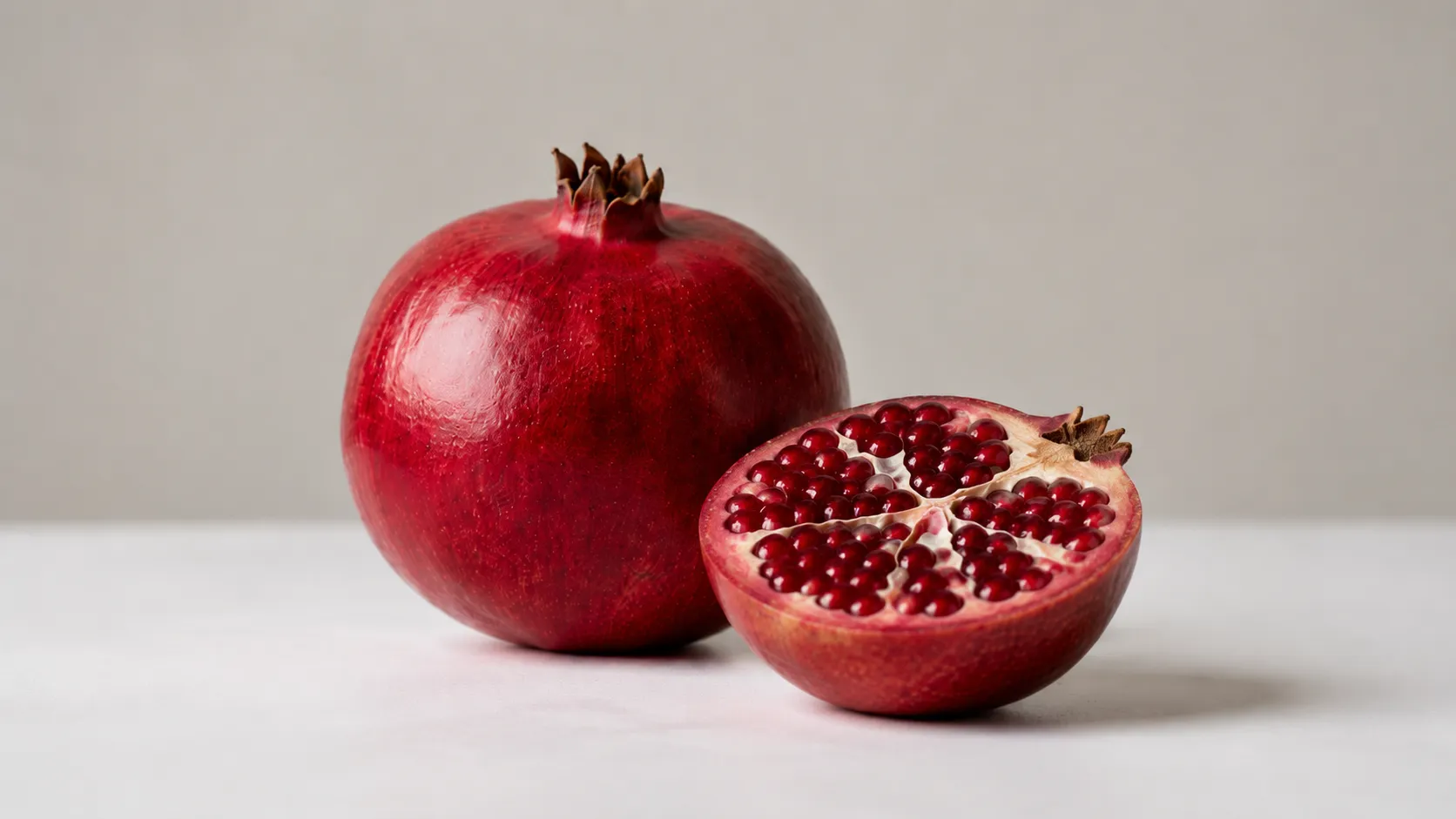
Pomegranate is a moderate choking risk - each juicy aril hides a small, hard seed, exactly the size and firmness that's difficult for a baby to manage.
Crush the arils and strain out the seeds, then stir the juice and pulp through soft food. See how to serve for age-by-age prep.
Allergens
Pomegranate is not a common food allergen, so a true food allergy to it is rare. Its deep red juice can stain skin around the mouth, which is harmless.[3]
Start with a small amount and watch for a reaction.
If baby refuses
Pomegranate can be sharp, which some babies find too tart at first. If it's refused on its own, stir the crushed arils or juice through whole-milk yogurt or oatmeal, where the flavor turns milder.
How to serve
6+ months old
Crushed arils and juice, stirred into soft food
Spoon-fed, never whole arils
Crush the arils, strain out the hard inner seeds, and stir the juice and pulp through oatmeal or whole-milk yogurt, or spoon a little juice over soft fruit.
No whole arils yet - the seed inside is the hazard, and crushing and straining is what removes it.
How to prepare
No cooking needed. Score the skin and open the fruit underwater in a bowl - the arils sink clean and the white pith floats free - then crush them through a sieve and press the juice and pulp through, leaving the hard seeds behind.
9+ months old
Crushed arils, or flattened arils to pick up
Crushed and stirred in, or popped flat for picking-up practice
Keep stirring crushed, strained arils through oatmeal or yogurt. For picking-up practice, press a few arils flat first so they pop and lose their round shape - the small seed inside stays, but once the slippery round package is gone, it's too small to cause trouble. No whole, unpopped arils yet.
How to cook
No cooking needed. Open the fruit underwater in a bowl - the arils sink clean and the white pith floats free. Crush and strain for stirring in, or press each aril flat with the back of a fork for pieces baby can pick up.
12+ months old
Whole arils for confident chewers, or keep crushing
A few whole arils at a time, only if chewing well
Once your child chews well and doesn't stuff their mouth, a few whole arils at a time are fine. Many toddlers chew the flesh and spit the hard seed out - that's fine, and worth showing them.
If chewing isn't there yet, keep serving arils crushed and strained, or pressed flat - there's no hurry.
How to prepare
No cooking needed. Open the fruit underwater in a bowl - the arils sink clean and the white pith floats free. Scatter whole arils over yogurt or family dishes, squeeze a handful through a sieve for a tangy dressing, or keep crushing and straining for a younger toddler.
Tips
- Heavy and ugly is the good one. A ripe pomegranate feels heavy for its size - that's juice - with skin that's leathery, matte, and often a little angular rather than round and glossy. The polished-looking ones are usually the underripe ones; the slightly battered fruit that's straining at its own skin is the pick.
- It stains like nothing else. Pomegranate juice marks clothes, wooden boards, and grout on contact - open the fruit underwater as described, use a plastic board, and don't do this in the good shirt. A bib is not optional the first few times.