 HeySolids
Choking risk
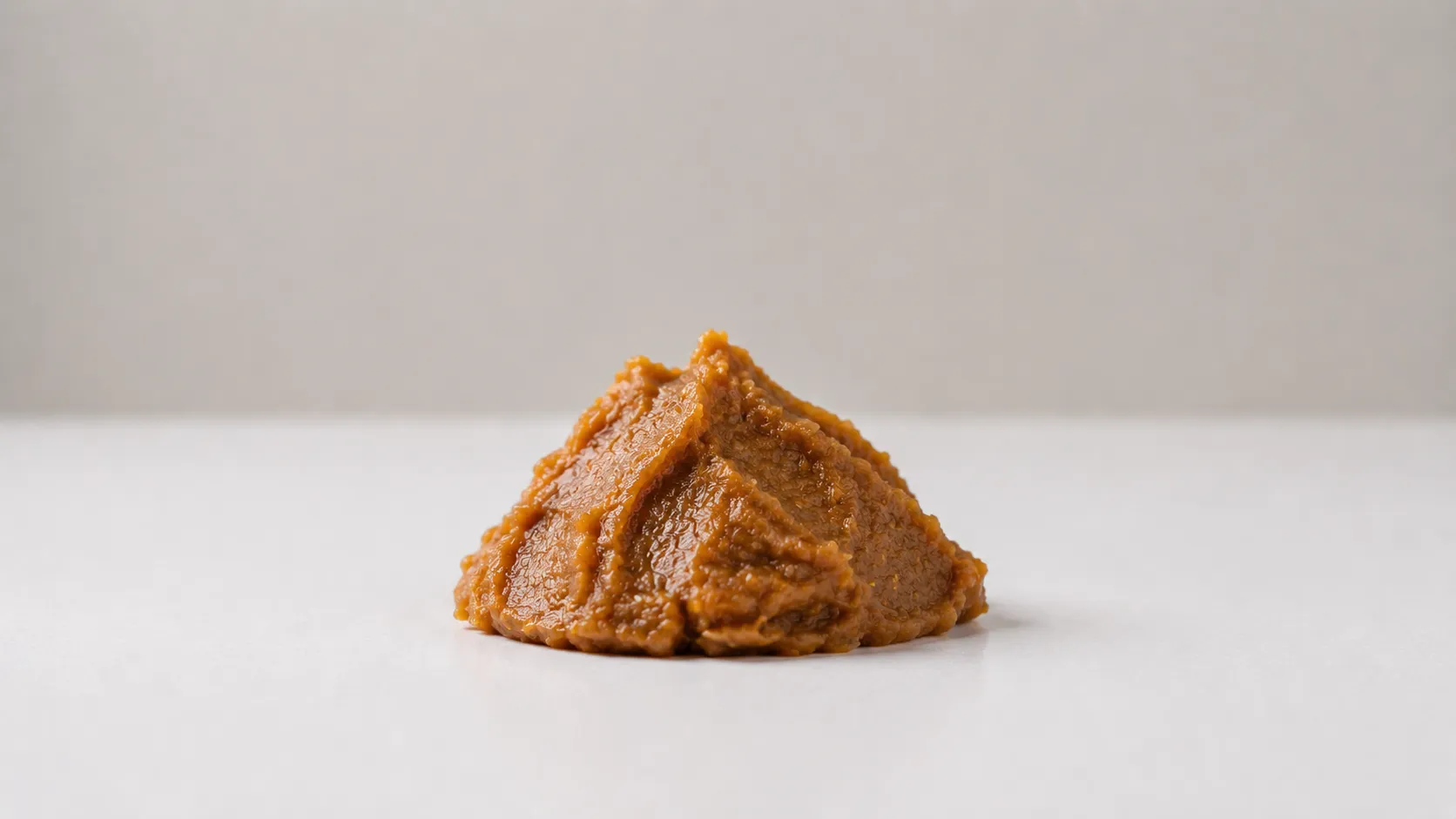
Miso is a smooth paste stirred into food, so it's a low choking risk - there's nothing to cut or shape.
The thing to get right with miso is salt, not choking. See how to serve for how to handle it at each age.
Allergens
Miso is made from soybeans, and soy is a common food allergen. There's no reason to delay soy itself, though - waiting doesn't prevent allergies, and allergens can start alongside other solids from around 6 months.[1]
Introduce soy as a plainer food first - tofu or soft-cooked tempeh - not as miso, so a reaction is easy to spot and the amount easy to control. Once soy is comfortably in the diet, miso counts as the same allergen - no separate introduction needed, just the trace amounts this card describes, from 12 months.[2]
If your baby has severe eczema or an existing food allergy, check with your pediatrician before starting allergens. Keep soy in the diet a few times a week.
One label note: some misos are cultured on barley, which adds gluten - check the label if that matters for your family.[3]
If baby refuses
If a miso-flavored dish is refused, the miso was probably too strong. The fix is less, not more - a trace stirred into a big pot, where it deepens the flavor without announcing itself. Or skip it and build flavor with garlic, ginger, and herbs instead.
Food safety
Miso is a fermented, salted food - the salt is part of the ferment, not something you can leave out - and babies should have no added salt in the first 12 months, kept low after that.
Even a small spoonful carries a big share of a young child's daily salt, which is why miso works only as a trace: a quarter-teaspoon in a family pot flavors every bowl while adding very little to any one of them.[4]
One practical note: an opened tub keeps for many months in the fridge, so a single tub at trace-a-time pace is a long-term pantry citizen, not a race against spoilage.
How to serve
Up to 2 years old
Best left out - too salty
Skip miso before age 2. The salt isn't an extra you can leave out - it's what miso is, the way brine is what an olive is - and one spoonful can hold more sodium than a young child should get in a whole day.
If you've heard that babies in Japan grow up on miso soup, that's true - but it's served heavily watered down, a trace at most. The rule underneath is the same: barely any salt. Waiting until 2 is just the simplest way to follow it.
For umami without the salt
You can build the same deep, savory flavor other ways: a little no-salt broth, mushrooms, tomato, onions cooked slow and sweet, or a parmesan rind dropped into the soup pot. Miso isn't the only door to that flavor.
2+ years old
A trace in family dishes
From age 2, a trace of miso can season family cooking - a quarter-teaspoon stirred through a pot of soup flavors every bowl while adding very little to any one of them. That math only works if the rest of the meal stays low in salt: miso is the day's seasoning, not one of several. A little whisked into a dressing or glaze works the same way.
How to cook
Dissolve the miso in a ladle of the hot broth, then stir it back in with the heat off - boiling dulls what miso brings beyond salt. Start at the low end and taste: with miso, the right amount is always less than you think.
Tips
- White miso is the place to start. Miso ranges from mild to intense - white (shiro) is the sweetest and least salty, red the strongest. When miso does join family cooking, white is the gentle end of the shelf, and the one whose trace goes furthest before anyone notices salt.
- The tub outlasts everything. An opened tub keeps for many months in the fridge - miso is a preserved food by nature, so it won't race you. One tub at trace-a-time pace is a year of family soups, which makes even the fancy tub cheap per bowl.
- Stir it in off the heat. Miso's flavor - and what it brings beyond salt - dulls in a boiling pot. Dissolve a spoonful in a ladle of the hot broth, then stir it back in with the heat off. That's why miso soup is finished, never boiled.