 HeySolids
Choking risk
Mustard is a low choking risk cooked or stirred into food - it's a flavoring, not a food baby eats on its own.
The things to get right with mustard are salt and heat. Mix it into food rather than offering dry powder or whole seeds on their own. See how to serve for age-by-age prep.
Allergens
Mustard isn't one of the major allergens here, though any food can cause a reaction, so introduce new foods one at a time.[1]
If you've seen stronger mustard warnings from Canadian or European sources, that's real but regional - mustard is a labeled allergen there, where the allergy is more common; in the US it stays rare.
Worth knowing either way: mustard hides in a lot of foods - dressings, mayonnaise, marinades, barbecue and curry sauces, deli meats - so if your family is tracking a mustard reaction, the label check goes wider than the jar.
Food safety
Prepared mustard from the jar is a salty food - babies should have no added salt in the first 12 months, kept low after that, so the jar waits, and even then a smear or a small spoonful cooked into a dish is the serving, not a tableside squeeze.[2]
Plain mustard powder is different: it's just the ground seed, no salt at all, so a pinch cooked into food works earlier - that's the route this card's serving guidance takes.
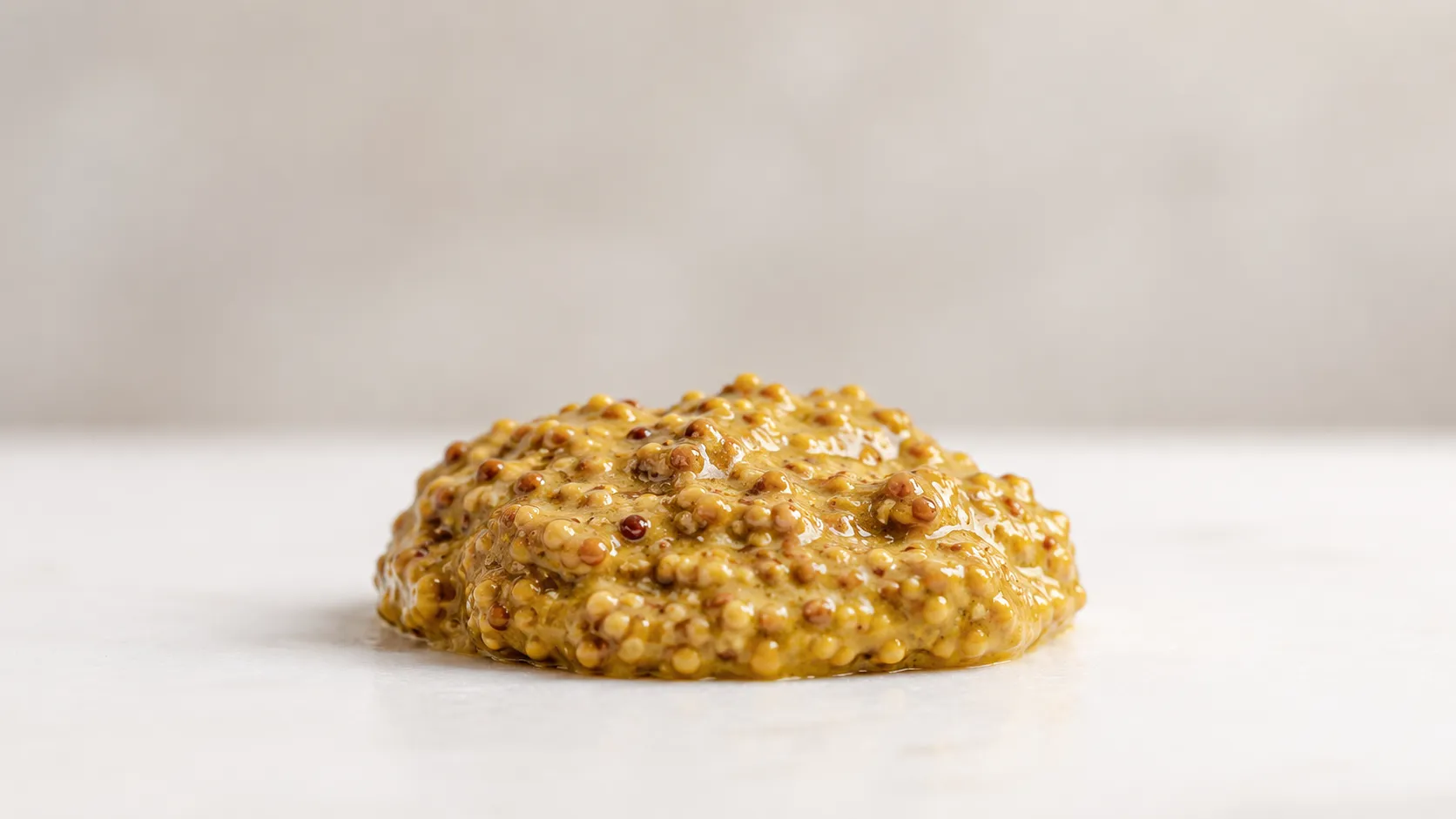
On heat: mustards range from mild to fierce. American yellow is the gentle end; Dijon runs sharper; English and hot mustards are genuinely fiery, and they're one for the grown-ups. For baby, mild yellow or a pinch of powder - and check the label, since "hot" isn't always on the front.
How to serve
6+ months old
A pinch of mustard powder cooked into food
A pinch stirred into a dish as it cooks
Cook a small pinch of plain mustard powder into a soft dish - a simple sauce, a mash, a cheese-and-vegetable bake. Cooked in, mustard powder mellows to a gentle warmth rather than heat, and a pinch is plenty. Always mixed in as the dish cooks, never offered dry.
The jar waits: prepared mustard is a salty food, and its turn comes later.
How to cook
Stir the pinch into the pot while the food cooks - heat softens mustard's bite, so cooked-in is milder than stirred-in at the end. Keep it tiny and add no salt.
12+ months old
Used across family dishes, mild and small
The jar gets its turn now: a small spoonful of mild mustard can go into family dressings, sauces, marinades, and cheesy dishes - cooked in, where it mellows. Prepared mustard is a salty food, so the mustard is the dish's seasoning, not one touch of several, and the rest of the meal stays plain. Hot mustards - English and the fiery kinds - are one for the grown-ups. Season the grown-ups' plates at the table.
How to cook
Whisk a small spoonful of mild mustard into the dressing or sauce as it comes together, or cook a pinch of powder into the pot - heat softens mustard's bite either way. No added salt in the cooking.