 HeySolids
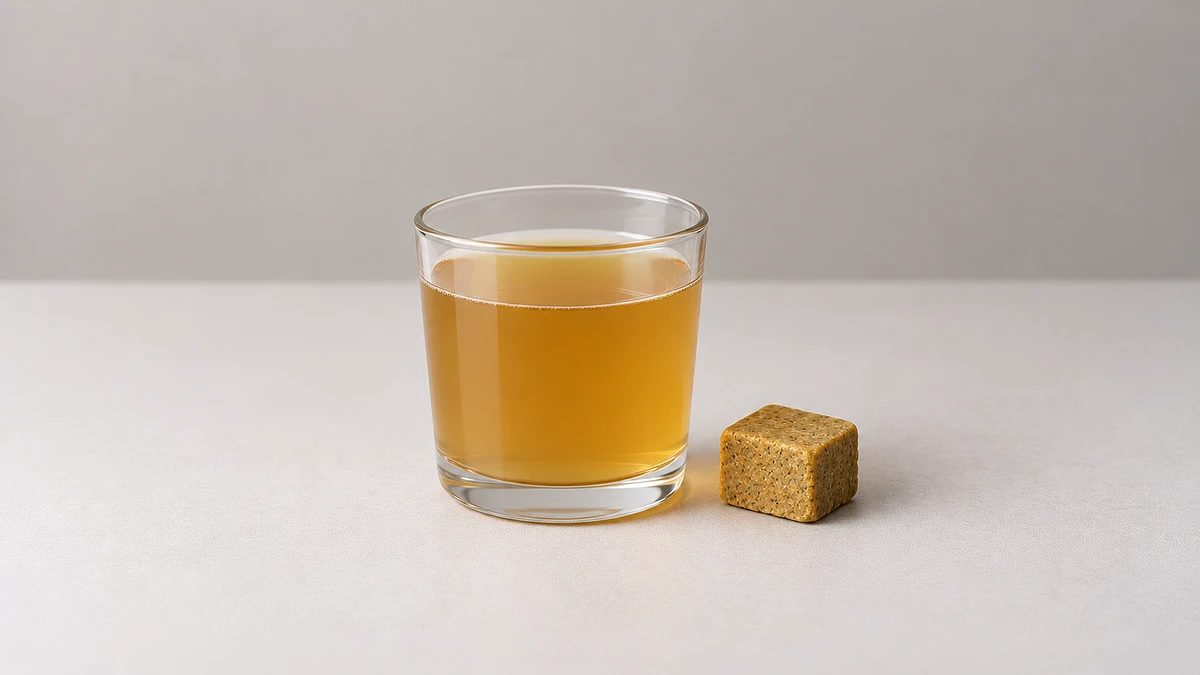
Can babies have stock cubes or gravy?
Not the standard kind. Bouillon cubes and pastes are extremely salty: a cup of broth made from one has around 1,000 mg of sodium. That’s more than two and a half times a baby’s daily guide of 370 mg at 7 to 12 months, and more than the 800 mg guide for a whole day at 1 to 3 years.[1][2] The CDC advises keeping salty foods away from young children, and babies shouldn’t have added salt in the first year.[3]
From 6 months, use homemade stock made without salt, or a store-bought stock labeled “unsalted” or “very low sodium”. From 12 months, a little ordinary stock in a big family pot is OK now and then, since each portion gets only a small share. Keep gravy made from granules as an occasional extra, and use it sparingly.
Boxed stock in a carton varies a lot. Regular versions can have as much salt as a bouillon cube, so check the label and choose unsalted or low-sodium.
Choking risk
Stock and gravy are liquids, so they are a low choking risk - a dry cube or granules are the only form to keep out of reach, and nobody should be eating those.
The question with stock is salt, not texture. See how to serve for what to use at each age.
Allergens
Stock cubes are not a common food allergen in themselves, but they are a mix, and the label is worth a look.[5]
Wheat flour and gluten thickeners are common in gravy granules; milk, soy and celery turn up in many bouillon products; and fish or shellfish stock is exactly that. Yeast extract and sometimes MSG supply the savory note - not allergens, but the reason stock tastes so strong for so little.[6]
Food safety
Salt is the main concern. Babies shouldn’t have added salt in the first year, and toddlers need only a little, but a single stock cube can hold a whole day’s worth in one pot.[3][2] “Reduced sodium” on a US label only means at least 25% less than the regular version, so it can still be very salty. Look for “unsalted” or “very low sodium” instead, or check the sodium figure.
Gravy granules and instant gravy have the same problem. Most are mainly salt, starch, flavoring and coloring. For a roast, spoon off some meat juices before the family gravy is seasoned, and thicken them with a little flour for your baby’s portion.
Keep opened bouillon paste in the fridge as the jar directs. Reheat stored homemade stock until it’s boiling before adding it to your baby’s food.
How to serve
Up to 12 months old
No standard cubes - unsalted homemade stock or no-salt-added cubes
Don't use standard stock cubes, bouillon or gravy granules in food for a baby under 1 - a single cube carries far more sodium than a baby should have in a day. Cook with water, with homemade stock made without salt, or with a no-salt-added baby stock cube or pouch, and leave gravy off the plate unless it's unsalted meat juices.
How to prepare
Simmer chicken bones or vegetable trimmings in water for an hour or more with no salt, strain, and freeze in ice-cube trays - each cube is a baby-sized portion. Onion, carrot and a bay leaf add plenty of flavor without any salt.
12+ months old
A little standard stock in a big family pot, counted as the day's salt
From 12 months a small amount of ordinary stock cooked into a large family soup or stew is workable if it's the main salt that day: a cube spread across eight servings is around 250 mg of sodium per serving, which is a third of a toddler's 800 mg guide. Half a cube, or a low-sodium cube, keeps more room for everything else. Gravy granules stay an occasional, well-diluted thing - meat-juice gravy is still the better habit.
How to prepare
Make the stock weaker than the packet says - one cube to double the water - and season the adults' bowls at the table instead. Keep using unsalted homemade stock as the everyday base.
Sources
- Soup, chicken broth cubes, dry - USDA FoodData Central
- Dietary Reference Intakes for Sodium and Potassium (AI 370 mg at 7-12 months, 800 mg at 1-3 years) - National Academies 2019
- Foods and Drinks to Avoid or Limit (honey, added sugar, salt) - CDC
- Foods to avoid giving babies and young children (salt, stock cubes, gravy, raw jelly cubes) - NHS
- Food Allergies (the 9 major US allergens) - FDA
- Wheat - FARE