 HeySolids
Choking risk
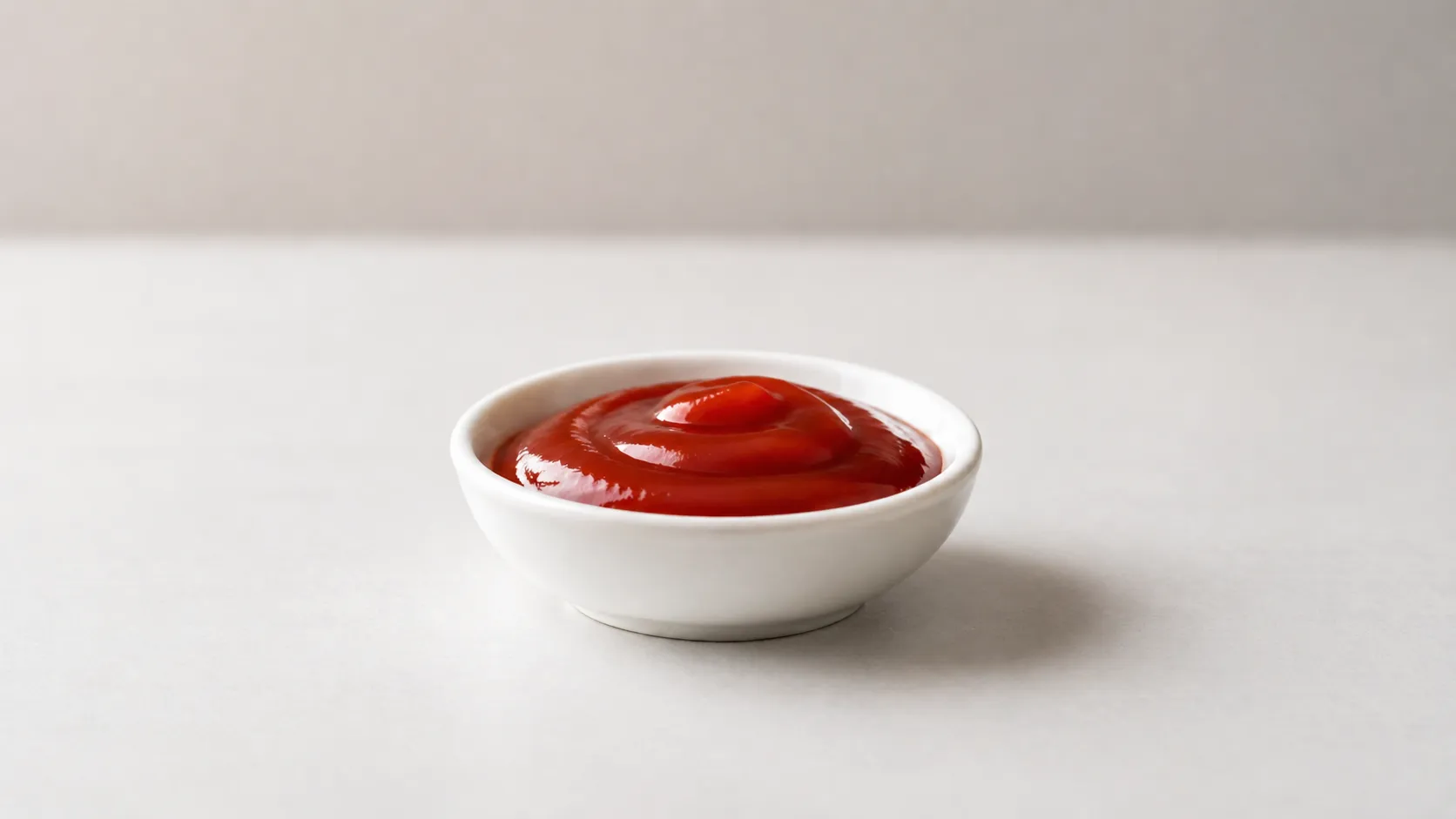
Ketchup is a smooth sauce, so it's a low choking risk - there's nothing to cut or shape.
The thing to get right with ketchup is sugar and salt, not choking. See how to serve for how to handle it at each age.
Allergens
Plain tomato ketchup isn't one of the major allergens, though any food can cause a reaction, so introduce new foods one at a time.[1]
Start with a small amount and watch for a reaction.
Flavored and specialty ketchups are a different matter - they can add ingredients plain ketchup doesn't have, so read the label if your baby has an allergy.
Food safety
Ketchup is where added sugar and salt concentrate - a single tablespoon of the standard bottle carries a real share of a young child's daily salt, and sugar is usually the second ingredient.[2]
Babies should have no added salt in the first 12 months, kept low after that, and added sugar is best avoided before age 2 - so ketchup waits until then.[3]
From age 2, keep it a dip rather than the flavor of everything: foods eaten sweet and salty early are the tastes a toddler learns to expect.
How to serve
Up to 2 years old
No added ketchup
Leave ketchup out before age 2. It's high in added sugar and salt, and a small squeeze carries a lot of both - that includes the no-added-sugar versions, which stay salty and keep the sweet-dip habit either way.
What to use instead
For a tomatoey flavor, stir a little no-salt-added tomato paste or a simple homemade tomato sauce into food - same flavor, none of the sugar.
2+ years old
Small amounts, occasionally
From age 2, a little ketchup now and then is fine - and it earns its place best as a dip, where a small dab can make vegetables or a new food more inviting.
Choose a lower-sugar, lower-salt bottle, and keep it a dip rather than the flavor of everything: a thin smear, not a puddle, and not stirred through every meal.
What to use instead
If the dip habit is growing faster than you'd like, plain yogurt with a little tomato paste, hummus, or mashed avocado dip the same way with none of the sugar.