 HeySolids
Choking risk
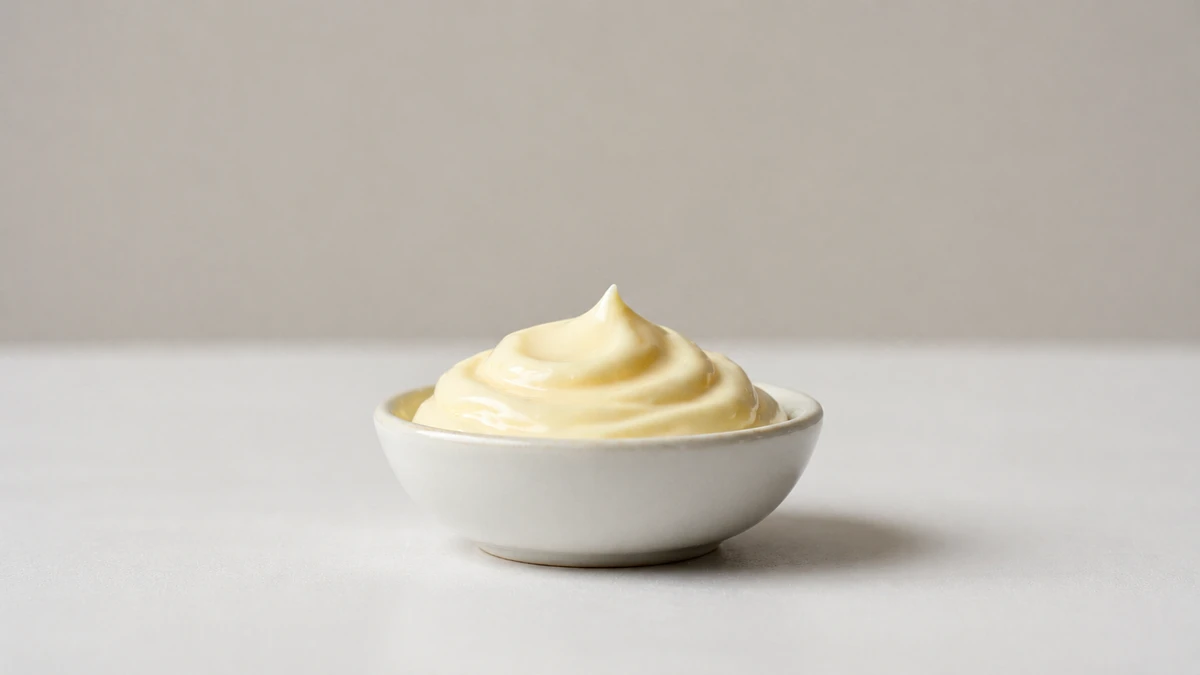
Mayonnaise is a low choking risk - it is a smooth, soft sauce that is easy to swallow.
The mayonnaise is not the hazard, but the foods you mix it into can be, so prepare those safely for baby. See how to serve for age-by-age prep.
Allergens
Mayonnaise is made with egg, and egg is a common food allergen.[1]
Introduce egg as plain, well-cooked egg first, not as mayonnaise, so a reaction is easy to spot and the amount easy to control. Once egg is comfortably in the diet, mayonnaise counts as the same allergen - no separate introduction needed, just keep egg in the diet a few times a week.[2]
Many mayos also contain mustard, so check the label if your baby has reacted to mustard before.
If baby refuses
Mayonnaise is creamy and mild, and it rarely appears on its own - stir a little into mashed egg, avocado, tuna, or potato, where it blends into a food baby already enjoys.
Food safety
The kind of mayonnaise matters. Store-bought mayo is made with pasteurized egg and is the safe choice for babies - this is one food where the jar beats homemade.[3]
Homemade mayonnaise is raw shell egg, which can carry salmonella, so it's not for babies unless you make it with pasteurized eggs. Babies are more vulnerable to food poisoning than adults. Keep any mayo refrigerated, homemade or opened jar alike.
How to serve
Up to 12 months old
No mayonnaise yet
Babies should have no added salt in the first 12 months, and mayo adds a little salt without adding anything baby needs. There's nothing it does that the food underneath doesn't - mashed egg, avocado, and tuna all work with no binder, or a little plain whole-milk yogurt does the same job with no salt.
12+ months old
A small amount as a condiment
A dab in family dishes, dips, and dressings
Mayonnaise can join the menu now, in small amounts - binding mashed egg, avocado, or tuna for sandwiches and soft fillings, loosened with a little yogurt as a dressing, or as a dip for soft vegetables.
Keep servings small: a dab for dipping or binding, not a bowl to spoon from, since mayo carries a fair amount of salt.
Watch the deli versions too - ready-made coleslaw, potato salad, and sandwich fillings are usually much saltier than the same dish made at home.
How to prepare
No cooking needed. Store-bought mayo is made with pasteurized egg and is the safe choice; homemade mayonnaise is not for young children unless you make it with pasteurized eggs. A teaspoon goes further than you'd think - mayo is for binding, not coating - and thinning it with plain yogurt makes a milder dressing that goes further still.
Tips
- One jar, checked once. Mayo brands vary more in salt than you'd guess - the difference between two jars on the same shelf can be double. Check the label once, pick the lower-salt one with the short ingredients list (oil, egg, vinegar, not much else), and that's the jar; no need to re-litigate it every shop.